
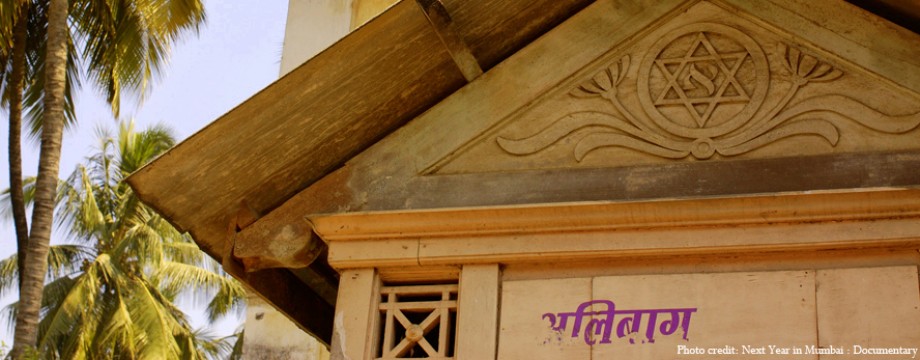
Jews of India
Two thousand years of Jewish life on the Indian subcontinent
“Perhaps the most unique aspect of the Indian Jewish experience is the complete absence of discrimination by a host majority. The secret of India’s tolerance is the Hindu belief which confers legitimacy on a wide diversity of cultural and religious groups even as it forbids movement from one group to another.”
– Raphael Meyer
Welcome to Jews of India
For over two thousand years, Jewish communities have called the Indian subcontinent home. This website is dedicated to preserving, exploring, and celebrating the remarkable story of Indian Jews: the Bene Israel of Maharashtra, the Cochin Jews of Kerala, the Baghdadi Jews of Calcutta and Bombay, and the Bnei Menashe of northeastern India.
India is one of the few countries in the world where Jews have lived freely for millennia, never facing antisemitism or expulsion. The story of Indian Jews is therefore not a story of persecution but one of integration, creativity, and cultural richness, as Jewish communities adapted to Indian life while preserving the core of their Jewish identity.
The Communities
The Jews of India are not one community but several, each with a distinct history, origin story, and cultural tradition:
The Bene Israel are the largest and oldest Indian Jewish community, concentrated in Maharashtra around Mumbai and Pune. They trace their origins to seven families who survived a shipwreck on the Konkan coast over two thousand years ago. Cut off from mainstream Jewish contact for centuries, they developed a distinct culture while maintaining core Jewish practices, rediscovered by mainstream Jewry in the eighteenth century through contact with the Cochin Jewish community and later the Baghdadi Jews of Bombay.
The Cochin Jews of Kerala are divided into two sub-communities: the Malabari Jews (also called Black Jews), who arrived in Kerala over a thousand years ago and integrated deeply into Malayali culture, and the Paradesi Jews (also called White Jews), who arrived in the sixteenth century from Europe, the Middle East, and North Africa. The Paradesi Synagogue in Kochi, built in 1568, is one of the oldest active synagogues in the Commonwealth. Today, fewer than twenty Jews remain in Kochi, the rest having emigrated to Israel, but their legacy endures in the city’s culture and architecture.
The Baghdadi Jews arrived in Calcutta and Bombay from Iraq, Syria, and Iran beginning in the late eighteenth century. They became among the most prominent merchant families in British India, building synagogues, schools, and cultural institutions that transformed the urban landscapes of both cities. Families like the Sassoons, Ezras, and Kadoories left an indelible mark on the history of commerce, philanthropy, and architecture in South Asia.
The Bnei Menashe are a community from the Mizo and Kuki-Chin peoples of Manipur and Mizoram in northeastern India who trace their descent from the lost Israelite tribe of Manasseh. Following the ruling of Israel’s Sephardic chief rabbi in 2005 and formal recognition by the Israeli government, thousands of Bnei Menashe have immigrated to Israel, while several thousand more await recognition and aliyah.
Explore This Site
This website brings together articles, books, documentary films, recipes, music, art, and cultural history related to Indian Jews. Use the navigation to explore by community, topic, or medium. Whether you are a researcher, a member of the diaspora, or simply curious about one of the world’s most remarkable minority communities, there is something here for you.
Some highlights: our Bene Israel section covers everything from the community’s origins to their traditions and notable figures. The Cochin Jews section explores the Paradesi Synagogue, the community’s unique Malayali-Jewish culture, and their journey to Israel. The Baghdadi Jews section tells the story of some of British India’s most influential merchant dynasties. And the Miscellaneous Facts section collects fascinating details and stories that do not fit neatly into any single category.