
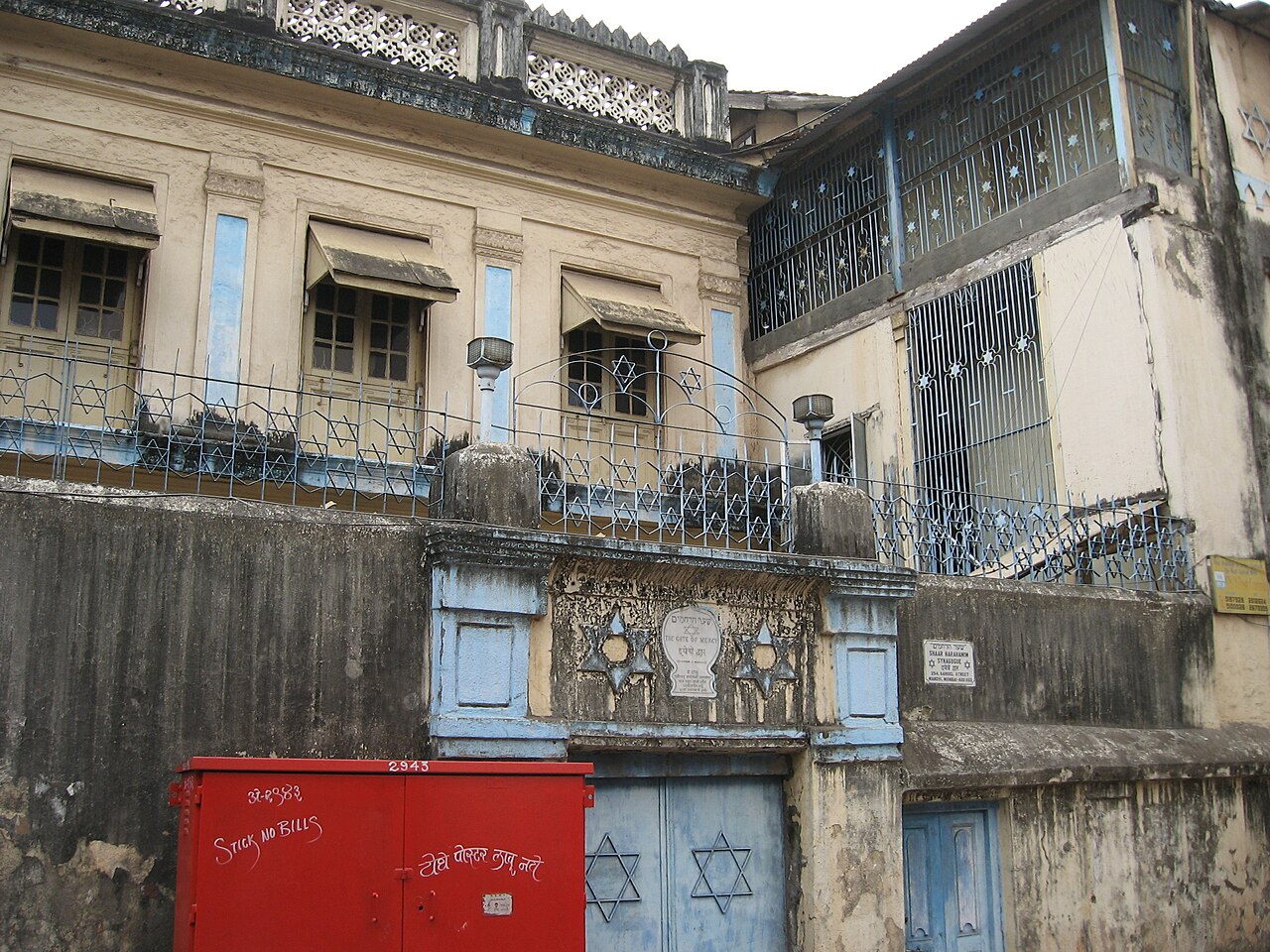
The Jews of India are often described as three distinct communities that happen to share a country rather than one single group: the Bene Israel of the Konkan coast and Bombay, the Cochin Jews of the Malabar coast, and the Baghdadi Jews who arrived through trade networks stretching back to Iraq and Aleppo. Understanding this community as a whole, rather than as three separate footnotes, has taken decades of scholarship, and a handful of books have done more than any others to bring that fuller picture together. This overview looks at the books that have shaped how the world understands the Jews of India, and why they remain worth reading today.
Three Communities, One Homeland
The Bene Israel trace their presence in India back many centuries, with origin stories ranging from shipwrecked travelers to descendants of an ancient tribe, none of which can be verified with certainty. The Cochin Jews settled along the Malabar coast and built some of the oldest synagogues in Asia, including communities that trace their roots back over a thousand years. The Baghdadi Jews arrived far more recently, mostly during the era of British colonial trade, and included wealthy merchant families such as the Sassoons who left behind synagogues, schools, and civic buildings across Bombay, Pune, and Calcutta. Each community kept its own customs, its own synagogue traditions, and in many cases its own language influences, which is part of why a single unifying history of Indian Jewry took so long to appear in print.
Where Scholars Start: Nathan Katz’s “Who Are the Jews of India?”
Published by the University of California Press in 2000, Nathan Katz’s Who Are the Jews of India? is widely regarded as the first comprehensive academic study to treat the Bene Israel, Cochin, and Baghdadi communities together in a single integrated work. Rather than treating the three groups as isolated case studies, Katz organizes the book around the theme of identity, examining how each community balanced its Jewish practice against centuries of life inside Hindu and, later, colonial society. Scholarly reviewers have pointed to its balanced, comparative approach as the reason it remains a standard reference more than two decades after publication, and it is frequently cited in later academic work on the subject. For a reader who wants one serious, well-sourced starting point before moving on to memoirs or exhibition catalogs, this is usually the first book recommended by specialists in the field.
A Story of Three Communities: The Israel Museum’s Exhibition Catalog
A very different but equally important book is The Jews of India: A Story of Three Communities, edited by Orpa Slapak and published by the Israel Museum in Jerusalem in 1995 to accompany a major exhibition. Rather than an academic argument, this book is built around material culture: textiles, ketubot (marriage contracts), ritual objects, synagogue furnishings, and photographs collected from all three communities. Because the Israel Museum drew on its own collection and loans gathered specifically for the exhibition, the catalog remains one of the only places where so many artifacts from India’s Jewish communities are documented together in one volume, with essays that explain the history behind each object. For readers who want to see the community’s material and visual culture rather than read a purely textual history, this catalog is still considered the reference point.
Earlier Voices: Community Histories from Within
Before either of those books appeared, members of the community itself had already begun documenting their own history. Benjamin J. Israel, a Bene Israel scholar, published his own book titled simply The Jews of India in 1982 through the Jewish Welfare Association, offering a history written from inside the community rather than by an outside academic. Decades earlier, Bene Israel historian Haeem Samuel Kehimkar completed The History of the Bene Israel of India in 1897, which was published posthumously in 1937 and remains one of the earliest community-authored histories of the group, laying groundwork that later scholars like Katz would build on. These insider accounts matter because they preserve details of daily religious practice, family structure, and internal community debate that outside researchers sometimes miss entirely.
More Recent Additions to the Shelf
The last few decades have added to this literature rather than replacing it. Edna Fernandes’ The Last Jews of Kerala (2008) follows the final generation of Cochin Jews as most of the community emigrated to Israel, blending reportage with history. More recently, Ori Z. Soltes’ edited anthology Growing Up Jewish in India (Niyogi Books, 2021) combines synagogue history with contemporary art criticism, centered partly on painter Siona Benjamin’s own memoir of growing up Bene Israel in Bombay. Together with Katz and Slapak’s earlier works, these newer books mean a reader today has more serious, well-researched options than at any point in the past.
Why These Books Still Matter
India’s Jewish population today numbers only in the low thousands, a fraction of what it was before mass emigration to Israel in the 1950s through 1970s. Most Bene Israel, Cochin, and Baghdadi families who once filled synagogues in Bombay, Kochi, Pune, and Calcutta now live in Israel, with smaller communities scattered across the United States, the United Kingdom, and Australia. That demographic shift makes the written record unusually important: without these books, much of the material culture, oral history, and internal community memory documented in them would have far fewer places to survive, since the synagogues themselves are often maintained today by only a handful of caretakers rather than active congregations.
Reading Katz alongside Slapak, and pairing both with newer memoirs like Fernandes’ or Soltes’ anthology, gives a far more complete picture than any single book could offer on its own. Each approaches the same three communities from a different angle: Katz through comparative religious identity, Slapak through material culture and museum scholarship, and the more recent authors through personal memoir and reportage. Together they cover history, artifact, and lived experience in a way that complements rather than duplicates.
For anyone starting to explore the history of India’s Jewish communities, these titles remain the most reliable place to begin, and each is well documented enough that a curious reader can follow the citations and photographs further into archives, museum collections, and academic journals if they want to go deeper still.