
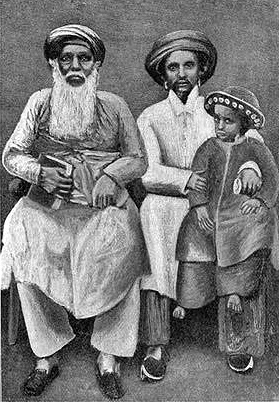
The Bene Israel are the largest and oldest Jewish community in India. According to their tradition, they are descendants of ancient Israelites who fled persecution and shipwrecked on the Konkan coast of western India over two thousand years ago. Settling in villages along the coast south of Mumbai, they maintained Jewish practices through centuries of cultural isolation, developing a rich tradition that fused Hebrew heritage with Marathi language and Indian customs. These photographs document their history and community life.
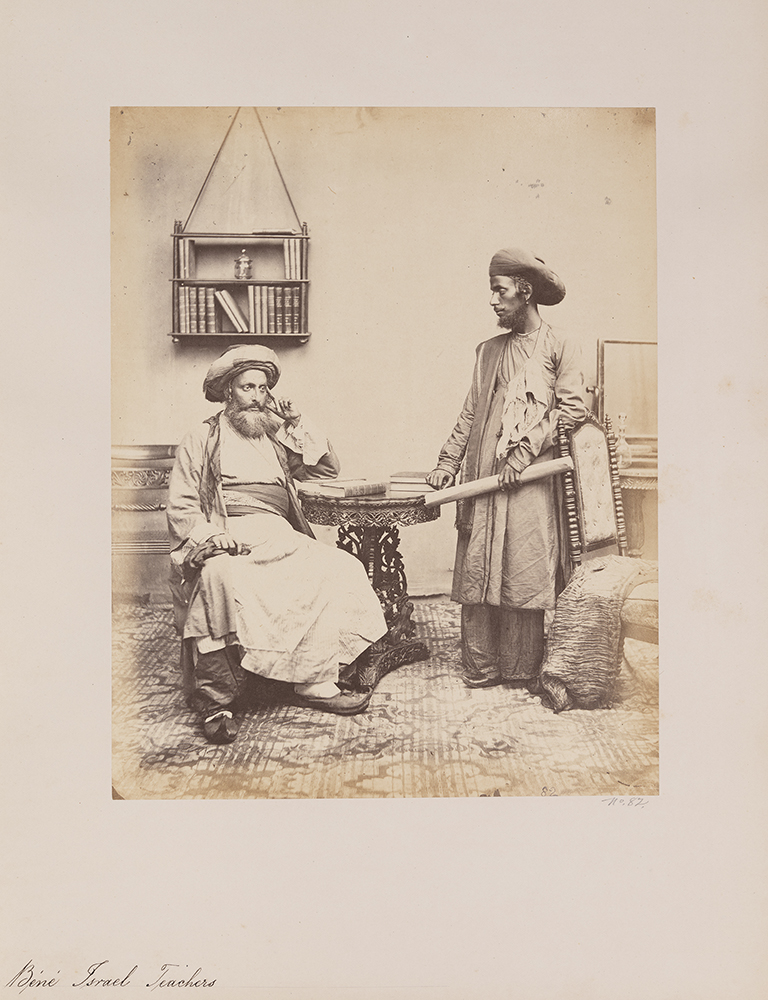
Bene Israel Teachers, Bombay, 1855
This historic group photograph from 1855 shows Bene Israel teachers in Bombay, representing the community at a time of major cultural transition. The 19th century brought significant change for the Bene Israel as contact with Baghdadi Jews and European missionaries reintroduced mainstream Jewish practices and created new educational opportunities for the community.
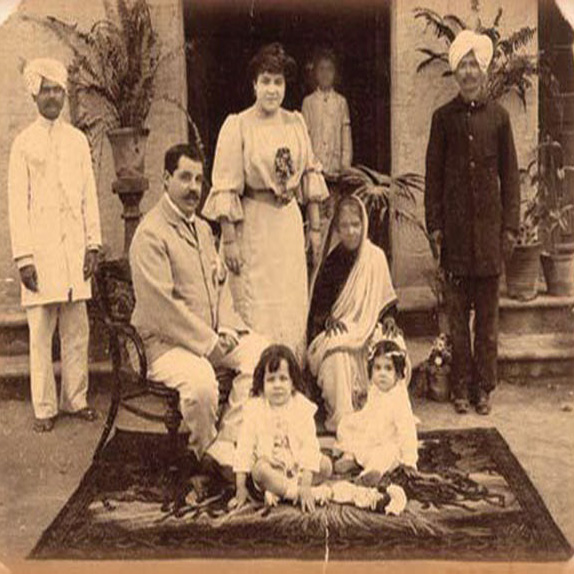
Bene Israel in Traditional Costume
This photograph from approximately 1901 to 1906 shows a Bene Israel community member in traditional costume, illustrating the distinctive dress of the community during the late colonial period. The clothing reflects the blend of Indian and Jewish identity that characterized the Bene Israel throughout their history in India.
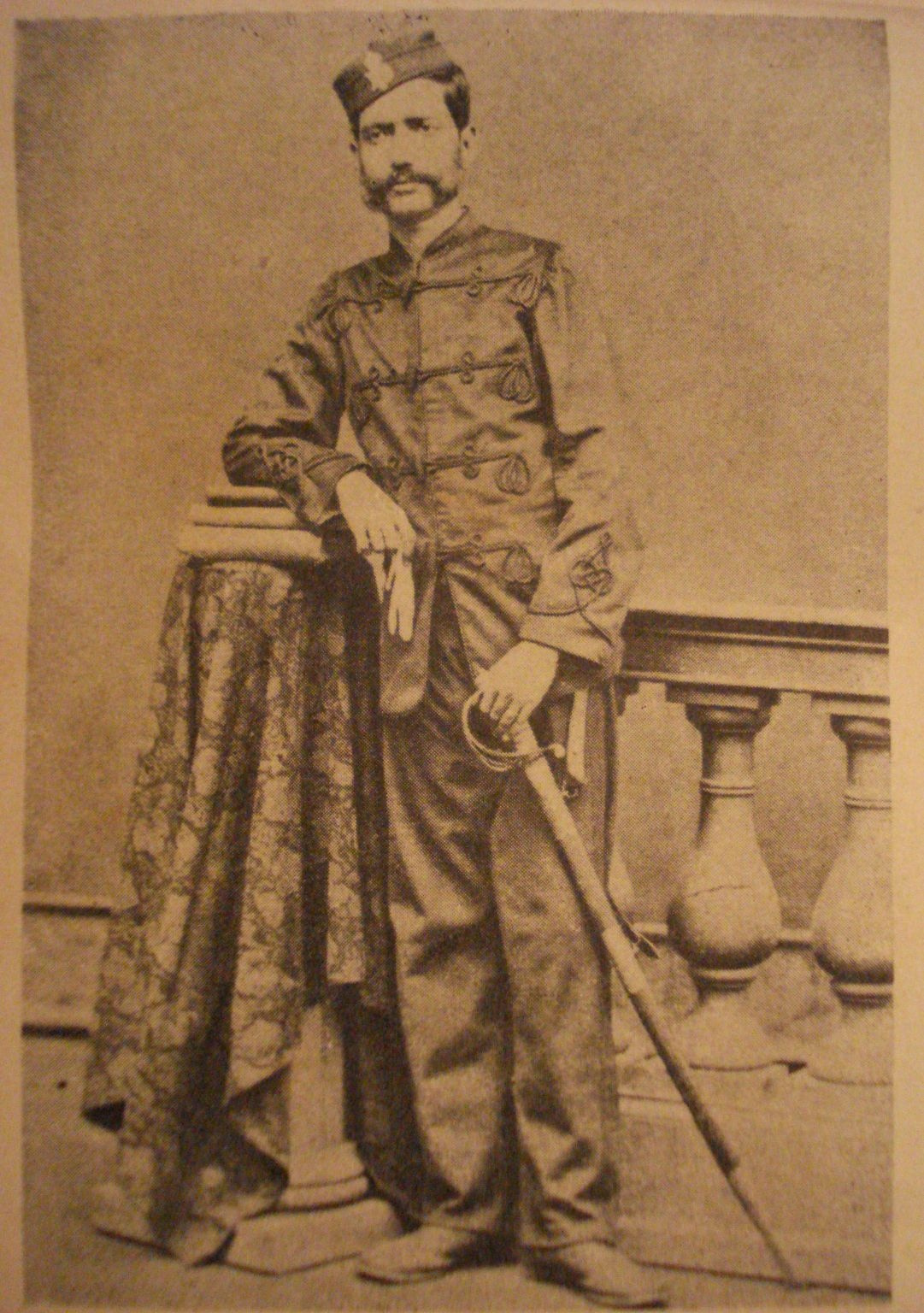
David Haeem Divekar Portrait
David Haeem Divekar was one of the most celebrated figures in Bene Israel history. He served as a Subedar (senior native officer) in the British East India Company’s army and was renowned for his loyalty and bravery. This 1858 portrait by the English artist Prince depicts Divekar in his military uniform, a symbol of the prominent role Bene Israel men played in the Indian Army across multiple generations.
The Bene Israel Haggadah
Published in Bombay in 1890, this Passover Haggadah written in Judeo-Marathi represents the unique linguistic heritage of the Bene Israel community. The Bene Israel developed Judeo-Marathi, a dialect of Marathi written in Hebrew characters, as their community language over the centuries. This Haggadah is one of the most important surviving documents of that tradition.
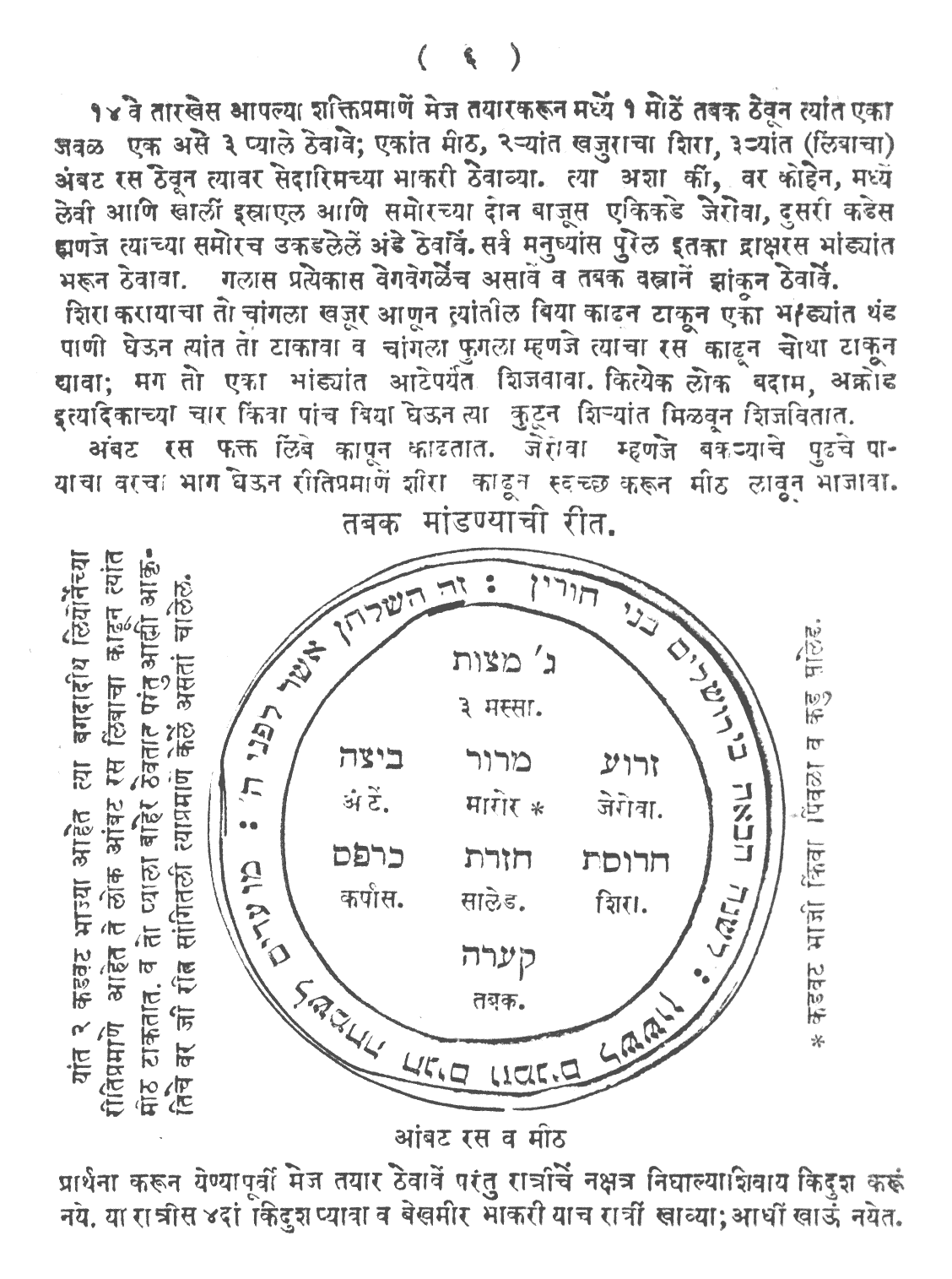
Bene Israel Marriage Ceremony
The Bene Israel marriage ceremony (known as a Lagna) is a vibrant celebration that incorporates both Jewish religious rituals and Indian cultural traditions. The Malida ceremony, performed to give thanks to the Prophet Elijah (known as Eliyahu Hannavi), is a distinctive Bene Israel custom observed at weddings, births, and other important life events.
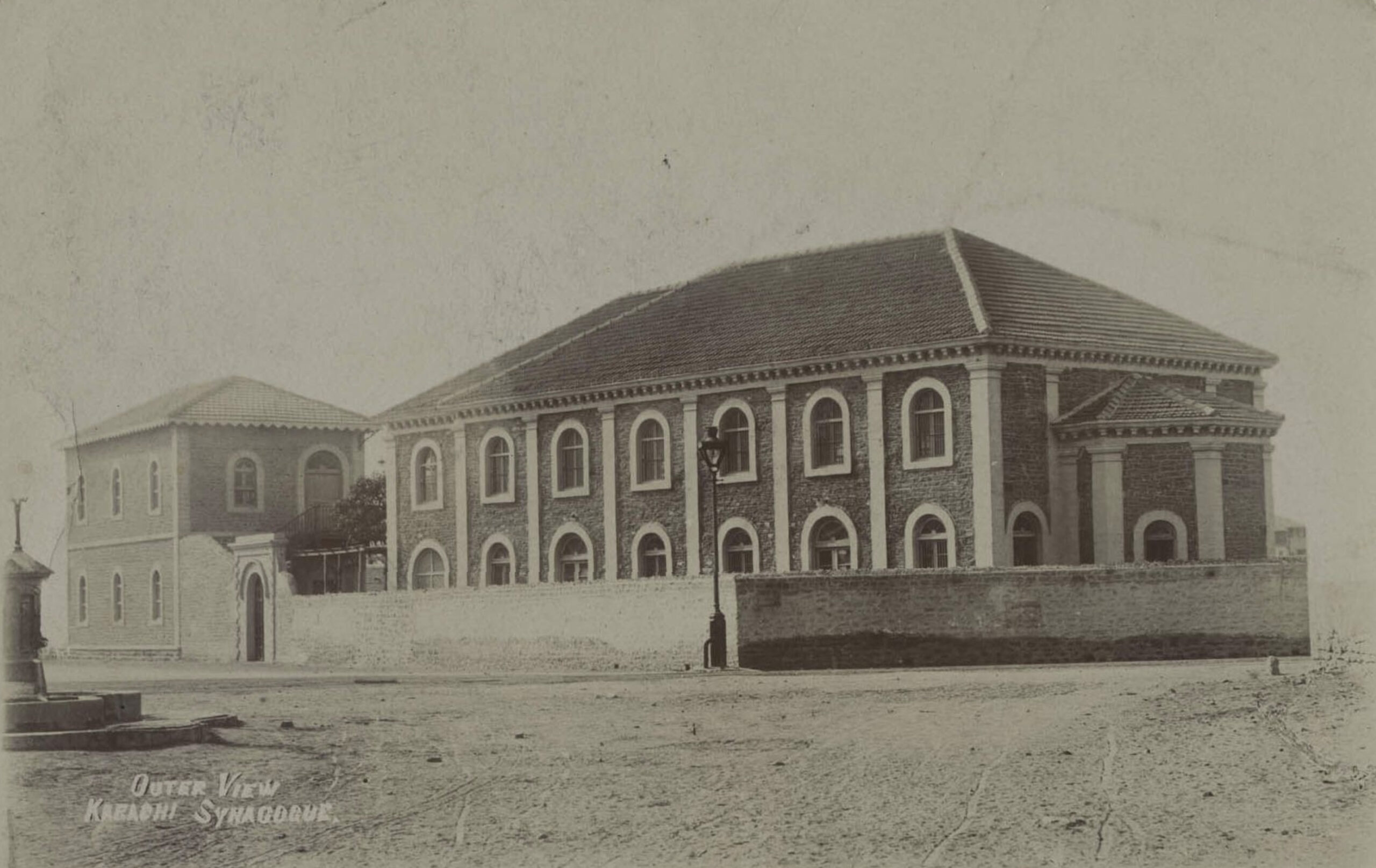
The Magain Shalome Synagogue, Karachi
The Magain Shalome Synagogue in Karachi (in present-day Pakistan) was once the center of a thriving Bene Israel community in Sindh. Built in the 19th century, the synagogue served the community until Partition in 1947, after which most Bene Israel Jews migrated to Bombay or to Israel. The building still stands in Karachi’s old city as a reminder of Jewish life in pre-Partition South Asia.
Discover more about the Bene Israel in the Bene Israel section of this website.