
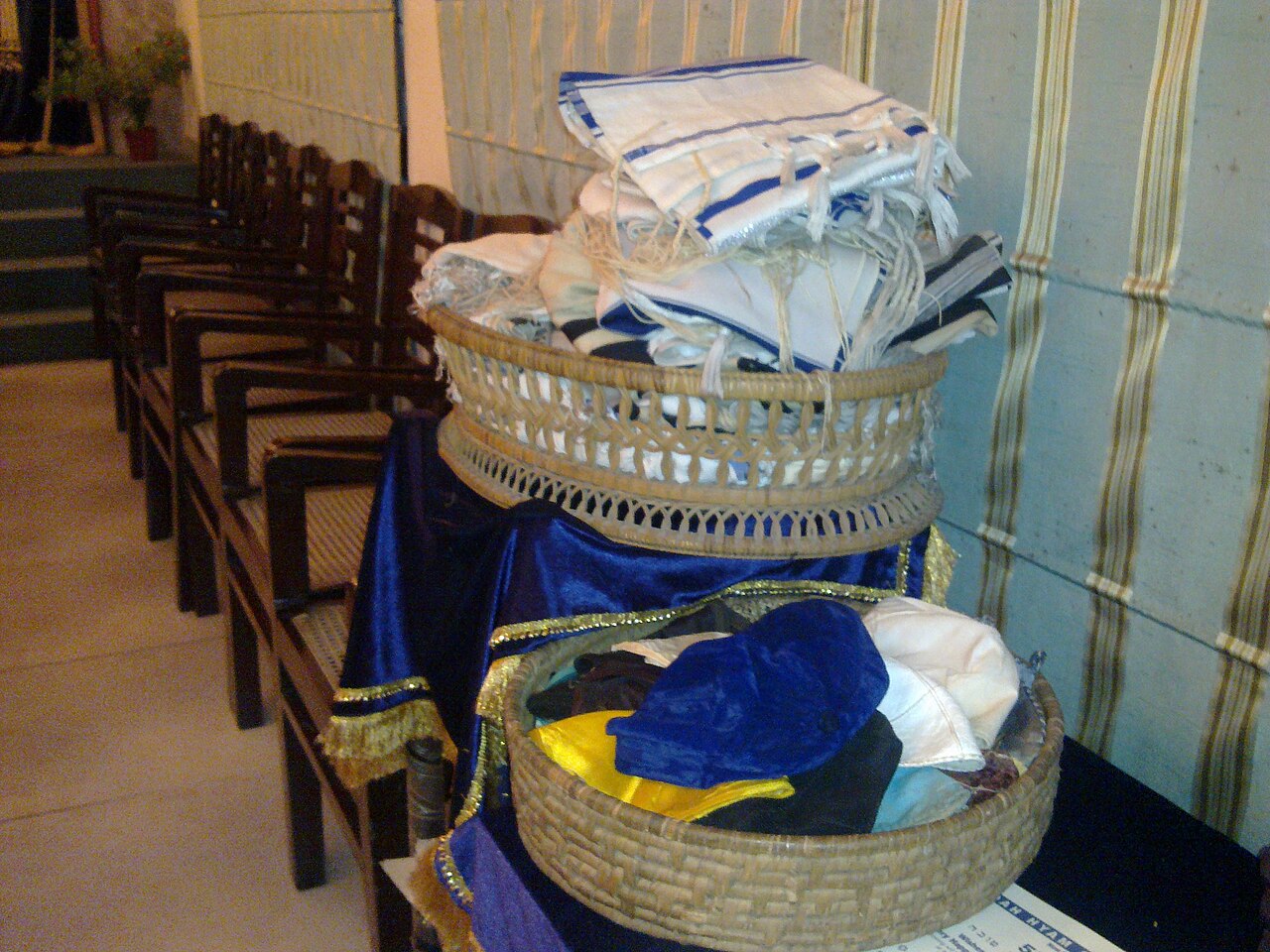
Delhi is not where most heritage travelers think to look for Jewish history in India. Mumbai has its Byculla synagogues, Kolkata its Baghdadi merchant houses, Kochi its sixteenth-century Paradesi Synagogue. Delhi has exactly one working synagogue, tucked into a quiet colonial-era residential block near Khan Market, and it is still very much in use.
A Synagogue Built for Refugees, Not Merchants
Judah Hyam Synagogue does not have the centuries of history that Kochi or Kolkata can claim. It was founded in 1956, in the years after the Second World War, to serve a Jewish population that had grown in Delhi largely through displacement: refugees who had fled Europe, families connected to the Allied forces stationed in India during the war, and a small number of Baghdadi and Bene Israel Jews who had moved to the capital for work. Unlike Bombay’s grand Sassoon-funded synagogues or Pune’s Ohel David, Judah Hyam was never built as a monument to a merchant dynasty’s wealth. It was built because a community needed somewhere to pray.
The building itself carries a distinctly Indian institutional pedigree: it was designed by Joshua M. Benjamin, an Indian Jewish architect who also worked on the Parliament House of India. The result is a modest, cream-colored structure with a facade marked simply by a Star of David and a menorah, giving little outward sign of the ornate interior, where a central bimah faces Jerusalem in the traditional layout.
Delhi’s Smallest, Most Visited Community
Today, Judah Hyam serves what is usually described as about ten Jewish families still living in Delhi, making it India’s smallest organized Jewish community by a wide margin. Their story, and how they have kept the community going, is worth reading on its own. What is unusual is how many outsiders pass through despite that tiny membership: the synagogue reports more than 12,000 visitors a year, a mix of tourists, diplomats posted in Delhi, and Jewish travelers passing through the capital who want a place to mark Shabbat.
Planning a Visit
Judah Hyam is easy to reach and, unlike some of India’s more security-conscious synagogues, genuinely open to visitors. It sits at 2 Humayun Road, in the Sujan Singh Park neighborhood just south of Khan Market, one of Delhi’s more walkable and well-known commercial areas. The synagogue is generally open from 11 a.m. to 1 p.m. and again from 5 to 6:30 p.m., though it is closed on Saturdays, since that is when the small congregation is using it for Shabbat itself rather than receiving casual visitors. There is no entry fee. Modest dress is expected, as at any working house of worship, and visitors hoping to attend a Friday evening Shabbat service, conducted in a mix of Hebrew and English and open to people of any faith, are advised to contact the synagogue office in advance rather than simply arrive.
Because Khan Market and Lodi Gardens are both close by, a stop at Judah Hyam fits easily into a half-day of central Delhi sightseeing rather than requiring a special trip across the city, which is part of why it draws so many visitors relative to the size of the community it actually serves.
Why It Matters Beyond Its Size
It would be easy to treat Judah Hyam as a curiosity, the one synagogue in a city of over twenty million people. But its continued operation says something real about the durability of India’s Jewish communities more broadly: even in a city where the Jewish population never numbered more than a few hundred families at its peak, and now numbers a fraction of that, the community has kept a functioning synagogue open for nearly seventy years, still holding weekly services rather than existing only as a historical marker. That is a different story from Kochi, where the Paradesi Synagogue draws tourists to a community that has largely emigrated, or Bombay’s grand Baghdadi synagogues maintained more as heritage sites than as centers of daily religious life. Judah Hyam is small, but it is not a museum.