
The map of Indian Jewish Israel is not just a matter of which towns people settled in decades ago. It is also a short, practical list of actual places a visitor, researcher, or descendant looking to reconnect can walk into today: synagogues built by hand from memory, a heritage museum with a phone number, and a Jerusalem archive dedicated to communities the wider world rarely hears about. This is a working directory of the Indian Jewish community centers still open in Israel right now.
Cochin Jewry Heritage Center, Moshav Nevatim
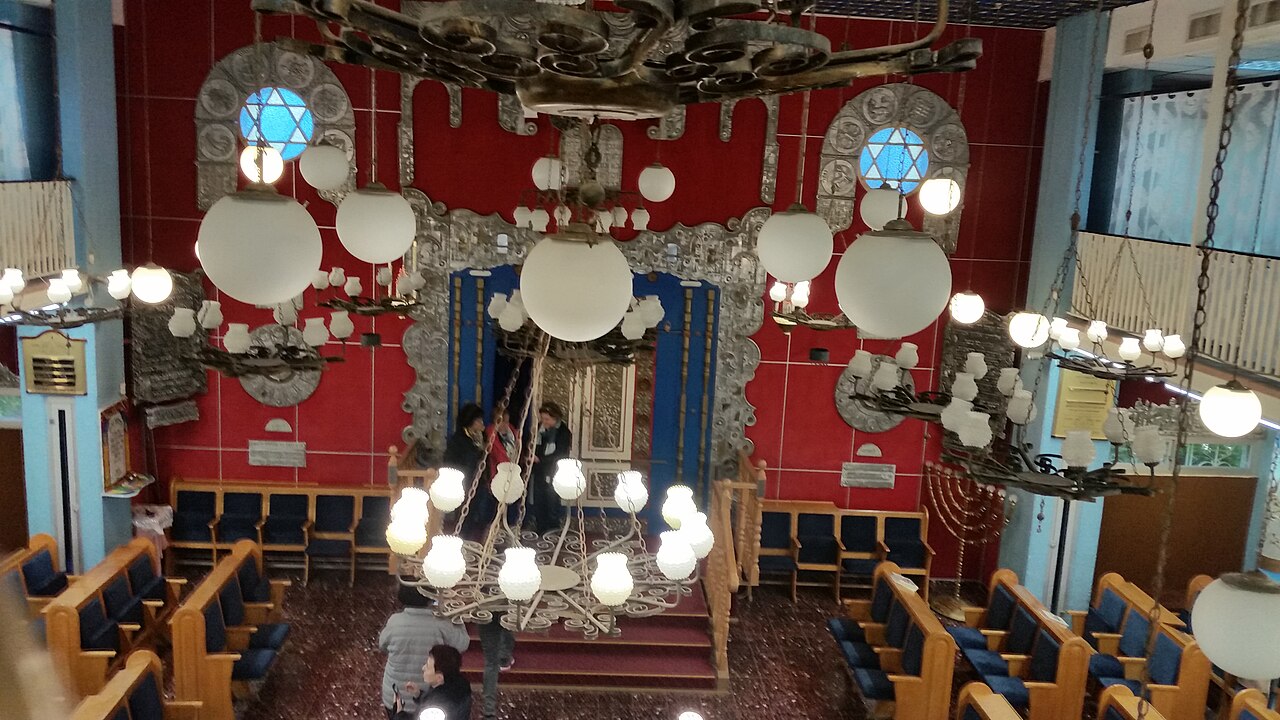
The single most complete stop for anyone tracing Cochin Jewish heritage in Israel is the Cochin Jewry Heritage Center at Moshav Nevatim, a Negev farming village re-established by Cochin immigrants in 1954. Its centerpiece is the Adat Ha-Cochinim Synagogue, built in 1975 as a working reconstruction of a synagogue from Kerala, using an Ark and ritual objects that Cochin families carried with them from India, some dating to the 16th century. The adjoining museum displays the community’s utensils, spices, costumes, and jewelry alongside photographs and films documenting daily life on the Malabar Coast and the move to Israel.
The center is open Sunday through Thursday, 9:00 a.m. to 2:00 p.m., and closed Friday and Saturday. Visits can be arranged by phone (+972-8-6238299) or email ([email protected]), and the center maintains its own site at cochin.org.il. It is wheelchair accessible and welcomes school groups and children, making it the most visitor-ready Indian Jewish heritage site in the country.
Beit Keneset Alfei Menashe and the Bnei Menashe Gallery, Sderot
Sderot is home to the first Bnei Menashe synagogue built in Israel, Beit Keneset Alfei Menashe, established in 2014 to serve a community that traces its roots to Manipur and Mizoram in India’s northeast and immigrated to Israel after formal conversion under the guidance of organizations such as Shavei Israel. For nine years the congregation prayed in a caravan with no bomb shelter before a permanent building was finally begun, with a cornerstone ceremony held in September 2023 at a new, safer location. That relocation would prove fortunate: the community’s original site sat near one of the areas hit hardest in the October 7, 2023 attacks.
In March 2025, the community opened a dedicated Bnei Menashe Gallery in Sderot alongside the synagogue, displaying historical manuscripts documenting the Bnei Menashe’s early contact with the wider Jewish world, traditional garments, photographs of the immigration process, and an animated film telling the community’s story. Rabbi David Lhungdim leads the roughly 120 households the congregation now serves. Community members have also become known for a striking statistic: close to every eligible man, and a meaningful share of women, go on to serve in the Israel Defense Forces or national service after making aliyah.
The Ma’ani Center, Jerusalem
For a single stop that covers Bnei Menashe heritage alongside that of other communities with unusual or contested histories, the Ma’ani Center in Jerusalem is the place to visit. Located at 3 Am VeOlamo Street, adjacent to the main offices of Shavei Israel, the center was established to research, preserve, and present the history of groups including the Bnei Menashe of India, Bnei Anousim descended from forcibly converted Iberian Jews, hidden Jewish communities in Poland, Subbotnik Jews from Russia, and the Kaifeng Jews of China. The center runs a permanent exhibition, hosts lectures and cultural events, and sends staff to schools and community groups to present on the language, dress, music, and food of these communities. It also maintains an archive of documents, photographs, and recordings, some of which have gone on tour as traveling exhibitions elsewhere in Israel.
What’s Still Missing
Not every Indian Jewish institution in Israel has a public-facing address or fixed visiting hours. Bene Israel community life in Beersheba, Ashdod, Ramla, and Dimona, home to the largest concentrations of Bene Israel outside India, still centers mainly on synagogues that function as neighborhood houses of worship rather than heritage attractions with their own websites and phone lines, and a proper published directory of those addresses does not yet appear to exist in English-language sources. That gap is worth naming plainly: the Cochin and Bnei Menashe communities have, for different reasons, built more visible public infrastructure than the larger and older Bene Israel community has, and a visitor hoping to see Bene Israel communal life firsthand is generally better served by contacting a local synagogue or community organization directly than by expecting a museum-style welcome.
Taken together, these three centers, one in the Negev, one in the western Negev town of Sderot, and one in Jerusalem, offer a real, visitable answer to a question many descendants and researchers ask: not just where Indian Jews settled in Israel, but where their heritage is actively being kept and shown today. For the fuller settlement picture behind these three stops, see our guide to where Indian Jews settled across Israel, and for the kibbutzim and moshavim themselves, see our guide to kibbutzim and settlements in Israel.
Sources: Israel and You; Cochin Jewry Heritage Center (cochin.org.il); Shivtei Menashe; The Jerusalem Post; Shavei Israel.