
The Baghdadi Jews of India trace their origins to the ancient Jewish communities of Iraq and the broader Middle East, arriving in India in the late eighteenth and early nineteenth centuries as merchants and traders drawn by the commercial opportunities of the expanding British Empire. The subject of “The Jews of Mumbai: Bollywood, Blue Synagogues, and Community Life” opens a window onto a community that combined the deep heritage of Babylonian Jewish tradition with the dynamism and ambition of a diasporic merchant class – creating communities in Calcutta and Bombay that left lasting marks on both cities.
The Sassoon Family and Baghdadi Jewish Bombay
No name is more central to the story of Baghdadi Jewish life in Bombay than Sassoon. David Sassoon arrived in Bombay in 1832 after fleeing political persecution in Baghdad, and within decades had built a commercial empire that would become one of the most influential in Asia. The Sassoon family’s business interests extended from the cotton and opium trades to banking, textiles, and real estate, and their philanthropic legacy in Bombay, London, and the Land of Israel was extraordinary in its scope and generosity.
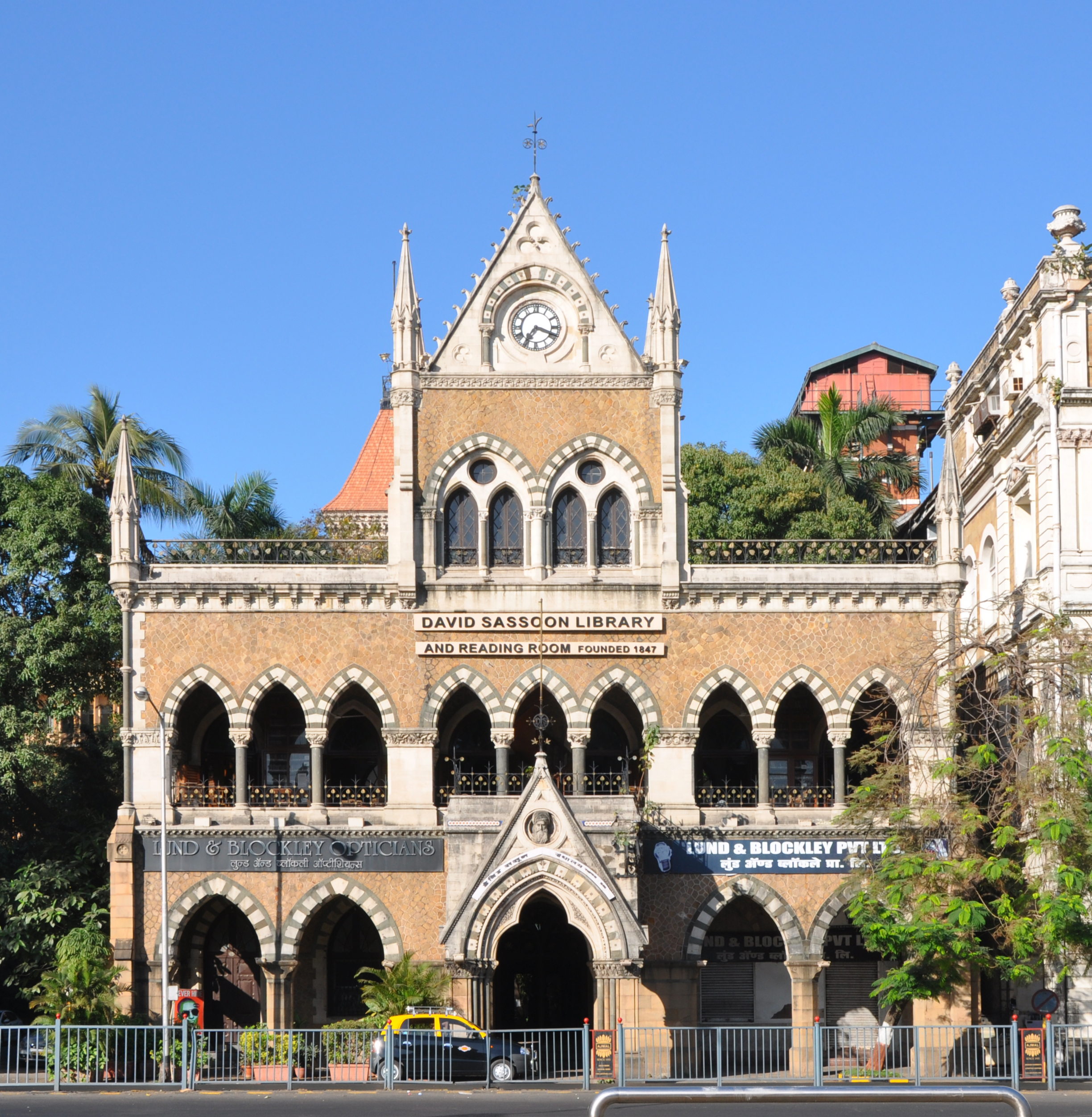
The physical legacy of the Sassoons in Bombay is still visible today. The Sassoon Docks, Sassoon Library, and numerous buildings bearing the family name remain landmarks of the city. The Keneseth Eliyahoo Synagogue in Bombay’s Fort district, built in 1884, is one of the finest examples of colonial-era Jewish religious architecture anywhere in the world, and it continues to serve the small remaining Jewish community of Mumbai.
Cultural Life of Baghdadi Jewish Bombay
The Baghdadi Jewish community of Bombay developed a rich cultural life that reflected its unusual position at the intersection of British colonial modernity, Indian tradition, and Middle Eastern Jewish heritage. Educated in English-language schools and connected to Jewish communities around the world, Bombay’s Baghdadi Jews were among the most cosmopolitan members of the city’s elite. Their homes combined Middle Eastern Jewish ritual objects with Victorian furnishings and Indian crafts; their social life spanned Jewish community institutions, British colonial clubs, and Indian business networks.
The community’s contributions to Bombay’s artistic and entertainment culture were particularly significant. Several of the early stars of Indian cinema were Baghdadi Jewish women from Bombay, and Jewish musicians and composers contributed to the development of the Bombay film industry’s distinctive musical sound. These creative contributions reflected the community’s cultural sophistication and its ability to move fluidly between multiple cultural worlds.
Photo: David Sassoon Library by Joe Ravi, CC BY-SA 3.0, via Wikimedia Commons
Related Reading
Read next on JewsOfIndia.com
- Keneseth Eliyahoo Synagogue, Mumbai
- Magen David Synagogue, Byculla
- Neveh Shalome: Kolkata's first synagogue
Sources
- Baghdadi Jews (Wikipedia, checked 18 Nov 2026, with the sources it cites)
- David Sassoon (treasurer) (Wikipedia, checked 18 Nov 2026, with the sources it cites)
- Knesset Eliyahoo (Wikipedia, checked 18 Nov 2026, with the sources it cites)