
The Baghdadi Jews of India trace their origins to the ancient Jewish communities of Iraq and the broader Middle East, arriving in India in the late eighteenth and early nineteenth centuries as merchants and traders drawn by the commercial opportunities of the expanding British Empire. The subject of “The Jews of Mumbai: Bollywood, Blue Synagogues, and Community Life” opens a window onto a community that combined the deep heritage of Babylonian Jewish tradition with the dynamism and ambition of a diasporic merchant class — creating communities in Calcutta and Bombay that left lasting marks on both cities.
The Sassoon Family and Baghdadi Jewish Bombay
No name is more central to the story of Baghdadi Jewish life in Bombay than Sassoon. David Sassoon arrived in Bombay in 1832 after fleeing political persecution in Baghdad, and within decades had built a commercial empire that would become one of the most influential in Asia. The Sassoon family’s business interests extended from the cotton and opium trades to banking, textiles, and real estate, and their philanthropic legacy in Bombay, London, and the Land of Israel was extraordinary in its scope and generosity.
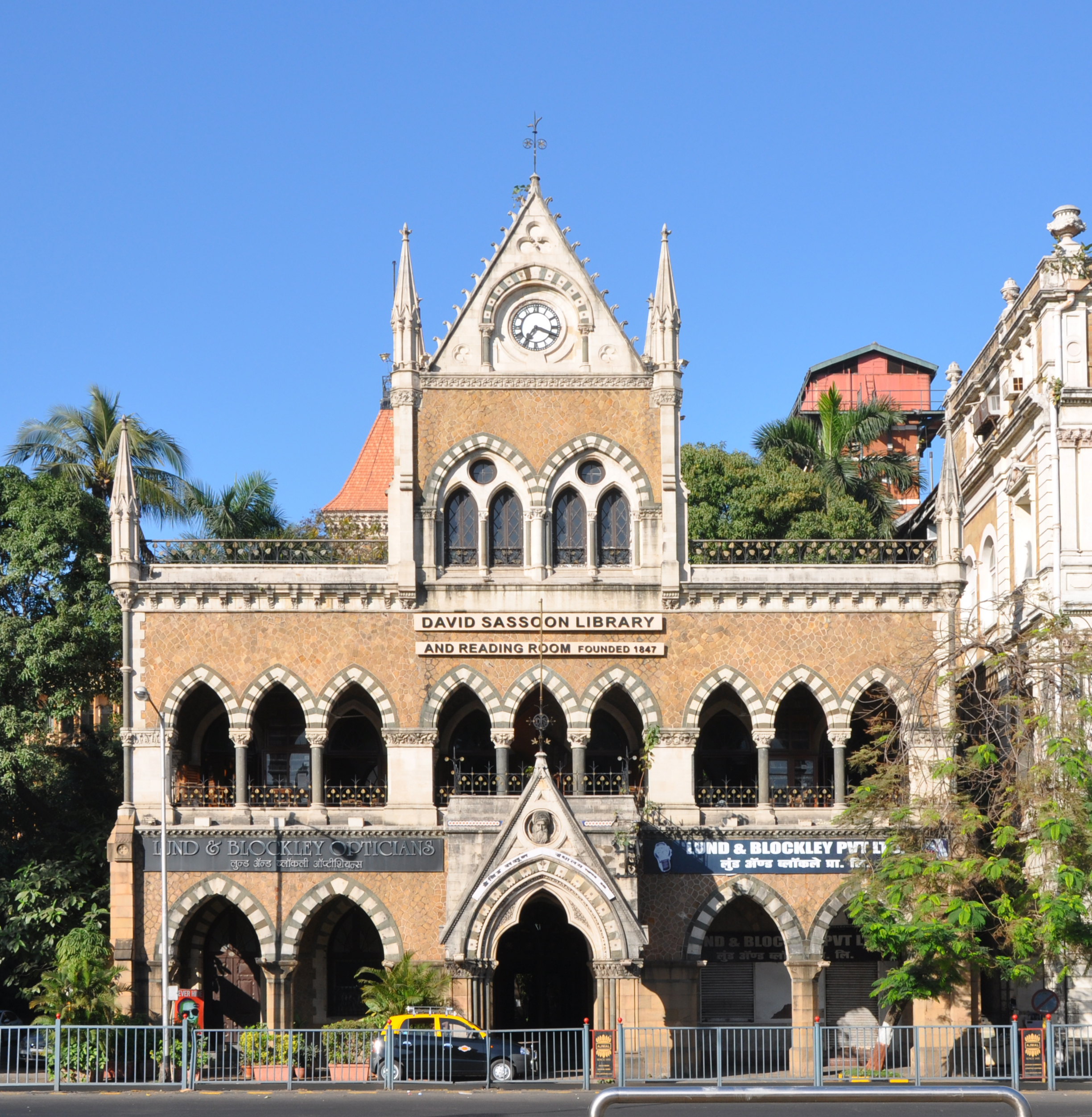
The physical legacy of the Sassoons in Bombay is still visible today. The Sassoon Docks, Sassoon Library, and numerous buildings bearing the family name remain landmarks of the city. The Keneseth Eliyahoo Synagogue in Bombay’s Fort district, built in 1884, is one of the finest examples of colonial-era Jewish religious architecture anywhere in the world, and it continues to serve the small remaining Jewish community of Mumbai.
Cultural Life of Baghdadi Jewish Bombay
The Baghdadi Jewish community of Bombay developed a rich cultural life that reflected its unusual position at the intersection of British colonial modernity, Indian tradition, and Middle Eastern Jewish heritage. Educated in English-language schools and connected to Jewish communities around the world, Bombay’s Baghdadi Jews were among the most cosmopolitan members of the city’s elite. Their homes combined Middle Eastern Jewish ritual objects with Victorian furnishings and Indian crafts; their social life spanned Jewish community institutions, British colonial clubs, and Indian business networks.
The community’s contributions to Bombay’s artistic and entertainment culture were particularly significant. Several of the early stars of Indian cinema were Baghdadi Jewish women from Bombay, and Jewish musicians and composers contributed to the development of the Bombay film industry’s distinctive musical sound. These creative contributions reflected the community’s cultural sophistication and its ability to move fluidly between multiple cultural worlds.
Preserving Indian Jewish Heritage for Future Generations
The task of preserving Indian Jewish heritage is one of the most urgent cultural projects in the contemporary Jewish world. As the communities that created this heritage continue to shrink through emigration and natural attrition, the window for capturing living memories, traditional practices, and community knowledge is narrowing rapidly. Every year, elderly community members pass away, taking with them irreplaceable firsthand knowledge of how Jewish life was actually lived in the Bene Israel villages of Maharashtra, the Jewish neighborhoods of Cochin, or the commercial districts of Calcutta and Bombay where Baghdadi Jewish families built their businesses and synagogues.
The response of scholars, community organizations, and cultural institutions to this challenge has been energetic and multifaceted. Oral history projects have recorded interviews with elderly community members in India, Israel, and the diaspora. Digital archives have made historical photographs, documents, and recordings accessible to researchers and community members around the world. Museum exhibitions have introduced Indian Jewish heritage to audiences who might otherwise never encounter it. And writers, artists, and filmmakers from within and outside the community have created new works that carry Indian Jewish stories and traditions into the contemporary cultural conversation.
The Place of Indian Jews in the Larger Jewish Story
The history of India’s Jewish communities occupies a distinctive and important place in the broader story of the Jewish diaspora. Unlike the often traumatic histories of Jewish communities in Europe and the Middle East — marked by persecution, pogroms, forced conversions, and the Holocaust — the Indian Jewish story is predominantly one of peaceful coexistence, communal autonomy, and cultural creativity within a tolerant host society. This positive experience does not diminish or contradict the difficult experiences of other Jewish communities; it demonstrates that the relationship between Jews and their host societies is shaped by specific historical circumstances rather than by any inevitable dynamic of conflict.
The Indian Jewish communities offer evidence that Jewish identity can be maintained across many centuries of geographic isolation and cultural interchange without requiring either segregation from the surrounding society or assimilation into it. The Bene Israel maintained their Jewish identity across what may be two thousand years of life in Maharashtra while becoming genuinely Indian in language, culture, and social orientation. The Cochin Jews built a thriving community under the protection of local Hindu rulers while maintaining Hebrew literacy and connections to the broader Jewish world. The Baghdadi Jews created cosmopolitan communities in Calcutta and Bombay that participated fully in both the British imperial system and the commercial networks of the Indian Ocean world while maintaining the religious traditions of the ancient Jewish communities of Iraq.