
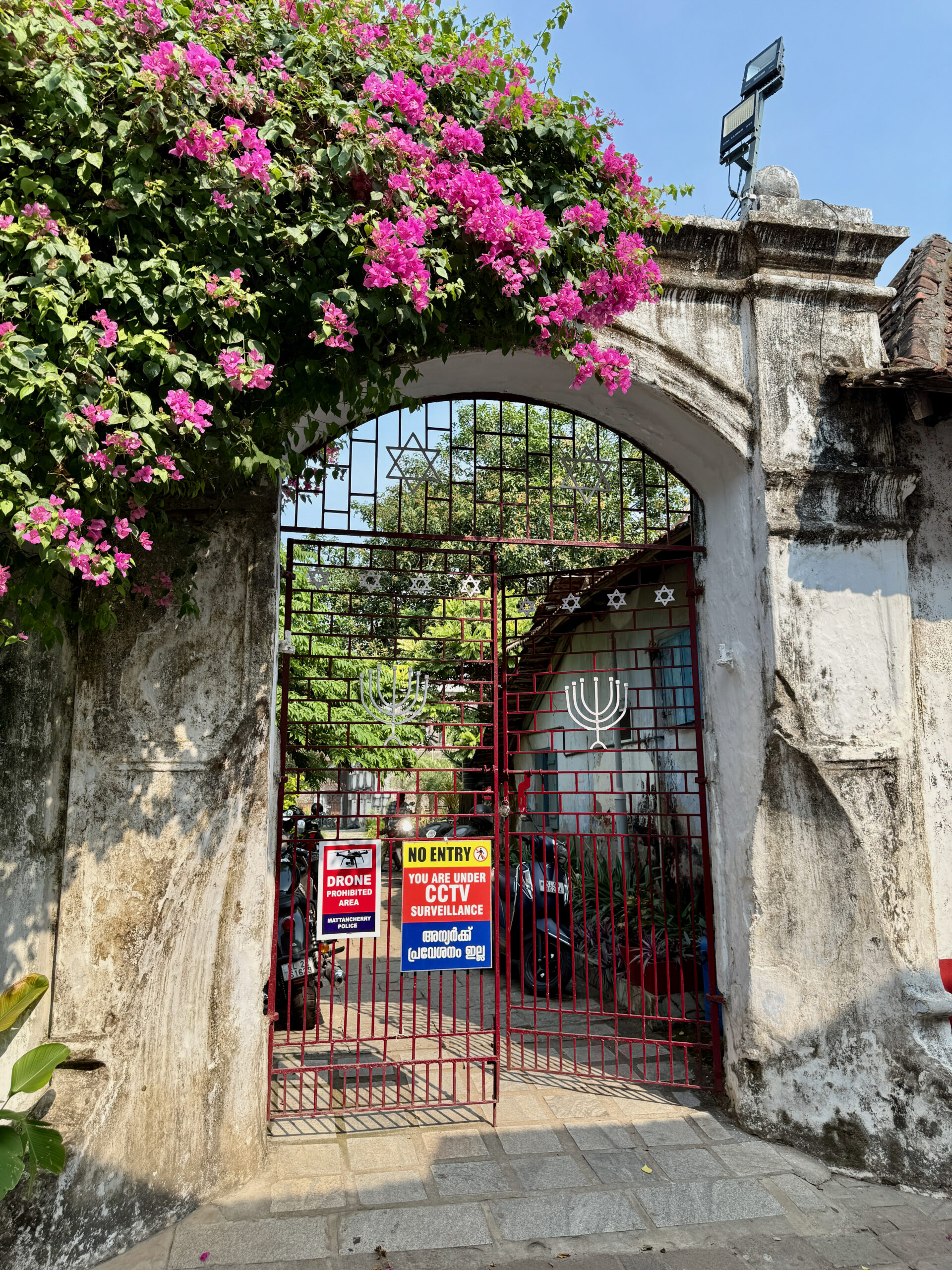
Photo: Paradesi Synagogue, Cochin, built 1568. Dan Lundberg / Wikimedia Commons (CC BY-SA 2.0)
Standing in the heart of the neighborhood still known as Jew Town in Mattancherry, Kochi, the Paradesi Synagogue is one of the most historically significant Jewish sites in the world. Built in 1568 by the Cochin Jewish community, it is widely considered the oldest active synagogue in the Commonwealth of Nations and among the oldest in all of Asia. Its survival over more than four and a half centuries, through Portuguese attacks, Dutch and British colonial rule, and the near-complete emigration of the community that built it, is a story of extraordinary resilience.
Who Built It and Why
The synagogue was built by the “Paradesi” or “White” Jews of Cochin, a subgroup within the Cochin Jewish community that traced its origins to migrants from Spain, Holland, the Middle East, and other parts of the world who arrived in Kerala after the 15th-century expulsions from Iberia and the broader Sephardic diaspora. The term “Paradesi” means “foreigner” in Malayalam, distinguishing these later arrivals from the original Malabari Jews who had been in Kerala for centuries. The Paradesi Jews built their own synagogue next to the Mattancherry Palace (now known as the Dutch Palace), on land granted to them by the Raja of Cochin, Kesava Rama Varma, who maintained warm relations with the Jewish community.
The original building was partially destroyed by the Portuguese in 1662 during an attack on Cochin. It was rebuilt in 1664 after the Dutch captured Kochi from the Portuguese and restored religious freedom to the Jewish community. The synagogue’s famous floor of hand-painted blue and white Chinese porcelain tiles, each tile unique, was added in the 18th century and is one of its most celebrated features.
Inside the Synagogue
The Paradesi Synagogue’s interior is a remarkable combination of Jewish, Indian, and Dutch aesthetic elements. The hand-painted Chinese porcelain tiles on the floor date to the mid-18th century and are believed to have been brought from Canton. The chandeliers are Belgian crystal. The Torah scrolls are among the most precious objects in the building: some are encased in gold and silver cases brought from other parts of the Jewish world, and the synagogue holds some of the oldest Torah scrolls in existence. A set of copper plates granting land rights and special privileges to the Jewish community from the local ruler, believed to date to around the 10th century, are among the most important documents in Indian Jewish history and are kept in the synagogue.
The synagogue also contains a tevah (raised reading platform) in the center of the space, following the Sephardic tradition, and a women’s gallery above. The combination of the Chinese tiles, the Belgian chandeliers, the Indian woodwork, and the strictly Jewish ritual layout of the space captures in miniature the remarkable cultural layering that defines the Cochin Jewish experience.
Today
The Paradesi Synagogue is currently maintained by a handful of elderly community members, as most of the Cochin Jewish community emigrated to Israel in the decades following Israeli independence in 1948. The synagogue is open to visitors and has become one of the most popular tourist attractions in Kochi. It functions as a working synagogue for services when a minyan (quorum of ten Jewish adults) can be assembled, which happens on Jewish holidays when community members and visiting Jewish tourists gather. The Government of India and the Archaeological Survey of India have recognized the synagogue’s historical importance and contribute to its preservation.
Learn more: Paradesi Synagogue – Wikipedia