
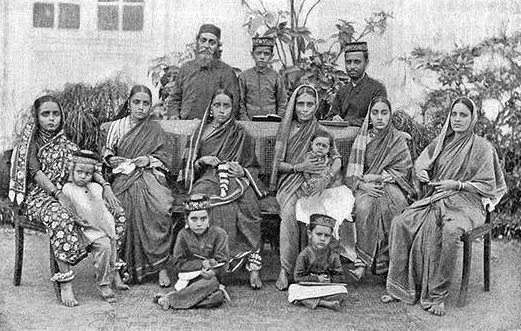
Who Are the Jews of India?, published by University of California Press in 2000, remains the single most comprehensive book-length attempt to describe all three of India’s major Jewish communities, Cochin Jews, Bene Israel, and Baghdadi Jews, within one unified volume. Written by Nathan Katz, the American scholar who did more than perhaps anyone else to establish Indo-Judaic studies as a recognized academic field, the 224-page book was a finalist for the National Jewish Book Award and later won India’s Vak Devi Saraswati Saman Award, recognition on both sides of the specific cultural divide the book set out to bridge.
A Single Volume, Three Communities
Prior to Katz’s book, most English-language scholarship on Indian Jewish communities treated Cochin Jews, Bene Israel, and Baghdadi Jews as separate research subjects, each requiring its own specialized study, since the three communities arrived in India at different times, from different places, and developed largely independent relationships with the Hindu-majority society around them. Who Are the Jews of India? made the case that these three communities deserved sustained comparative treatment within a single volume, not because their histories were similar, they were often strikingly different, but because doing so revealed something genuinely distinctive about India as a host country for Jewish life: across three unrelated communities, arriving centuries apart under entirely different circumstances, none experienced anything resembling the systematic antisemitic violence that shaped Jewish history across so much of Europe and the Middle East.
The Central Argument: An Exceptional Host Country
Katz’s book argues that India represents a genuine outlier in the global history of Jewish diaspora communities specifically because Hindu-majority Indian society never developed the theological or social framework for anti-Jewish persecution that shaped Christian Europe and, at various points, the Islamic world. Because Hinduism does not claim to be the final or exclusive revelation superseding Judaism, unlike Christianity’s supersessionist theology or Islam’s specific historical relationship with Jewish communities under Islamic rule, Indian Jewish communities were spared the theological justification for persecution that recurred elsewhere. Katz situates this argument carefully within broader debates in Jewish historiography about whether antisemitism should be treated as a near-universal feature of Jewish diaspora experience or as a historically contingent phenomenon tied to specific theological and political conditions in particular host societies. By presenting India as a genuine counter-example, three separate communities, three separate migration histories, and not one experience of organized anti-Jewish violence across more than a thousand years of combined history, Katz’s book pushes back against historical narratives that treat persecution as an inevitable feature of Jewish life in the diaspora, suggesting instead that the presence or absence of a specific kind of religious exclusivism in the host society matters more than diaspora status itself. Katz is careful throughout the book not to romanticize this history uncritically; India’s Jewish communities still experienced social stratification, internal communal tension, and eventually near-total demographic collapse through emigration, but the specific mechanism of that decline, voluntary emigration toward Israel and economic opportunity, differs fundamentally from the expulsions, pogroms, and genocide that drove Jewish population decline elsewhere in the world. This comparative ambition reflected Katz’s own scholarly trajectory: having spent years conducting fieldwork specifically among Bene Israel communities and co-authoring an entire earlier volume, The Last Jews of Cochin (1993), focused solely on the Cochin community, Katz used Who Are the Jews of India? to step back and synthesize his accumulated expertise across all three communities into a single argument about India’s Jewish history as a whole, rather than continuing to publish separate, community-specific studies indefinitely.
Covering the Baghdadi Jews in Depth
Unlike some of Katz’s other work, which concentrates more heavily on the Cochin Jews and Bene Israel specifically, Who Are the Jews of India? devotes substantial attention to the Baghdadi Jewish communities of Bombay and Calcutta, tracing their arrival as Ottoman Iraqi merchant migrants beginning in the eighteenth century, their rapid accumulation of trade wealth under figures like David Sassoon, and their construction of a distinct communal identity built around British colonial-era institutions rather than either Hindu caste integration or isolated village practice. This three-way comparative structure, treating Baghdadi Jewish history with the same depth and seriousness as the older, more thoroughly studied Cochin and Bene Israel communities, was relatively unusual for its time and helped establish Baghdadi Jewish history as a legitimate subject of sustained academic study in its own right, rather than a footnote to the other two communities’ longer histories. Katz traces how Baghdadi Jewish communal institutions, synagogues, schools, and charitable foundations, were built specifically around British colonial administrative structures and English-language education, producing a community whose civic and economic life became deeply entangled with the colonial state in ways neither the Cochin Jews nor the Bene Israel experienced, and whose subsequent decline after Indian independence in 1947 and the end of British colonial administration therefore followed a distinctly different trajectory than the other two communities’ more gradual, emigration-driven decline.
Identity as the Book’s Organizing Question
As its title suggests, the book is organized less around a single chronological narrative than around the recurring question of Jewish identity itself: what makes a group of people recognizably Jewish, and does that recognition depend on genealogy, religious practice, communal self-identification, or external validation from other Jewish communities and religious authorities. Katz uses each of the three communities to test this question from a different angle. The Cochin Jews present a case of internally layered identity, with different sub-groups recognized differently by each other and by outside authorities. The Bene Israel present a case of identity preserved through near-total isolation and later validated through formal instruction from outside Jewish teachers. The Baghdadi Jews present a case of identity maintained through recent, well-documented migration and institution-building rather than through either integration or isolation. Read together, the three case studies argue against any single, simple definition of Jewish identity, suggesting instead that the category has always been constructed differently depending on a community’s specific historical circumstances. This structural choice, letting the three communities remain genuinely distinct case studies rather than forcing them into a single unified narrative arc, is part of what distinguishes Katz’s approach from a more conventional single-community ethnography or history. Readers encountering all three communities together are left to draw their own comparative conclusions about what, if anything, unifies “Indian Jewish identity” as a meaningful category, rather than being handed a single tidy definition by the author.
Reception and Legacy
The book’s recognition on both sides of its subject, a National Jewish Book Award finalist nomination in the United States and India’s own Vak Devi Saraswati Saman Award, reflects its unusual success in speaking to two different audiences simultaneously: Jewish studies readers in the West interested in an unfamiliar diaspora community, and Indian readers interested in a genuinely Indian religious minority history rarely covered in mainstream Indian historiography. The book’s publication in 2000 came two years before Katz convened his landmark 2002 Oxford conference on Indo-Judaic studies, and many scholars in the field regard Who Are the Jews of India? as the single-volume synthesis that made the case for Indo-Judaic studies as a coherent field deserving its own dedicated conferences, journals, and scholarly infrastructure, groundwork that the Oxford conference then built into lasting academic institutions. University of California Press’s decision to publish the book through its trade-facing rather than purely academic monograph line also broadened its readership considerably beyond the specialist audience a university press typically reaches for a regional religious history, contributing directly to the book’s crossover recognition in both the American Jewish Book Award process and the Indian cultural award it later received.
Why This Book Still Matters
More than two decades after its publication, Who Are the Jews of India? remains one of the most accessible entry points for readers encountering India’s Jewish history for the first time, precisely because it treats all three communities together rather than requiring readers to seek out three separate specialized studies. As each of the three communities it describes continues to shrink toward a small remnant population in India itself, the book’s comparative framework, and its central argument about India’s exceptional history of Jewish-Hindu relations, remains an essential reference point for understanding what specifically is being lost as India’s once-thriving Jewish communities approach disappearance.
For students and general readers alike, the book functions less as a final, settled account of Indian Jewish history than as an invitation to further inquiry, and indeed much of the scholarship produced since its publication, including Katz’s own later comparative work and the wider body of Indo-Judaic studies research that followed the 2002 Oxford conference, can be read as an extended response to questions the book first posed clearly but did not claim to resolve completely.
Few books manage to open a field while also standing on their own as a satisfying, self-contained read; this is one of them.
Further Reading
For more on the individual communities this book compares, see our coverage of the Baghdadi Jews of Mumbai and Kolkata and the Jews of Cochin, as well as the Wikipedia article on Nathan Katz.