
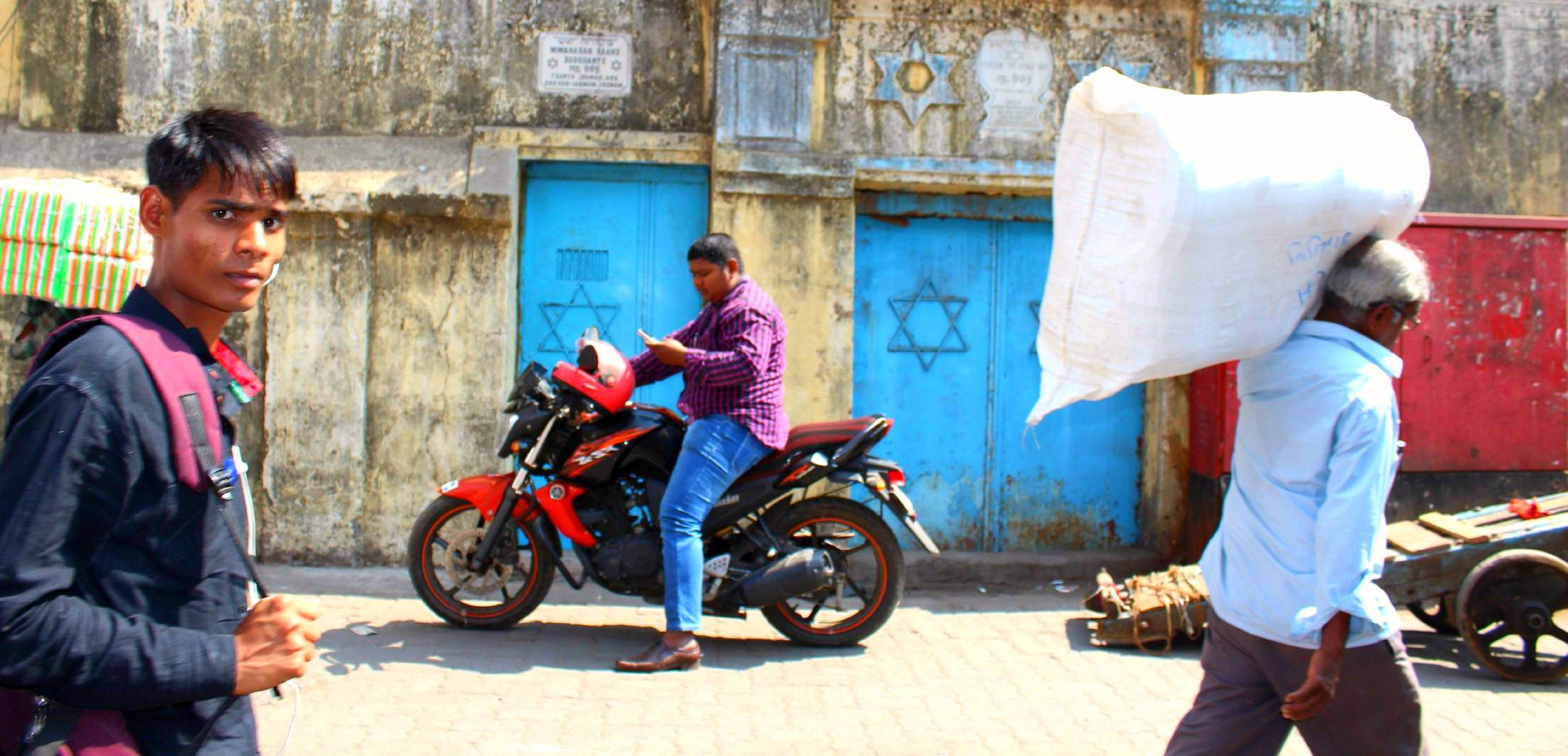
Photo: Bene Israel Jews, historical photo. Wikimedia Commons (CC BY-SA 4.0)
Chicken Chitranee is one of the signature dishes of the Bene Israel community of Maharashtra, and one of the most distinctive preparations in all of Indian Jewish cooking. A rich, deeply spiced curry built on a base of onions, tomatoes, and a complex spice blend, Chitranee is the kind of dish that requires time and patience to get right, but the result is a gravy of extraordinary depth and fragrance. The name itself is believed to be a corruption or Indianization of an older term, and the dish has no direct equivalent in either mainstream Indian cooking or other Jewish culinary traditions.
The foundation of Chitranee is a spice paste or masala made from roasted coriander seeds, cumin, dry red chilies, peppercorns, and a combination of fresh and dried aromatics. Some family recipes call for coconut paste to be added, which gives the gravy a richness that distinguishes it from the drier, more tomato-forward curries common in North Indian cooking. The chicken is typically marinated before cooking, often with turmeric, ginger, and garlic, then browned in oil before being added to the masala.
What makes Chitranee specifically Jewish in character is the care taken to observe kashrut. No dairy is used in the dish, which would prevent it from being served at a meat meal according to Jewish law. The oil used is typically vegetable oil or, in older recipes, sesame oil, which was the cooking fat of choice for the Bene Israel along the Konkan coast long before refined vegetable oils became widely available. The chicken itself would have been slaughtered by a shochet (ritual slaughterer) following Jewish law, though as the community has diminished in India, families increasingly rely on imported kosher chicken or halal chicken in the absence of a local shochet.
Chicken Chitranee is traditionally served at Shabbat dinner and at festive meals. It pairs well with plain rice or with the Bene Israel version of pulao, a mildly spiced rice dish cooked with whole spices and onions. The recipe is one of the most requested dishes at Indian Jewish cultural events worldwide, and it appears in several community cookbooks including those compiled by the Bene Israel Heritage Centre in Israel.
Home cooks making this dish for the first time should allow extra time for developing the masala, as the depth of flavor comes from cooking the spice paste low and slow until the oil separates before adding the chicken. Shortcuts produce a noticeably thinner result. The dish can be made a day ahead and actually improves overnight as the spices continue to develop in the gravy.
Source: Indian Jewish Chicken Chitranee
Related Reading
- The Bene Israel of Maharashtra
- The Jews of Cochin
- Feature Articles on Indian Jewish History
- Interesting Facts About the Jews of India
- The Four Communities of Indian Jews: An Overview
Chicken in the Indian Jewish Kitchen
Chicken has long held a central place in Indian Jewish cooking. In the Bene Israel community of Maharashtra, chicken dishes became the cornerstone of Shabbat and holiday meals. The influence of regional Indian cooking is unmistakable — whole spices like cardamom, cloves, and cinnamon are toasted before being added to the pot, fresh ginger and garlic are ground into pastes, and coconut milk or tamarind may be introduced for depth and brightness. These are genuinely Indian dishes refined within Jewish households over centuries of culinary tradition.
What distinguishes Bene Israel chicken preparations is the careful attention to both flavor and kashrut. Kosher slaughter requirements were maintained throughout, and the spicing of the dish follows local Indian traditions rather than any pan-Jewish template. The result is food that is deeply embedded in a specific place and community — food that could only have emerged from centuries of Jewish life on the Indian subcontinent.
Preserving the Recipe, Preserving the Culture
The documentation of Indian Jewish recipes has become an urgent priority as the communities that created them continue to shrink. In 1948, before the establishment of the State of Israel, there were an estimated 30,000 Jews living in India. Today, fewer than 5,000 remain, most of them elderly. The younger generations have largely emigrated to Israel, where they maintain some connection to their Indian heritage while integrating into Israeli society.
Cookbooks, food blogs, and community archives have played a crucial role in preserving these recipes. Works like “Bene Appetit: The Cuisine of Indian Jews” and various community-produced recipe collections represent efforts by Indian Jewish families to document their culinary traditions before they are lost. Food writers and ethnographers have also contributed by interviewing elderly community members and recording not just the recipes but the stories and memories surrounding them.
For the Indian Jewish diaspora, cooking these dishes is an act of cultural maintenance — a way of honoring ancestors and transmitting identity to children who may have grown up in Tel Aviv, New York, or London, far from Mumbai, Cochin, or Kolkata where their grandparents lived. The food becomes a bridge between generations and across geographies, carrying the taste of a world that is gradually disappearing but whose flavors refuse to be forgotten.