
Understanding the Indian Jewish Experience in Historical Context
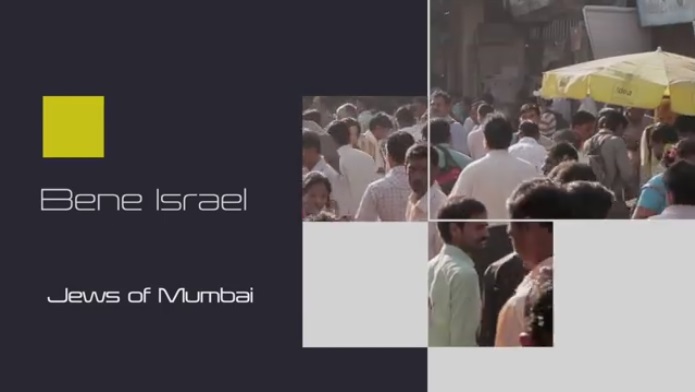
The story of India’s Jewish communities cannot be properly understood without appreciating the specific historical circumstances that shaped it. Judaism arrived in India through multiple routes over many centuries, creating communities that were diverse in their origins, their practices, and their social positions but united by their adherence to Jewish tradition and their identification with the Jewish people. The Bene Israel of Maharashtra, possibly descended from Jewish settlers who arrived before the Common Era; the Cochin Jews of Kerala, present for at least two thousand years under the protection of Hindu rulers; and the Baghdadi Jews of Calcutta and Bombay, arriving in the late eighteenth century from Iraq and the broader Middle East — each community had its own distinct history but shared the experience of being Jewish in India.
What makes the Indian Jewish story distinctive in the broader context of Jewish history is the nature of the host society in which these communities developed. India under Hindu rule provided a social environment quite unlike the Christian Europe or Muslim Middle East where most Jewish communities spent the Common Era. The absence of organized anti-Jewish persecution, the recognition of Jews as a legitimate minority community with rights to self-governance in religious matters, and the broadly tolerant character of Hindu social philosophy all contributed to a Jewish experience in India that was, by the standards of most Jewish diasporic history, remarkably peaceful.
India and Israel: A Special Bond
The relationship between India and Israel, shaped in significant part by the connections created by the Indian Jewish communities, is one of the most important bilateral relationships in the contemporary geopolitical landscape. India and Israel established full diplomatic relations in 1992, ending decades of Indian support for Palestinian causes that had prevented formal recognition of Israel. Since then, the relationship has grown rapidly, encompassing defense cooperation, technology transfer, agricultural development, and deepening people-to-people connections driven by the large Indian Jewish community in Israel and the growing Indian presence in Israel’s technology sector.
The Indian Jewish communities of Israel serve as a human bridge between the two countries. Their presence in Israel keeps alive the memory and the reality of Jewish life in India, while their connections to family and community in India maintain personal ties that give meaning to the diplomatic relationship. For both countries, the Indian Jewish story is evidence that the relationship between Indian and Jewish civilization has deep roots that long predate the modern political relationship — roots that make the contemporary friendship between the two countries feel like the fulfillment of an ancient connection rather than a new arrangement.
Related Reading
- The Four Communities of Indian Jews: An Overview
- The Bene Israel of Maharashtra
- The Jews of Cochin
- The Baghdadi Jews of Mumbai and Kolkata
- Books on the Jews of India
The Jewish New Year, Rosh Hashanah, is celebrated by Jewish communities around the world with prayers, family gatherings, and symbolic foods that represent hopes for a sweet and fruitful year ahead. In Mumbai, where the Bene Israel community has maintained its presence for over two thousand years, the New Year celebration combines the universal elements of the Jewish holiday with specifically Indian Jewish culinary and cultural traditions that make it unlike any other Rosh Hashanah celebration in the world.
The Bene Israel New Year Table
The Bene Israel New Year feast blends Jewish symbolic foods with Indian spices and cooking techniques in a way that has developed over centuries. The traditional simanim, the symbolic foods whose names or appearance represent blessings for the New Year, appear on the Bene Israel table in Indian form. Pomegranate seeds, representing the hope that one’s merits will be as numerous as the seeds of the pomegranate, might be served in a preparation flavored with cardamom and rose water. Fish, representing the hope that one will multiply like fish, might be prepared with a coconut curry sauce that reflects the flavors of Maharashtra.
Apples dipped in honey, the most universally recognized symbol of the Jewish New Year, appear on Bene Israel tables alongside Indian sweets that serve similar symbolic functions. The honey used might be a local Indian honey with a different flavor profile than the European honey most commonly associated with the tradition. The result is a table that is simultaneously recognizably Jewish and deeply Indian, a physical expression of the community’s two-thousand-year identity at the intersection of two civilizations.
Prayer and Community
The Rosh Hashanah services in Mumbai’s remaining synagogues draw together the small but determined community that continues to celebrate the holiday in the city where their ancestors have prayed for generations. The liturgy is familiar, drawn from the same prayer book used by Jewish communities around the world, but the melodies in which it is sung carry the distinctive character of the Bene Israel musical tradition, shaped by Maharashtra’s musical culture and preserved through generations of community practice.
For the small congregation that gathers in Mumbai’s synagogues for Rosh Hashanah, the holiday carries an additional layer of meaning: it is a demonstration that Jewish life continues in India even as the community has contracted dramatically from its peak. Each year’s celebration is an act of cultural persistence, a refusal to allow this specific form of Jewish life to end without a fight.
New Year in the Diaspora
For the much larger population of Bene Israel who now celebrate Rosh Hashanah in Israel, Canada, Australia, and elsewhere, the holiday often serves as an occasion to reclaim specifically Indian Jewish culinary traditions. The mother’s or grandmother’s recipe for New Year chicken curry, the family tradition of preparing malida as a thanksgiving offering, the specific holiday prayers learned in childhood in an Indian synagogue: these memories surface with particular force at New Year, making the holiday both a celebration of the present and a reconnection with a past that grows more distant with each passing year.