A Life Across Shores: The Indian Jewish Diaspora Experience

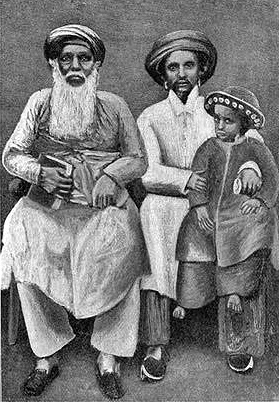
Historical photograph of Bene Israel Jews of India in traditional costume

Documentary films and other visual media have become increasingly important tools for preserving and sharing the history of India’s Jewish communities. The work “A Life Across Shores: The Indian Jewish Diaspora Experience” represents part of a growing body of film and video documentation that captures the faces, voices, places, and memories of communities that are rapidly diminishing in India itself. These visual records serve as bridges across time, ensuring that future generations — including the grandchildren and great-grandchildren of Indian Jews who will grow up far from the places their ancestors called home — will have access to living testimony about their heritage.

Indian Jews in the Global Diaspora Story

The Jewish communities of India are part of the broader story of Jewish diaspora — the centuries-long dispersal of the Jewish people across the globe that is one of the defining experiences of Jewish history. But the Indian Jewish diaspora has distinctive characteristics that set it apart from the better-known diasporas of Europe and the Middle East. It was, in most cases, a voluntary diaspora driven by commercial opportunity rather than persecution; it maintained unusually peaceful relations with the host society; and it eventually joined the great twentieth-century movement of return to the Land of Israel while simultaneously dispersing further into Western countries. Documentary and scholarly work that situates the Indian Jewish communities within the broader history of Jewish diaspora illuminates this distinctive character. The trade networks that connected Indian Jews to other Jewish communities across the Indian Ocean world — linking Cochin, Bombay, and Calcutta to communities in Aden, Basra, Baghdad, and beyond — were part of a system of global Jewish commercial connection that maintained community relationships across vast distances.

The Diamond Trade and Jewish Migration

The diamond trade offers one of the most vivid illustrations of the global networks that connected Indian Jews to the wider Jewish world. Jewish traders played important roles in the global diamond trade from the medieval period onward, and the networks they created connected Jewish communities in India, the Middle East, the Netherlands, England, and South Africa. The movement of Jewish merchants along these trade routes contributed to both commercial exchange and cultural transmission, as traders carried not only diamonds but news, letters, religious texts, and cultural influences between the communities they connected. Documentaries that explore the role of Indian Jews in global trade networks reveal the cosmopolitan character of these communities and their connections to the wider Jewish world. Far from being isolated outposts of Judaism in a remote part of the world, the Jewish communities of India were nodes in a global network of Jewish commerce, communication, and cultural exchange that operated across oceans and continents for centuries.

Preserving Indian Jewish Heritage for Future Generations

The task of preserving Indian Jewish heritage is one of the most urgent cultural projects in the contemporary Jewish world. As the communities that created this heritage continue to shrink through emigration and natural attrition, the window for capturing living memories, traditional practices, and community knowledge is narrowing rapidly. Every year, elderly community members pass away, taking with them irreplaceable firsthand knowledge of how Jewish life was actually lived in the Bene Israel villages of Maharashtra, the Jewish neighborhoods of Cochin, or the commercial districts of Calcutta and Bombay where Baghdadi Jewish families built their businesses and synagogues. The response of scholars, community organizations, and cultural institutions to this challenge has been energetic and multifaceted. Oral history projects have recorded interviews with elderly community members in India, Israel, and the diaspora. Digital archives have made historical photographs, documents, and recordings accessible to researchers and community members around the world. Museum exhibitions have introduced Indian Jewish heritage to audiences who might otherwise never encounter it. And writers, artists, and filmmakers from within and outside the community have created new works that carry Indian Jewish stories and traditions into the contemporary cultural conversation.

The Place of Indian Jews in the Larger Jewish Story

The history of India’s Jewish communities occupies a distinctive and important place in the broader story of the Jewish diaspora. Unlike the often traumatic histories of Jewish communities in Europe and the Middle East — marked by persecution, pogroms, forced conversions, and the Holocaust — the Indian Jewish story is predominantly one of peaceful coexistence, communal autonomy, and cultural creativity within a tolerant host society. This positive experience does not diminish or contradict the difficult experiences of other Jewish communities; it demonstrates that the relationship between Jews and their host societies is shaped by specific historical circumstances rather than by any inevitable dynamic of conflict. The Indian Jewish communities offer evidence that Jewish identity can be maintained across many centuries of geographic isolation and cultural interchange without requiring either segregation from the surrounding society or assimilation into it. The Bene Israel maintained their Jewish identity across what may be two thousand years of life in Maharashtra while becoming genuinely Indian in language, culture, and social orientation. The Cochin Jews built a thriving community under the protection of local Hindu rulers while maintaining Hebrew literacy and connections to the broader Jewish world. The Baghdadi Jews created cosmopolitan communities in Calcutta and Bombay that participated fully in both the British imperial system and the commercial networks of the Indian Ocean world while maintaining the religious traditions of the ancient Jewish communities of Iraq.

Related Reading