
Understanding the Indian Jewish Experience in Historical Context
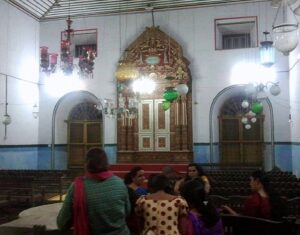
The story of India’s Jewish communities cannot be properly understood without appreciating the specific historical circumstances that shaped it. Judaism arrived in India through multiple routes over many centuries, creating communities that were diverse in their origins, their practices, and their social positions but united by their adherence to Jewish tradition and their identification with the Jewish people. The Bene Israel of Maharashtra, possibly descended from Jewish settlers who arrived before the Common Era; the Cochin Jews of Kerala, present for at least two thousand years under the protection of Hindu rulers; and the Baghdadi Jews of Calcutta and Bombay, arriving in the late eighteenth century from Iraq and the broader Middle East — each community had its own distinct history but shared the experience of being Jewish in India.
What makes the Indian Jewish story distinctive in the broader context of Jewish history is the nature of the host society in which these communities developed. India under Hindu rule provided a social environment quite unlike the Christian Europe or Muslim Middle East where most Jewish communities spent the Common Era. The absence of organized anti-Jewish persecution, the recognition of Jews as a legitimate minority community with rights to self-governance in religious matters, and the broadly tolerant character of Hindu social philosophy all contributed to a Jewish experience in India that was, by the standards of most Jewish diasporic history, remarkably peaceful.
India and Israel: A Special Bond
The relationship between India and Israel, shaped in significant part by the connections created by the Indian Jewish communities, is one of the most important bilateral relationships in the contemporary geopolitical landscape. India and Israel established full diplomatic relations in 1992, ending decades of Indian support for Palestinian causes that had prevented formal recognition of Israel. Since then, the relationship has grown rapidly, encompassing defense cooperation, technology transfer, agricultural development, and deepening people-to-people connections driven by the large Indian Jewish community in Israel and the growing Indian presence in Israel’s technology sector.
The Indian Jewish communities of Israel serve as a human bridge between the two countries. Their presence in Israel keeps alive the memory and the reality of Jewish life in India, while their connections to family and community in India maintain personal ties that give meaning to the diplomatic relationship. For both countries, the Indian Jewish story is evidence that the relationship between Indian and Jewish civilization has deep roots that long predate the modern political relationship — roots that make the contemporary friendship between the two countries feel like the fulfillment of an ancient connection rather than a new arrangement.
Related Reading
- The Four Communities of Indian Jews: An Overview
- The Bene Israel of Maharashtra
- The Jews of Cochin
- The Baghdadi Jews of Mumbai and Kolkata
- Books on the Jews of India
Hanukkah, the eight-day Jewish festival of lights, is celebrated by Jewish communities around the world as a commemoration of the Maccabean victory over the Seleucid Empire and the miracle of oil that lasted eight days in the rededicated Temple in Jerusalem. For the Bnei Menashe communities in Manipur and Mizoram, Hanukkah is among the most visible and joyful of the Jewish holidays they observe, and the annual celebration of the festival provides both a religious occasion and a community-building event that strengthens the bonds among families spread across the hills of northeastern India.
Hanukkah in the Hills of Manipur
The celebration of Hanukkah in Manipur and Mizoram is notable for the seriousness and enthusiasm with which communities observe it. Menorahs, the nine-branched candelabras used for the holiday, are lit each evening in community synagogues and in homes across the region. The Hebrew prayers recited over the candles, the same prayers used by Jewish communities everywhere, are learned from Hebrew study books and from the recordings and materials provided by Shavei Israel and other organizations that support the community’s Jewish practice.
The foods traditionally associated with Hanukkah in Ashkenazi communities, latkes made from potato and sufganiyot, oil-fried doughnuts, reflect the central miracle of Hanukkah, the burning of oil. The Bnei Menashe communities celebrate the holiday with their own food traditions, using local ingredients to prepare fried dishes that honor the same symbolic association with oil and light. The result is a Hanukkah celebration that is recognizably Jewish in its essential structure while being adapted to the specific culinary resources of northeastern India.
Games and Celebration
The dreidel, the spinning top used in traditional Hanukkah games, is one of the most beloved physical symbols of the holiday for Jewish children worldwide. In Bnei Menashe communities, the game of dreidel has been adopted as part of the Hanukkah celebration, with community members learning its rules and the meaning of the Hebrew letters on its four sides from educational materials distributed through their Jewish organizations. The game, played for small prizes of coins or candy, brings children and adults together in a spirit of playfulness that provides relief from the more solemn aspects of Jewish religious observance.
Community gatherings for Hanukkah in Bnei Menashe villages have the character of both religious celebration and social festival. Families who live in different villages may travel to attend the communal menorah lighting and celebration, and the occasion often includes music, singing of Hanukkah songs in Hebrew, and shared meals that strengthen community bonds. The Hanukkah celebration is therefore not just a religious observance but a social institution that serves the community’s need for collective expression and shared identity.
Connection to the Wider Jewish World
Through their Hanukkah observances, the Bnei Menashe communities in India connect themselves to the global Jewish world in a tangible way. The same prayers, the same candles, the same songs that are part of Hanukkah celebrations in Jerusalem, New York, and London are part of the Hanukkah celebration in Manipur. This shared practice is itself a form of belonging, a demonstration that the Bnei Menashe are part of the same Jewish civilization as communities everywhere, separated by geography and history but connected by the common thread of Jewish tradition.