
Understanding the Indian Jewish Experience in Historical Context
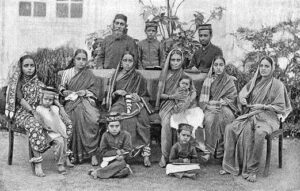
The story of India’s Jewish communities cannot be properly understood without appreciating the specific historical circumstances that shaped it. Judaism arrived in India through multiple routes over many centuries, creating communities that were diverse in their origins, their practices, and their social positions but united by their adherence to Jewish tradition and their identification with the Jewish people. The Bene Israel of Maharashtra, possibly descended from Jewish settlers who arrived before the Common Era; the Cochin Jews of Kerala, present for at least two thousand years under the protection of Hindu rulers; and the Baghdadi Jews of Calcutta and Bombay, arriving in the late eighteenth century from Iraq and the broader Middle East — each community had its own distinct history but shared the experience of being Jewish in India.
What makes the Indian Jewish story distinctive in the broader context of Jewish history is the nature of the host society in which these communities developed. India under Hindu rule provided a social environment quite unlike the Christian Europe or Muslim Middle East where most Jewish communities spent the Common Era. The absence of organized anti-Jewish persecution, the recognition of Jews as a legitimate minority community with rights to self-governance in religious matters, and the broadly tolerant character of Hindu social philosophy all contributed to a Jewish experience in India that was, by the standards of most Jewish diasporic history, remarkably peaceful.
India and Israel: A Special Bond
The relationship between India and Israel, shaped in significant part by the connections created by the Indian Jewish communities, is one of the most important bilateral relationships in the contemporary geopolitical landscape. India and Israel established full diplomatic relations in 1992, ending decades of Indian support for Palestinian causes that had prevented formal recognition of Israel. Since then, the relationship has grown rapidly, encompassing defense cooperation, technology transfer, agricultural development, and deepening people-to-people connections driven by the large Indian Jewish community in Israel and the growing Indian presence in Israel’s technology sector.
The Indian Jewish communities of Israel serve as a human bridge between the two countries. Their presence in Israel keeps alive the memory and the reality of Jewish life in India, while their connections to family and community in India maintain personal ties that give meaning to the diplomatic relationship. For both countries, the Indian Jewish story is evidence that the relationship between Indian and Jewish civilization has deep roots that long predate the modern political relationship — roots that make the contemporary friendship between the two countries feel like the fulfillment of an ancient connection rather than a new arrangement.
Related Reading
- The Four Communities of Indian Jews: An Overview
- The Bene Israel of Maharashtra
- The Jews of Cochin
- The Baghdadi Jews of Mumbai and Kolkata
- Books on the Jews of India
The story of the Bnei Menashe is in many ways a story about seeking: seeking recognition, seeking connection, seeking belonging in a Jewish world that has not always known they existed. The community of approximately seventy thousand people in the Indian states of Manipur and Mizoram who claim descent from the Lost Tribe of Manasseh have spent decades navigating the complex terrain of Jewish identity, halakhic law, and Israeli immigration policy in pursuit of a place in the Jewish state that they believe is their ancestral homeland.
The Long Road to Recognition
The Bnei Menashe’s claim to Israelite identity was for many years viewed with skepticism by both the Israeli rabbinate and the Israeli government. The community’s geographic location in the hills of northeastern India, their Mongoloid physical features, and their lack of documentation connecting them to any known Jewish community all made their claim difficult to evaluate through conventional methods. The oral traditions that formed the foundation of their claim, while internally consistent and emotionally compelling, could not be verified through historical scholarship in the way that the copper plate grants of the Cochin Jews could be verified.
The breakthrough came in 2005 when Sephardi Chief Rabbi Shlomo Amar issued a formal ruling recognizing the Bnei Menashe as descendants of Israel and authorizing their immigration to Israel following halakhic conversion. This ruling did not resolve all debates about the community’s origins, but it provided the necessary religious sanction for the organized aliyah process that Shavei Israel and other organizations had been advocating.
The Immigration Process
The process by which Bnei Menashe community members immigrate to Israel is carefully regulated and involves multiple stages. Candidates for aliyah must first undergo extensive Jewish education within the community in India, demonstrating knowledge of Jewish law, Hebrew language, and the practices that will be expected of them as members of the Israeli Jewish community. This education is supervised by rabbinically trained community leaders and by representatives of Shavei Israel who make regular visits to the communities in Manipur and Mizoram.
The formal conversion process, conducted by an authorized rabbinical court, represents the final religious threshold before immigration. The rabbinical court examines each candidate’s Jewish knowledge and sincere intent to live as a Jew, and if satisfied, officiates at the conversion ceremony. Only after conversion can the candidate apply for immigration to Israel under the Law of Return as a person who has converted to Judaism.
Life in Israel
The Bnei Menashe who have successfully made aliyah have settled in communities across Israel, with concentrations in development towns, West Bank communities, and major cities. Their integration into Israeli life has been neither smooth nor troubled in any uniform way but has varied significantly depending on the specific community where they settled, the economic opportunities available, and the individual family’s resources and adaptability. Some Bnei Menashe immigrants have achieved notable success in Israeli society; others have found the transition more challenging. Together they represent one of the most remarkable immigration stories in Israeli history.