
Jews of India: A Community Unlike Any Other
India holds a remarkable distinction in the history of the Jewish diaspora. It is widely regarded as one of the only countries in the world where Jewish communities lived for centuries without facing antisemitism from the local population. Judaism arrived in India long before Christianity or Islam, and the Jewish communities that took root here developed their own distinct identities that blended Jewish tradition with Indian culture.
The Cochin Jews of Kerala
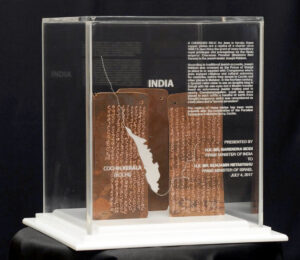
The earliest Jewish settlers in India are believed to have arrived in Kerala following the Babylonian conquest of Jerusalem and the destruction of the First Temple around 597 BCE. These communities, known as Cochin Jews, settled along the Kerala coast and established synagogues and trading colonies. Over the centuries they became deeply embedded in local life while maintaining their Jewish observances and traditions. The Paradesi Synagogue in Kochi’s Jew Town, built in 1568, stands as one of the oldest active synagogues in the Commonwealth and remains a testament to this community’s deep roots in India.
The Bene Israel of Maharashtra
According to their own tradition, the Bene Israel arrived in India after a shipwreck stranded seven Jewish families on the Konkan coast near present-day Alibag, south of Mumbai. Over generations they multiplied, integrated with the local Maharashtrian community, and adopted local language, dress, and food customs. The local population gave them the nickname Shaniwar Teli, meaning “Saturday oil-pressers,” because they refused to work on the Sabbath. Despite centuries of cultural integration, the Bene Israel retained core Jewish practices including circumcision, Sabbath observance, and dietary laws.
The Baghdadi Jews of Mumbai and Kolkata
The Baghdadi Jews arrived in India approximately 250 years ago, emigrating from Iraq, Iran, Afghanistan, Syria, and Yemen. They settled primarily in Mumbai and later expanded to Kolkata. These communities established major commercial enterprises and contributed significantly to the development of both cities. Prominent Baghdadi Jewish families like the Sassoons helped transform Mumbai into a major commercial hub, funding hospitals, schools, and public buildings that still stand today.
A Legacy of Tolerance and Coexistence
What makes the Jews of India particularly remarkable is the harmony in which they lived alongside their Hindu, Muslim, and Christian neighbors. Unlike their counterparts in Europe, Indian Jews were never subjected to pogroms, forced conversions, or systematic persecution. They participated freely in Indian civic and commercial life, rose to positions of prominence, and contributed to the cultural fabric of the regions they called home.
Today the majority of India’s Jewish population has emigrated to Israel, leaving behind a small but dedicated community working to preserve their unique heritage. The synagogues, cemeteries, and cultural traditions they left behind across India’s major cities remain an important part of both Indian and Jewish world heritage.
Source: Jews of India
Understanding the Indian Jewish Experience in Historical Context
The story of India’s Jewish communities cannot be properly understood without appreciating the specific historical circumstances that shaped it. Judaism arrived in India through multiple routes over many centuries, creating communities that were diverse in their origins, their practices, and their social positions but united by their adherence to Jewish tradition and their identification with the Jewish people. The Bene Israel of Maharashtra, possibly descended from Jewish settlers who arrived before the Common Era; the Cochin Jews of Kerala, present for at least two thousand years under the protection of Hindu rulers; and the Baghdadi Jews of Calcutta and Bombay, arriving in the late eighteenth century from Iraq and the broader Middle East — each community had its own distinct history but shared the experience of being Jewish in India.
What makes the Indian Jewish story distinctive in the broader context of Jewish history is the nature of the host society in which these communities developed. India under Hindu rule provided a social environment quite unlike the Christian Europe or Muslim Middle East where most Jewish communities spent the Common Era. The absence of organized anti-Jewish persecution, the recognition of Jews as a legitimate minority community with rights to self-governance in religious matters, and the broadly tolerant character of Hindu social philosophy all contributed to a Jewish experience in India that was, by the standards of most Jewish diasporic history, remarkably peaceful.
India and Israel: A Special Bond
The relationship between India and Israel, shaped in significant part by the connections created by the Indian Jewish communities, is one of the most important bilateral relationships in the contemporary geopolitical landscape. India and Israel established full diplomatic relations in 1992, ending decades of Indian support for Palestinian causes that had prevented formal recognition of Israel. Since then, the relationship has grown rapidly, encompassing defense cooperation, technology transfer, agricultural development, and deepening people-to-people connections driven by the large Indian Jewish community in Israel and the growing Indian presence in Israel’s technology sector.
The Indian Jewish communities of Israel serve as a human bridge between the two countries. Their presence in Israel keeps alive the memory and the reality of Jewish life in India, while their connections to family and community in India maintain personal ties that give meaning to the diplomatic relationship. For both countries, the Indian Jewish story is evidence that the relationship between Indian and Jewish civilization has deep roots that long predate the modern political relationship — roots that make the contemporary friendship between the two countries feel like the fulfillment of an ancient connection rather than a new arrangement.