
In 1971, the London-based publisher Schocken Books issued The Bene Israel of Bombay, a short but influential ethnographic study by the anthropologist Schifra Strizower. The book remains one of the earliest sustained academic attempts to describe, in the language of social anthropology rather than communal memory or religious apologetics, how the Bene Israel of the Konkan coast and Bombay had organized their social and religious life prior to the mass emigration that would soon transform the community.
Who Were the Bene Israel, and Why Study Them?
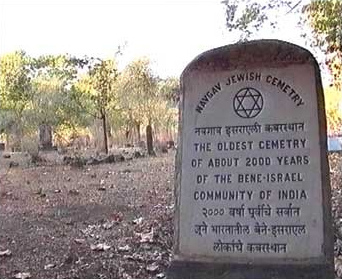
The Bene Israel are a community of Jews native to India, historically concentrated in villages of the Konkan coast south of Bombay before relocating in large numbers to the city itself from the late eighteenth century onward. According to communal tradition, their ancestors were fourteen survivors – seven men and seven women – of a shipwreck near the village of Navagaon, refugees from the persecution of Antiochus Epiphanes in ancient Judea. For generations, the community made its living pressing oil and abstained from work on the Sabbath, which earned them the local name “Shanivar Teli,” or Saturday oil-pressers, among their Hindu and Muslim neighbors. Genetic studies conducted decades after Strizower’s fieldwork would later support a Middle Eastern origin for at least part of the community’s ancestry, but in 1971 that scientific confirmation still lay decades in the future, and Strizower’s study instead relied on direct observation and interview.
By the time Strizower conducted her research, the community had already begun the demographic transformation that would define its twentieth-century history. India’s Bene Israel population, estimated at roughly 20,000 around 1951, had fallen to about 16,000 by 1961 and would drop further still, as emigration to the newly founded State of Israel accelerated following Indian and Israeli independence in 1947 and 1948. Strizower’s book therefore captured a community already in the midst of a historic contraction, describing customs and social structures that were, even as she wrote, becoming a matter of living memory rather than daily practice for a shrinking population.
The Anthropological Approach
What distinguished Strizower’s work from the communal histories and religious guides that had previously been written about the Bene Israel was its explicitly social-scientific method. Rather than centering religious law or a chronological narrative of communal origins, Strizower examined kinship structures, occupational patterns, relations with surrounding Hindu and Muslim populations, and the internal social organization of Bene Israel communities in Bombay and the Konkan villages from which many families had migrated. This approach placed the Bene Israel within the broader comparative literature of Jewish diaspora communities being studied by anthropologists in the mid-twentieth century, a period when scholars increasingly treated small, geographically isolated Jewish populations – from the Jews of Kaifeng to the Jews of Ethiopia – as legitimate subjects for rigorous field-based social science rather than as curiosities to be catalogued in travelers’ accounts.
Strizower had already worked on comparative Jewish communities before turning to the Bene Israel; the same year saw the publication of her related book The Children of Israel, which situated the Bene Israel alongside other dispersed Jewish groups whose Jewish identity had been questioned or scrutinized by outside authorities. Read together, her two 1971 books reflect a scholarly moment when the boundaries of who counted as authentically Jewish, and by what criteria, were being actively renegotiated – a question of direct and painful relevance to the Bene Israel, whose religious status was formally debated within Orthodox rabbinic circles in Israel during the 1960s before the Israeli Chief Rabbinate ultimately affirmed their Jewish status, albeit with continuing requirements for verification of personal status in some cases.
Social Structure and Internal Divisions
A central concern of Strizower’s ethnography was the internal social stratification of the Bene Israel community itself. Like several other Jewish communities that developed for centuries in close proximity to Indian caste society, the Bene Israel had developed their own internal status distinctions, and Strizower’s fieldwork documented how these distinctions shaped marriage patterns, synagogue seating, and social interaction well into the twentieth century. Her account paid particular attention to how urbanization and migration to Bombay had begun to erode these older village-based distinctions, replacing them gradually with new forms of status organized around education, English-language fluency, and employment in the professions, the civil service, and the British Indian Army – all avenues through which Bene Israel families had achieved considerable social mobility from the nineteenth century onward.
Strizower also documented the Bene Israel’s religious practice as it stood at mid-century: a Judaism that had been substantially reshaped by contact with Baghdadi Jewish immigrants and visiting Cochin Jewish teachers from the eighteenth century onward, who introduced normative Sephardi liturgy and ritual to a community that had preserved a much older, more isolated set of practices centered on Sabbath observance, dietary restriction, and the Shema prayer, with limited access to rabbinic literature or organized synagogue worship before that contact began.
Why the Book Still Matters
Because Strizower wrote at the hinge point between the Bene Israel’s centuries-long presence in India and the community’s rapid twentieth-century relocation to Israel, The Bene Israel of Bombay functions today as a kind of ethnographic snapshot of a social world that has substantially disappeared. Later writers on the Bene Israel, including the American scholar Nathan Katz and the Israeli anthropologist Shalva Weil, would build on and sometimes revise Strizower’s account as more archival and oral-history material became available, but her 1971 study remains a frequently cited early source precisely because it was conducted while a critical mass of the community still lived in the Konkan villages and Bombay neighborhoods it describes, rather than being reconstructed after the fact from the memories of an already-dispersed diaspora.
For readers coming to Indian Jewish history for the first time, Strizower’s book is best read as a complement to the community’s own later self-documentation – projects like the Bene Israel’s own historical sourcebooks and oral history collections – rather than as a substitute for them. Where those later projects tend to emphasize communal continuity and pride, Strizower’s outside anthropological eye was more attentive to internal tension, social change, and the practical mechanics of how a small, geographically dispersed religious minority maintained its boundaries within a much larger and religiously diverse Indian society. That combination of sympathy and analytical distance is a large part of why the book has remained on university reading lists in Jewish studies and South Asian studies programs for more than five decades after its first publication.
Kinship, Marriage, and the Konkan Villages
Strizower’s fieldwork placed particular emphasis on the villages of the Konkan coast that most Bombay Bene Israel families still traced their ancestry to, even after a generation or more of urban residence. Marriage alliances, she found, frequently continued to be negotiated with reference to village of origin long after a family had relocated permanently to the city, a pattern common among many migrant communities but one that carried particular weight for a community whose religious status had periodically been questioned by outsiders and which therefore placed a premium on marrying within a network whose Jewish lineage was not in doubt. This village-consciousness gradually weakened across the generations Strizower studied, but her account captured it while it remained a living organizing principle of social life rather than a matter of purely antiquarian family history.
The book also traced how occupational change reshaped these older village and kinship networks. As Bene Israel men entered the British Indian Army, the colonial civil service, and later the professions and the Indian film industry in growing numbers from the nineteenth century onward, the older economic base of oil pressing became a marker of the community’s origin story rather than a description of how most Bene Israel families actually earned their living by the time Strizower conducted her research. This shift from a single traditional occupation toward a much broader range of professional and administrative roles paralleled – and was in many respects a direct consequence of – the introduction of English-medium education and, for a portion of the community, service in institutions run by the British colonial state.
Position Within the Comparative Study of Indian Jewry
Strizower’s monograph did not attempt to cover the Cochin Jewish or Baghdadi Jewish communities, both of which had markedly different histories, occupational profiles, and relationships to the wider Jewish world; her focus remained tightly on the Bene Israel as a distinct case study. This narrower scope is part of what makes the book useful for comparative purposes: rather than producing a single flattened narrative of “the Jews of India,” Strizower’s work implicitly argued that India’s three historic Jewish communities required separate, community-specific ethnographic treatment before any responsible general synthesis could be attempted. Subsequent decades of scholarship on Indian Jewry have largely followed that model, with dedicated studies of the Cochin and Baghdadi communities appearing alongside further Bene Israel-focused research, before later writers attempted the kind of comparative, all-three-communities synthesis that authors such as Nathan Katz and the contributors to Thomas Timberg’s edited volume would produce in the years that followed.