
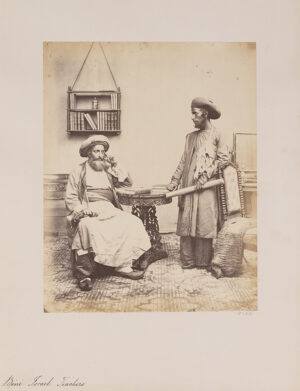
The Culinary Traditions of Bene Israel Cooking
The cooking of the Bene Israel community of Maharashtra represents one of the most fascinating intersections of religious tradition and regional Indian cuisine in the world. Over centuries of life in India, Jewish cooks adapted the dietary laws of kashrut to the ingredients, techniques, and flavor profiles of their regional Indian environment, creating a body of recipes that is unlike any other Jewish cuisine in the world. The result is food that is simultaneously deeply Jewish in its observance and thoroughly Indian in its character.
The spice palette of Indian Jewish cooking reflects the specific regional traditions of each community. The Bene Israel of Maharashtra use coconut, tamarind, and the spices of Maharashtrian coastal cooking; the Cochin Jews of Kerala draw on the coconut milk, curry leaves, and mustard seeds of Kerala cuisine; the Baghdadi Jews of Calcutta and Bombay combine Middle Eastern flavor traditions with the spices of Bengal and western India. Each community developed its own distinctive culinary identity within the shared framework of Jewish dietary law.
Cooking as Cultural Memory
For Indian Jewish families today, the act of preparing traditional dishes is a form of cultural memory and community continuity. Many of these recipes exist primarily in the memories of elderly community members who learned them from their parents and grandparents. The knowledge of how to properly prepare certain traditional dishes — the exact combination of spices, the specific technique for achieving the right texture, the small additions that transform a good dish into an authentic one — is being preserved through family oral tradition and, increasingly, through formal documentation efforts.
The urgency of this documentation work cannot be overstated. As the communities that created these recipes have emigrated from India, the social context in which culinary knowledge was transmitted naturally has been disrupted. Young people of Indian Jewish heritage growing up in Israel, North America, or elsewhere may have little opportunity to learn traditional dishes through the daily proximity to their grandmothers’ kitchens that once made such transmission automatic. Cookbooks, videos, and community food events have all become more important as vehicles for preserving and transmitting this culinary heritage.
Indian Jewish Food in the Contemporary World
The distinctive cuisine of India’s Jewish communities has begun to attract attention beyond the communities themselves in recent years, as interest in global Jewish food traditions has grown and as the richness and diversity of Indian Jewish culinary heritage has become better known. Food writers, culinary historians, and restaurant chefs have all discovered in Indian Jewish cooking a fascinating example of culinary synthesis — one that reflects broader questions about how cultures meet and blend through the medium of food.
For the Indian Jewish diaspora, this outside recognition of their culinary heritage is both gratifying and important. The cuisine they grew up with, the dishes that defined the taste of home and holiday for their families, is increasingly recognized as a significant contribution to the world’s diverse Jewish food heritage. Preserving and sharing these recipes is a way of honoring the communities that created them and ensuring that their contribution to Jewish cultural life is remembered and appreciated.
Related Reading
- The Bene Israel of Maharashtra
- The Jews of Cochin
- Feature Articles on Indian Jewish History
- Interesting Facts About the Jews of India
- The Four Communities of Indian Jews: An Overview
A Living Culinary Heritage
Food has served as one of the most durable carriers of Indian Jewish identity across centuries of diaspora and migration. As communities moved from India to Israel, the United States, the United Kingdom, and Australia, they carried their recipes with them — adjusting for ingredient availability but preserving the essential character of dishes refined over generations.
In the Bene Israel community of Maharashtra, the act of cooking traditional dishes is understood as a form of cultural continuity. It connects the present generation to grandmothers who stood at similar stoves, worked with similar spices, and fed families who observed the same Shabbat and celebrated the same holidays. The kitchen becomes a space of memory and identity, where the full complexity of Indian Jewish experience can be tasted in a single dish.
Preserving the Recipe, Preserving the Culture
The documentation of Indian Jewish recipes has become an urgent priority as the communities that created them continue to shrink. In 1948, before the establishment of the State of Israel, there were an estimated 30,000 Jews living in India. Today, fewer than 5,000 remain, most of them elderly. The younger generations have largely emigrated to Israel, where they maintain some connection to their Indian heritage while integrating into Israeli society.
Cookbooks, food blogs, and community archives have played a crucial role in preserving these recipes. Works like “Bene Appetit: The Cuisine of Indian Jews” and various community-produced recipe collections represent efforts by Indian Jewish families to document their culinary traditions before they are lost. Food writers and ethnographers have also contributed by interviewing elderly community members and recording not just the recipes but the stories and memories surrounding them.
For the Indian Jewish diaspora, cooking these dishes is an act of cultural maintenance — a way of honoring ancestors and transmitting identity to children who may have grown up in Tel Aviv, New York, or London, far from Mumbai, Cochin, or Kolkata where their grandparents lived. The food becomes a bridge between generations and across geographies, carrying the taste of a world that is gradually disappearing but whose flavors refuse to be forgotten.