
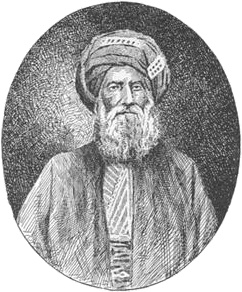
Published in 1941 by Robert Hale in London, The Sassoon Dynasty was written by Cecil Roth, one of the most prolific and respected Jewish historians of the twentieth century and later editor-in-chief of the Encyclopaedia Judaica. At 280 pages, Roth’s account of the Sassoon family predates by nearly three decades Stanley Jackson’s better-known 1968 popular biography of the same family, and it approaches the subject with the methodical rigor of a professional historian rather than the narrative flourish of a popular biographer, making it a valuable complementary source for anyone researching one of the most consequential Baghdadi Jewish families in modern history.
Cecil Roth: A Historian’s Life
Born in Dalston, London, in 1899, Cecil Roth received a traditional Jewish religious education as a child, studying Hebrew with the scholar Jacob Mann before attending the City of London School and serving in France during the First World War. He went on to study history at Merton College, Oxford, earning a first-class degree in 1922 and a doctorate in 1924, and his first published work, a study of the Last Florentine Republic, appeared in 1925. Roth became a Fellow of the Royal Historical Society that same year and would go on to build one of the most extensive bodies of scholarly work on Jewish history produced by any twentieth-century historian, eventually serving as editor-in-chief of the Encyclopaedia Judaica, a role that cemented his reputation as one of the central figures in twentieth-century Jewish historiography.
Writing The Sassoon Dynasty in 1941, in the middle of the Second World War and at a moment when the family’s commercial empire still retained significant global reach, Roth approached the Sassoons not as a journalist chasing a colorful commercial success story but as a historian interested in situating one Baghdadi Jewish merchant family’s rise within the broader context of Jewish economic and social history across the nineteenth and early twentieth centuries.
From Baghdad Treasurer to Bombay Merchant Prince
The family’s founder, David Sassoon, was born in Baghdad in 1792, the son of Sheikh Sassoon ben Saleh, a wealthy merchant who had served as chief treasurer to the pashas governing Ottoman Baghdad and as president of the city’s Jewish community. David himself served as treasurer of Baghdad between 1817 and 1829, but escalating persecution of the city’s Jewish community forced the family to flee, eventually settling in Bombay, where David Sassoon rebuilt his fortune from the ground up, founding the trading house that would become David Sassoon & Co. Trading heavily in cotton, textiles, and opium destined for the Chinese market, Sassoon built a commercial empire so extensive and successful that he became known across British India as the “Merchant Prince of Bombay,” using his wealth to fund synagogues, hospitals, schools, and other civic institutions that left a lasting architectural and philanthropic mark on the city.
David Sassoon’s sons and grandsons expanded the family’s reach far beyond Bombay, establishing trading operations across Asia and eventually in Britain itself. Albert Sassoon, David’s eldest son, became a prominent figure in British society and was honored with a baronetcy, while other branches of the family, including that founded by Elias David Sassoon under the rival firm E.D. Sassoon & Co., built major commercial and real estate interests in Shanghai, where descendants like Victor Sassoon would become central figures in that city’s development during the early twentieth century. This expansion from a single refugee merchant in Bombay to a multi-generational, transcontinental commercial dynasty spanning India, China, and Britain is the central narrative arc that Roth’s history sets out to trace.
A Historian’s Approach Versus a Biographer’s
The contrast between Roth’s 1941 history and Stanley Jackson’s 1968 biography of the same family illustrates two distinct ways of telling the Sassoon story. Jackson, writing nearly three decades later with the benefit of hindsight on the family’s full twentieth-century arc, including its eventual decline in Shanghai following the Chinese Communist revolution, produced a more narrative, personality-driven account aimed at a general readership captivated by the family’s wealth, social ascension into British aristocratic circles, and eventual eclipse. Roth, writing during the war and closer to the height of the family’s ongoing global commercial activity, approached the subject with a historian’s concern for documentation, social context, and the family’s place within the broader story of Baghdadi Jewish commercial diaspora across Asia.
This difference in approach and timing means the two books, while covering overlapping ground, serve different research purposes. Roth’s account, produced by a scholar deeply embedded in Jewish historiographical traditions and writing without the benefit of knowing how the family’s Shanghai and international operations would eventually wind down, offers a valuable snapshot of how the Sassoon family’s reputation and historical significance were understood by contemporaries at the height of the family’s continued global prominence, before the mid-twentieth-century upheavals that would ultimately transform the family’s commercial footprint.
Why the Sassoon Story Matters for Indian Jewish History
The Sassoon family’s significance to Indian Jewish history extends well beyond its commercial success. As patrons of synagogues, schools, hospitals, and libraries across Bombay, the Sassoons helped shape the physical and institutional landscape that Baghdadi Jewish communal life depended upon for generations. The family’s wealth and international connections also facilitated the broader Baghdadi Jewish trading network that linked Bombay to Calcutta, Rangoon, Singapore, Hong Kong, and Shanghai, a network within which many other, less famous Baghdadi Jewish families in India operated and prospered.
For readers seeking to understand not just the Sassoon family’s own trajectory but the broader economic and social forces that shaped Baghdadi Jewish life in colonial India, Roth’s 1941 history remains an important, historian-authored complement to the more widely read popular biographies that followed it in subsequent decades.
Philanthropy as Legacy
Perhaps more than any other Baghdadi Jewish family in India, the Sassoons translated commercial success into a lasting physical legacy still visible in Bombay today. The Sassoon Docks, one of the city’s oldest docking facilities, the David Sassoon Library and Reading Room, and the Sassoon General Hospital in Pune all trace their origins to the family’s philanthropic patronage, alongside synagogues including the Magen David Synagogue and Knesset Eliyahoo Synagogue that continue to serve as functioning houses of worship and heritage landmarks. Roth’s history, produced by a scholar with a strong interest in Jewish communal and institutional history, gives appropriate weight to this philanthropic dimension of the family’s legacy, treating it not as incidental to the story of commercial success but as an integral part of how the Sassoons understood their own religious and communal obligations as their wealth grew.
This pattern of translating mercantile wealth into institution-building was not unique to the Sassoons among Baghdadi Jewish merchant families in India, but the scale of their philanthropy, made possible by the family’s position as perhaps the wealthiest Jewish merchant dynasty operating anywhere in Asia during the nineteenth century, set a benchmark that other prominent families, including the Ezras of Calcutta, would follow on a smaller scale within their own communities.
A Scholarly Voice From a Pivotal Historical Moment
Reading Roth’s 1941 history today, nearly a century after its publication and more than seventy years after the events that brought the Sassoon family’s most active phase in Asia to a close, offers a distinctive vantage point: a serious historian’s assessment of the family’s significance written while that significance was still an ongoing, unfolding reality rather than a settled historical narrative. For researchers and general readers wanting a scholarly counterpart to the more popular biographical treatments that followed, Cecil Roth’s The Sassoon Dynasty remains a valuable and historically grounded starting point.
Copies of the 1941 first edition are today largely confined to research libraries and specialist Judaica collections, alongside the 1977 Arno Press reprint that made the text somewhat more widely accessible to later researchers. Together with Jackson’s more popular later account, Roth’s history forms one half of a useful pairing for anyone seeking to understand both the documented historical facts of the Sassoon family’s rise and the way that story has been told and retold to different audiences across the twentieth century.