
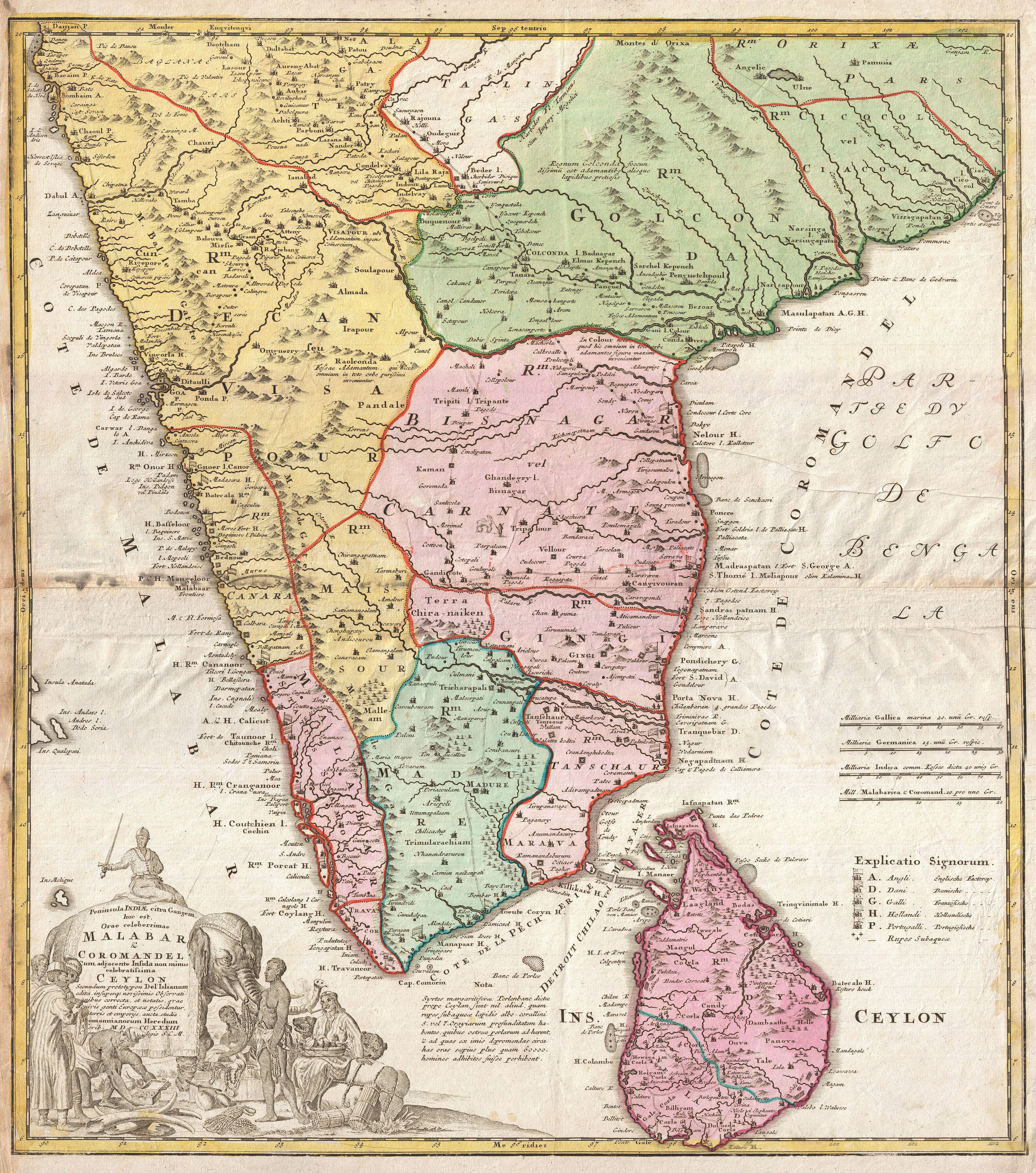
The Agreement of the Customs of the East-Indians with Those of the Jews and Other Ancient People, a 159-page work by the French writer known in library catalogs only as de La Créquinière, first appeared in French as Conformité des Coutumes des Indiens Orientaux, avec Celles des Juifs et des Autres Peuples de l’Antiquité before being translated into English and published in London by W. Davis, with the edition catalogued here explicitly marked as the second English edition, dated 1705. The book’s full title continues well beyond its opening clause, describing itself as “the first essay of this kind towards the explaining of several difficult passages in Scripture, and some of the most ancient writers, by the present Oriental customs,” a description that places the work squarely within an early Enlightenment tradition of using observed contemporary non-European customs as a tool for illuminating obscure passages in the Bible and other ancient texts.
An Early Exercise in Comparative Ethnography
Writing in an era well before anthropology existed as a formal academic discipline, La Créquinière undertook a project that anticipated, in embryonic form, later comparative ethnographic methods: observing the customs, social practices, and religious behavior of the people of India, likely drawing on accounts of the Malabar coast and other regions of contact between European travelers and South Asian populations, and systematically comparing them to the customs described or implied in the Hebrew Bible and other ancient texts. His underlying premise, that contemporary “Oriental” customs, being less changed by time than European ones, could serve as a kind of living window into ancient practices otherwise obscure to European biblical scholars, reflects a specific and historically significant intellectual move: treating living non-European societies as a source of evidence for interpreting ancient Near Eastern texts, a method that would later develop, for better and for worse, into the broader comparative ethnographic and anthropological traditions of the eighteenth, nineteenth, and twentieth centuries.
A Book for Travelers as Well as Scholars
The book’s English edition appended practical material specifically aimed at “young gentlemen that intend to travel,” combining La Créquinière’s scholarly comparative project with genuinely practical travel guidance for the young European men of means who, in this era, increasingly undertook extended journeys to Asia for trade, diplomacy, or simple curiosity. This combination of scholarly argument and practical travel advice within a single volume reflects the particular publishing conventions of the early eighteenth century, when works of comparative religion and ethnography often circulated alongside, and sometimes within the same covers as, more straightforwardly practical guidance for European travelers venturing into unfamiliar parts of the world.
India and Ancient Jewish Custom, Long Before Modern Scholarship
What makes La Créquinière’s book relevant to the specific history of Jews in India is less any direct treatment of India’s actual Jewish communities, the Cochin Jews or Bene Israel, than its broader intellectual project of drawing systematic comparisons between Indian and ancient Jewish custom. This kind of comparative exercise, conducted in 1705, predates by nearly two centuries the more historically grounded academic scholarship on India’s actual Jewish communities that scholars like J. B. Segal, Nathan Katz, and Shirley Isenberg would eventually produce. Yet La Créquinière’s project reflects an early and historically significant instance of European intellectual curiosity connecting India and ancient Jewish civilization, a curiosity that, refracted through later centuries of missionary contact, colonial ethnography, and eventually rigorous academic study, would eventually lead to the documented, historically grounded understanding of India’s actual Jewish communities that modern scholarship has since established.
A Curiosity of Early Modern Scholarship
Modern readers approaching La Créquinière’s book must do so with considerable historical distance and appropriate skepticism about its methods and conclusions, which reflect the comparative religious scholarship standards of the very early eighteenth century rather than any rigorous modern historical or anthropological method. The book’s comparisons between Indian and ancient Jewish custom were almost certainly speculative and impressionistic by modern scholarly standards, built on limited direct knowledge of either ancient Jewish practice or the full diversity of Indian customs, and shaped by the particular theological and scholarly preoccupations of early eighteenth-century European biblical criticism rather than by any systematic ethnographic fieldwork.
Nonetheless, as a historical artifact, the book documents an early and intellectually significant moment when European scholars began seriously entertaining comparisons between Indian civilization and ancient Jewish and Near Eastern culture, a line of inquiry that would eventually, through very different and far more rigorous methods, contribute to the modern academic study of India’s own historic Jewish communities and their surprising, well-documented antiquity on the subcontinent.
The Broader Context of Early Modern Travel Writing
La Créquinière’s book belongs to a substantial genre of early modern European travel and comparative religious writing, produced as European trading companies, missionaries, and diplomats expanded their contact with South and East Asia over the seventeenth and eighteenth centuries. Writers in this genre frequently combined firsthand or secondhand observation of Asian customs with attempts to fit those observations into European intellectual and theological frameworks, often reading Asian religious and social practice through the lens of biblical and classical antiquity rather than on its own terms. This tendency, visible throughout La Créquinière’s project of using Indian customs to illuminate scriptural difficulties, reflects the broader limitations of a scholarly tradition that had not yet developed the methodological tools to study non-European societies independently of European religious and historical preoccupations.
At the same time, this genre of writing played a genuine role in expanding European knowledge of and curiosity about Asian civilizations, however filtered through contemporary European concerns, and works like La Créquinière’s helped establish India as a subject of serious, if imperfect, scholarly attention within European intellectual circles well before the more systematic colonial-era ethnography of the eighteenth and nineteenth centuries developed. The book’s second English edition, appearing after an initial edition and the original French publication, suggests a degree of sustained readership and interest in its comparative arguments among the English-reading public of the early eighteenth century.
An Obscure but Historically Telling Text
Today, La Créquinière’s book survives primarily as a subject of interest to historians of early modern European scholarship on Asia and comparative religion, rather than as a text with ongoing relevance to the substantive historical or anthropological study of India’s Jewish communities. Its value lies not in any reliable factual content about actual Cochin Jewish or Bene Israel history and custom, which the book does not appear to address directly in any detailed or historically grounded way, but in what it reveals about the early eighteenth-century European intellectual imagination: a moment when the idea of systematically comparing Indian and ancient Jewish custom had already become thinkable and publishable, laying distant conceptual groundwork for the much later, far more rigorous scholarly tradition that would eventually document India’s actual Jewish communities with genuine historical and ethnographic care.
For researchers tracing the full, centuries-long history of European scholarly engagement with the question of India and ancient Jewish civilization, from early speculative comparative works like La Créquinière’s through nineteenth-century missionary ethnography to twentieth and twenty-first century academic scholarship on the Cochin Jews and Bene Israel, this 1705 book occupies a genuinely early position, a curiosity of its era that nonetheless marks one of the earliest sustained points of connection, however methodologically flawed by modern standards, between European scholarly interest in India and in ancient Jewish history and custom.
Little is recorded about La Créquinière himself beyond this single work and its French original, a common situation for minor early modern authors whose biographical details did not survive alongside their published writing. What can be said with confidence is that the book represents a genuine, dated artifact of early eighteenth-century European intellectual engagement with India, preserved today primarily through library reprint editions and of interest chiefly to historians of early modern comparative religious scholarship rather than to students of documented Indian Jewish history.