
Essie Sassoon’s Spice & Kosher: Exotic Cuisine of the Cochin Jews, published by Tamarind Tree Books in 2013, is a 207-page cookbook documenting the distinctive culinary tradition of Kerala’s Cochin Jewish community, a cuisine shaped by nearly two thousand years of continuous Jewish settlement along the Malabar coast and its accompanying immersion in one of India’s most spice-rich regional food cultures. The book arrived at a particularly urgent moment for this kind of documentary project: by 2013, the Cochin Jewish population remaining in Kerala had dwindled to only a handful of individuals, the overwhelming majority of the community having emigrated to Israel in successive waves since the 1950s, making a comprehensive record of the community’s kosher culinary tradition as practiced on Indian soil an act of preservation as much as of recipe collection.
A Cuisine Built on Kerala’s Spice Trade
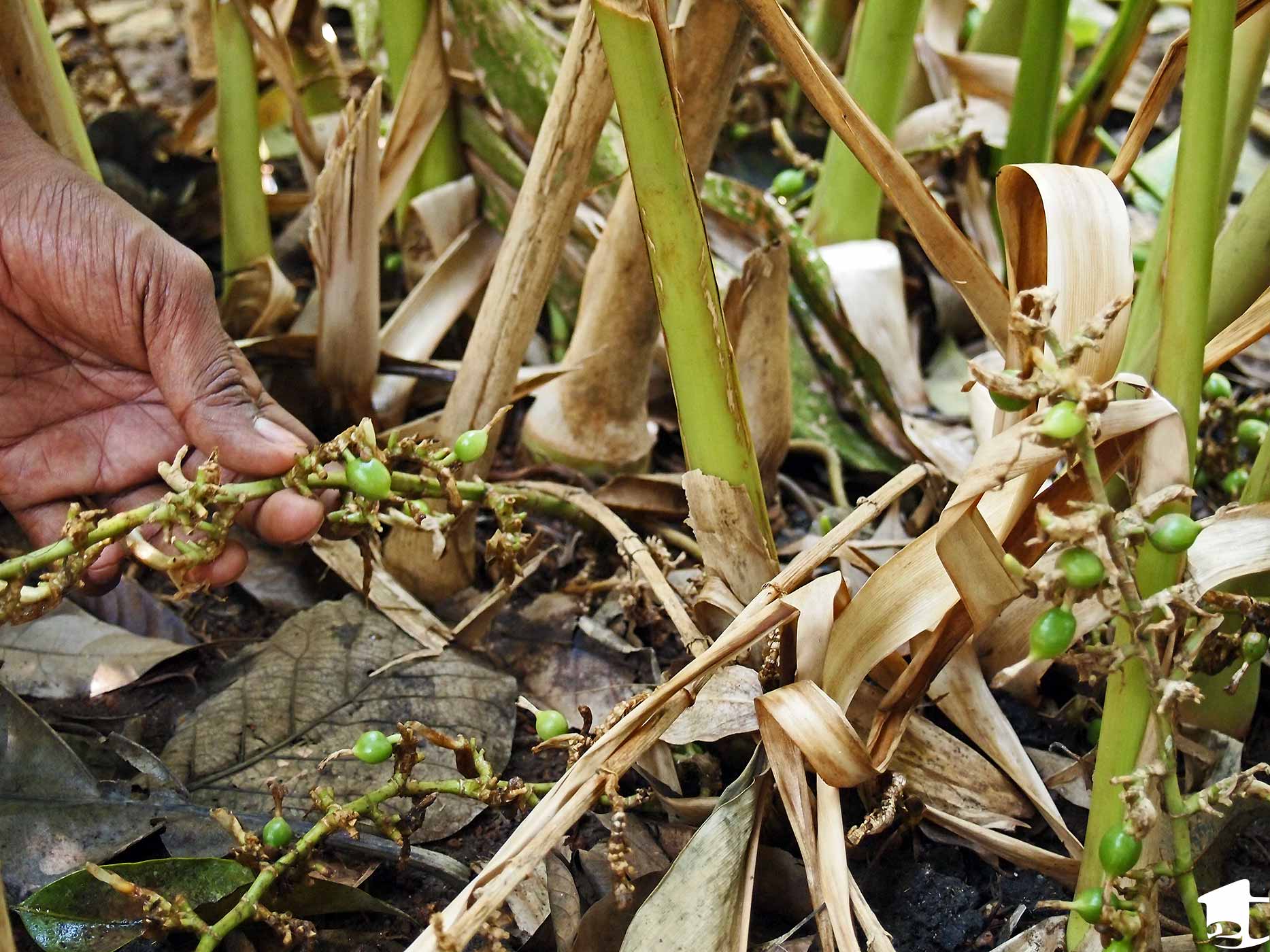
Cochin’s Jewish community developed its distinctive cuisine in one of the most historically significant spice-producing regions in the world. The Malabar coast’s pepper, cardamom, cinnamon, and other spices drew traders from across the ancient and medieval world, and the Cochin Jewish community, whose presence in the region is traditionally dated back roughly two millennia, developed kosher culinary traditions that fully absorbed this local spice culture while maintaining strict adherence to Jewish dietary law. The resulting cuisine, as Sassoon’s title suggests, represents a genuine fusion: recognizably kosher in its observance of separation between meat and dairy and its avoidance of forbidden foods, yet built from an intensely regional Keralan palette of coconut, curry leaves, tamarind, and the pepper and cardamom for which the Malabar coast has been famous since antiquity.
This fusion distinguishes Cochin Jewish cuisine from the culinary traditions of India’s other Jewish communities in specific and identifiable ways. Where Baghdadi Jewish cooking in Bombay and Calcutta drew on Iraqi and broader Middle Eastern culinary tradition adapted to Indian ingredients, and Bene Israel cuisine developed within the Marathi culinary context of the Konkan coast and Bombay, Cochin Jewish cooking developed within Kerala’s specific Malayali food culture, one of India’s most distinctive regional cuisines, characterized by extensive use of coconut in all its forms, along with the fish and seafood traditions of a coastal, tropical environment quite different from the drier, wheat-and-lentil-based food cultures of North India.
Documenting a Vanishing Culinary Tradition
By the time Sassoon compiled her cookbook, the practical challenge of documenting Cochin Jewish cuisine had become genuinely urgent. With only a small number of Cochin Jews remaining in Kerala, and an aging population among them, the direct, lived knowledge of how to prepare specifically Cochin Jewish kosher dishes, as opposed to either generic Kerala cooking or generic kosher cooking, existed in an increasingly small number of households and memories. A cookbook produced under these conditions serves a documentary function considerably beyond that of an ordinary recipe collection, working to capture techniques, ingredient combinations, and dish names that depended on direct transmission from cooks who had learned them from earlier generations within the specific, numerically shrinking Cochin Jewish community itself.
Food as the Last Living Connection
For diaspora communities facing the kind of dramatic demographic decline that has characterized Cochin Jewry since the 1950s, food often persists as one of the most durable markers of communal identity, surviving even after synagogues close for lack of a minyan and after the last members of a community have emigrated or passed away. Recipes, unlike buildings or institutions, can travel with individual families to new countries and new kitchens, carried forward by home cooks rather than requiring the kind of institutional infrastructure that sustaining a synagogue or a communal organization demands. Sassoon’s cookbook, by putting these recipes into permanent, published form, ensures that Cochin Jewish culinary tradition can continue to be practiced and taught even as the community that originated it becomes vanishingly small within Kerala itself, and increasingly dispersed among descendants living in Israel and elsewhere who may have only inherited memories, rather than direct experience, of their ancestors’ Kerala kitchens.
Part of a Broader Documentary Effort
Sassoon’s book joins a small but growing shelf of cookbooks documenting India’s various Jewish culinary traditions, including works focused on Baghdadi Jewish cooking in Calcutta and Bombay and broader surveys treating Indian Jewish cuisine across all three communities. Within this shelf, Spice & Kosher holds a distinctive place as one of the more focused and thorough treatments specifically of Cochin Jewish cooking, a tradition that, precisely because the Cochin Jewish community was always smaller than the Bene Israel or Baghdadi Jewish populations, has received comparatively less documentary attention in cookbook form than the culinary traditions of India’s larger Jewish communities. For readers and researchers interested specifically in how one of the world’s oldest Jewish diaspora communities cooked at the meeting point of kosher law and Kerala’s extraordinary spice-based culinary tradition, Sassoon’s book remains one of the most dedicated and detailed resources available.
Kosher Law Meets a Coconut-Based Cuisine
Adapting kosher dietary requirements to Kerala’s food culture required generations of Cochin Jewish cooks to develop specific solutions to challenges that Jewish communities in other parts of the world did not face in quite the same form. Kerala’s cuisine relies heavily on coconut milk and coconut oil as base ingredients, and on fish and seafood as primary protein sources, both categories requiring careful attention within a kosher framework: coconut products themselves pose no inherent kosher difficulty, but the extensive use of seafood in mainstream Kerala cooking required Cochin Jewish cooks to develop kosher-compliant alternatives and substitutions, relying on kosher fish species with fins and scales while avoiding the shellfish and other non-kosher seafood that features prominently in the broader regional cuisine. Meat dishes similarly required strict separation from dairy preparations, a constraint that shaped how Cochin Jewish cooks incorporated coconut milk, itself parve rather than a dairy product under Jewish law, as a rich, flavorful base that could accompany meat dishes in ways that actual dairy could not.
These kinds of detailed, practical adaptations, worked out and refined across many generations of Cochin Jewish households, represent exactly the kind of specific culinary knowledge that a dedicated cookbook like Sassoon’s works to preserve. General surveys of Indian Jewish cuisine or of Kerala cooking more broadly typically lack the specific detail needed to reconstruct how Cochin Jewish cooks navigated these particular constraints, making a focused, community-specific cookbook an essential resource for anyone seeking to understand or recreate this particular culinary tradition with any real accuracy.
A Cookbook as Cultural Bridge
Beyond its practical function as a source of recipes, Spice & Kosher serves a bridging function between the Cochin Jewish community’s Kerala origins and its now much larger diaspora population in Israel and elsewhere. For descendants of Cochin Jews raised outside India, often with only partial or secondhand knowledge of their family’s specific culinary heritage, a well-documented cookbook offers a tangible way of reconnecting with that heritage, providing not just recipes but the accompanying context, explaining the specific history and rationale behind particular dishes and techniques, that transforms a simple recipe collection into a meaningful vehicle of cultural transmission across generations and continents.
This function has become increasingly important as the direct, lived connection to Kerala among younger generations of Cochin Jewish descendants continues to thin with each passing generation since the main waves of emigration in the 1950s and subsequent decades. A cookbook published as recently as 2013, well after most of the community’s emigration had already occurred, reflects a conscious effort at cultural preservation undertaken specifically because the community recognized how much of its distinctive heritage risked being lost without deliberate documentary effort, making Spice & Kosher as much a work of communal memory-keeping as of culinary instruction.
For readers seeking to understand the full range of India’s Jewish culinary traditions, Sassoon’s focused treatment of Cochin Jewish cooking specifically fills an important gap, standing alongside comparable works on Baghdadi and Bene Israel cuisine as one of the essential building blocks in the still-developing documentary record of how India’s three historic Jewish communities each developed distinctive culinary traditions from a shared foundation of kosher law and a shared, if varied, immersion in India’s extraordinary regional food cultures.