
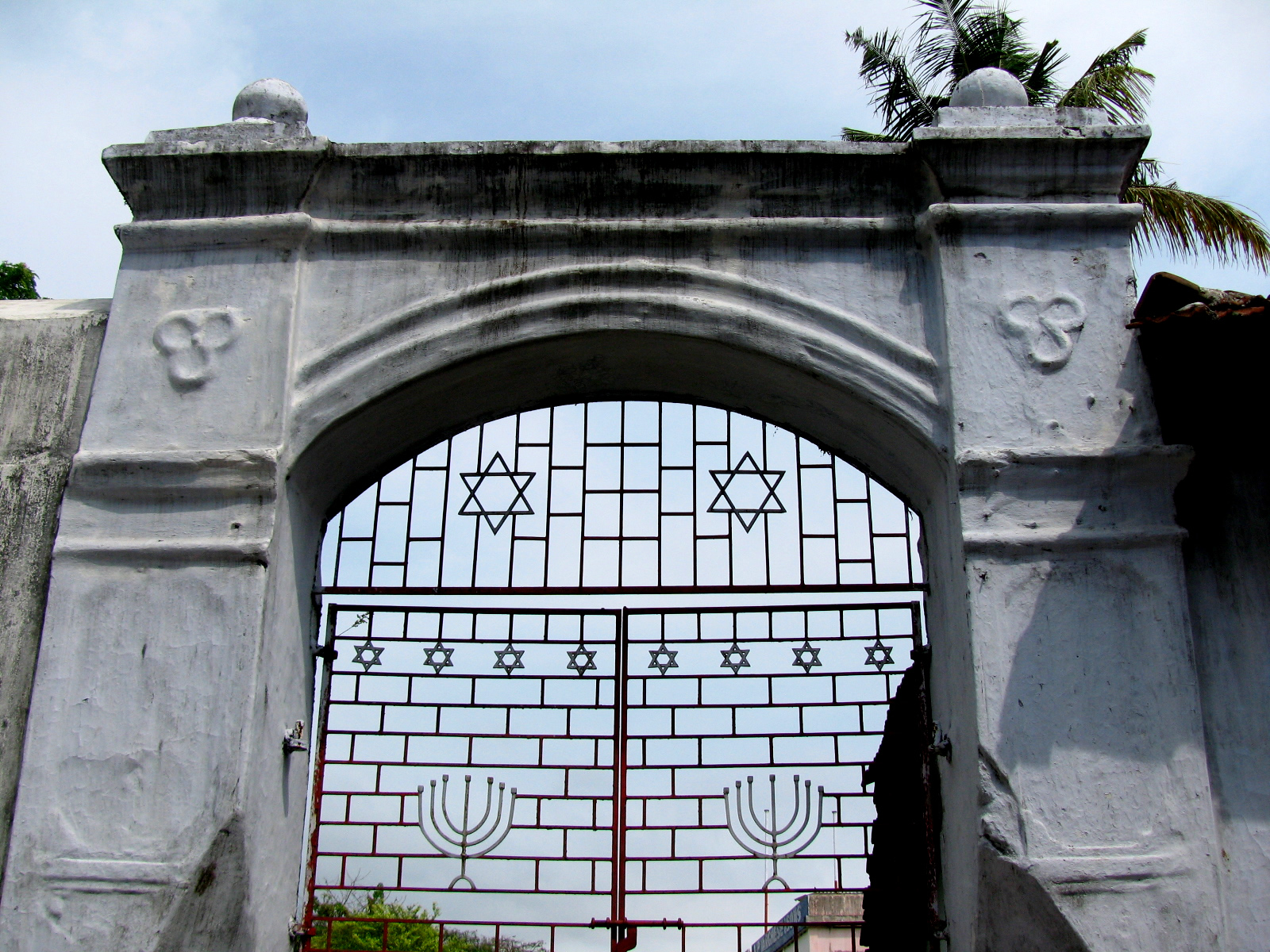
India’s Jewish communities are small in number but rich in history, and few books capture that richness as fully as Growing Up Jewish in India: Synagogues, Customs, and Communities, edited by art historian Ori Z. Soltes and published by Niyogi Books in 2021. The anthology brings together essays, photographs, and personal recollections that trace how three distinct Jewish communities, the Bene Israel, the Cochin Jews, and the Baghdadi Jews, built synagogues, preserved customs, and carried their traditions across centuries of Indian history.
Three Communities, One Anthology
Unlike many books on Indian Jewish life that focus on a single community, Soltes’ collection deliberately spans all three major groups. The Bene Israel trace their roots to the Konkan coast south of Mumbai and, according to community tradition, descend from Jewish shipwreck survivors who settled in Indian villages centuries ago. The Cochin Jews, concentrated in Kerala, point to trade links with the Malabar Coast that may stretch back two thousand years, and their community split historically into “Paradesi” (foreign-descended) and “Malabari” (older, native-rooted) branches. The Baghdadi Jews, by contrast, arrived far more recently,mostly in the eighteenth and nineteenth centuries, as merchant families from Iraq, Syria, and elsewhere in the Middle East settled in colonial port cities such as Bombay and Calcutta. The anthology’s contributors use synagogue architecture, life-cycle customs, and family memory to show both what these communities shared and where their histories diverged.
Synagogues as Living Archives
A central theme of the book is the synagogue itself, not just as a house of worship but as a record of community identity. The Paradesi Synagogue in Kochi’s old “Jew Town” quarter, built in 1568 and still active today, is the oldest synagogue in continuous use in the Commonwealth of Nations. Its blue willow-pattern floor tiles, hand-painted ceremonial scrolls, and clock tower have made it both a place of worship and a heritage landmark. Bene Israel congregations built their own synagogues in Mumbai and Pune, including Shaar Hashamayim, established in the nineteenth century and long known as one of the largest synagogues in Asia. Baghdadi Jewish merchants funded grand synagogues of their own, such as Kolkata’s Magen David and Pune’s Ohel David, buildings whose scale reflected the wealth and confidence of their nineteenth-century patrons. Soltes’ contributors treat each building as a physical record of when a community arrived, how it prospered, and how it understood its place within a majority Hindu and Muslim society.
Custom and Continuity
Beyond architecture, the anthology gives significant attention to lived custom: how Sabbath and festivals were observed, how life-cycle events such as births, weddings, and mourning rituals were marked, and how each community adapted Jewish law to Indian circumstances. Bene Israel families, for instance, developed distinctive practices such as the Malida ceremony, a thanksgiving ritual involving fruit and flattened rice that blends Jewish liturgical elements with regional custom. Cochin Jewish weddings historically stretched across several days of ceremony, drawing on both Sephardic liturgical tradition and local Kerala custom in dress and festivity. Baghdadi Jewish households, meanwhile, preserved Judeo-Arabic culinary and liturgical habits carried directly from Iraq and Syria, even while adopting English education and British colonial social norms. The book treats these customs not as static museum pieces but as evidence of communities actively negotiating identity across generations.
Migration and Memory
A recurring undercurrent in Growing Up Jewish in India is the story of departure. The vast majority of India’s Jews emigrated in the decades following Indian independence in 1947 and the establishment of Israel in 1948, with further waves through the 1950s and 1960s. Populations that had once numbered in the tens of thousands dwindled to small remnants; Kochi’s Jewish community today numbers only a handful of individuals, most elderly, and Kolkata’s Baghdadi community has similarly shrunk to a few dozen at most. The anthology’s personal essays, several by contributors who grew up in these communities before their families left for Israel, the United Kingdom, the United States, or Australia, give the book its title: they are recollections of what it meant, in a very literal sense, to grow up Jewish in India.
Why the Book Matters
Because India’s Jewish population is now so small, first-hand testimony is a limited and shrinking resource. Anthologies like this one, which combine scholarly framing from historians with direct memoir from community members, serve an important documentary function: they capture detail (the layout of a family kitchen, the choreography of a wedding processional, the particular Hebrew-Marathi or Hebrew-Malayalam hybrid phrases used in prayer) that might otherwise be lost once the last generation to experience it firsthand is gone. Soltes, whose prior work spans Jewish art and interfaith history, frames the book explicitly as an act of preservation as much as a work of history.
Further Reading
How the Book Is Organized
Growing Up Jewish in India is structured to move outward from the personal to the historical. Early sections favor first-person memoir, giving readers an intimate sense of daily life inside Bene Israel, Cochin, and Baghdadi households before shifting toward broader essays on trade history, colonial-era migration, and the architecture of Indian synagogues. This structure is part of what makes the anthology useful to such a wide readership: a reader who begins Growing Up Jewish in India looking for family history can also come away with a working understanding of India’s colonial trade routes, British-era communal politics, and the twentieth-century emigration wave that reshaped all three communities at once.
A Resource for Researchers and Families Alike
Because so few full-length treatments of India’s Jewish communities exist in a single volume, Growing Up Jewish in India has become a frequently cited resource for genealogists, museum curators, and descendants of Indian Jewish families now scattered across Israel, North America, the United Kingdom, and Australia. Community organizations researching synagogue restoration projects, such as ongoing preservation work at several Kerala synagogues, have drawn on the photographic documentation the anthology provides. For families researching their own roots, the book’s combination of named contributors and dated photographs offers a rare entry point into records that are otherwise scattered across synagogue registers, colonial administrative archives, and private family collections.
Further Reading
Readers interested in the individual communities profiled in the anthology can explore more on the Bene Israel and Cochin Jews community pages on this site. For background on the broader publishing history of Indian Jewish memoir and scholarship, the Jewish Telegraphic Agency has covered the shrinking of India’s Jewish communities and the efforts to document them before they disappear entirely.