
Related Reading
- The Four Communities of Indian Jews: An Overview
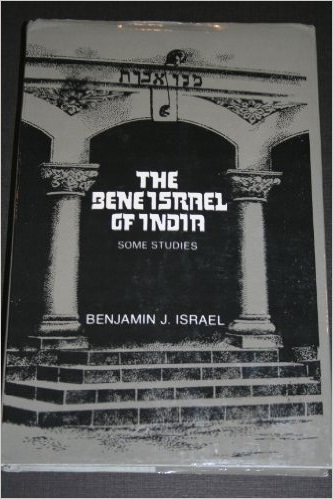
- The Bene Israel of Maharashtra
- The Jews of Cochin
- The Baghdadi Jews of Mumbai and Kolkata
- Books on the Jews of India
The history of Jews in India spans more than two millennia and encompasses three distinct communities, each with its own origin narrative, cultural character, and historical experience. Together, the Bene Israel, the Cochin Jews, and the Baghdadi Jews constitute one of the most diverse and historically significant Jewish diaspora populations in the world, and their combined history illuminates fundamental questions about the nature of Jewish identity, the possibilities of cultural adaptation, and the endurance of religious community across enormous distances of time and space.
The Bene Israel: Maharashtra’s Ancient Jews
The Bene Israel claim to be the oldest Jewish community in India, descended from a group of ancient Israelites who arrived on the Konkan coast, the narrow strip of land between the Western Ghats and the Arabian Sea in present-day Maharashtra, at some point in the ancient period. Their oral tradition speaks of a founding shipwreck and a miraculous survival, but modern scholarship places their actual arrival somewhere between the second century BCE and the fourth century CE.
For most of their history in India, the Bene Israel were isolated from mainstream Jewish life and from the Jewish communities of the Mediterranean and Middle East. They maintained their Jewish identity through a core set of practices, including circumcision, the observance of Saturday as a day of rest, abstention from fish without fins and scales, and the recitation of the Shema prayer, while gradually adopting many aspects of Maharashtrian culture including language, dress, and social organization.
The community underwent significant religious revival in the eighteenth and nineteenth centuries following contact with the Cochin Jews and later with Baghdadi Jewish traders, who reintroduced many aspects of mainstream Jewish practice that had faded during the long centuries of isolation. Today the Bene Israel are the largest Jewish community in India, with most concentrated in Mumbai and its surrounding areas.
The Cochin Jews: Kerala’s Ancient Jewish Community
The Jews of Cochin, in the southwest Indian state of Kerala, have a documented history stretching back at least a thousand years and claimed origins that may be considerably older. In the year 1000 CE, a local Hindu ruler granted to the Jewish community leader Joseph Rabban a set of copper plates conferring rights and privileges on the community that included freedom from taxation, the right to ride elephants, and a hereditary title. These Sasanam plates, preserved by the community for over a millennium, are among the most remarkable documents in Jewish diaspora history.
The Cochin Jews developed a distinctive form of Judaism that incorporated elements of Keralan culture into their religious practice. Their synagogue music combined Sephardic liturgical melodies with South Indian musical sensibilities, producing a unique liturgical style that has been carefully preserved and is now recognized as a significant contribution to Jewish musical heritage. The Paradesi Synagogue in Mattancherry, built in 1568 by the White Jewish community and one of the oldest active synagogues in the Commonwealth, is the most important surviving monument of this heritage.
The Baghdadi Jews: Merchants of Colonial India
The Baghdadi Jewish community of India arrived much later than the other two groups, beginning their settlement in Calcutta and Bombay in the late eighteenth century. Coming primarily from Iraq, Syria, and other parts of the Arab world, they brought with them commercial networks, capital, and the entrepreneurial energy that would make them among the most economically significant communities in colonial India.
The Sassoon family of Baghdad became the archetype of Baghdadi Jewish success in India. Beginning with David Sassoon, who arrived in Bombay in 1832, the family built a commercial empire that extended from India to China and made them among the wealthiest merchant families in the British Empire. Their philanthropy transformed the built environment of Bombay, endowing schools, hospitals, and synagogues that served not only the Jewish community but the broader population of the city.
India’s Record of Tolerance
What unites the histories of all three communities is the extraordinary tolerance they encountered in India. In a world where Jewish communities regularly faced persecution, expulsion, and forced conversion, India stands as one of the very few places where Jews were able to live freely and practice their religion without systematic interference. This tolerance was not merely passive; rulers actively welcomed Jewish communities for their commercial skills and granted them specific rights and protections.
The history of Jews in India therefore offers an important corrective to narratives of Jewish history that focus exclusively on persecution and suffering. In India, Jewish life flourished because of the character of the host society, producing communities of remarkable cultural richness that contributed enormously to the countries and cities that welcomed them.