
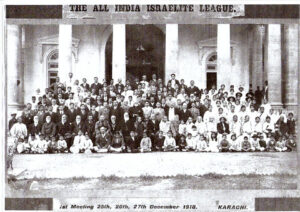
The Bene Israel — the “Sons of Israel” — are the oldest and largest Jewish community in India, with a history on the subcontinent stretching back at least two thousand years and possibly much longer. Their story, captured in the topic of “How India’s Tiny Jewish Community Is Keeping Its Distinct Identity Alive,” is one of remarkable perseverance and cultural creativity: a Jewish community that maintained its identity across centuries of geographic isolation, developing a way of life that was simultaneously deeply Jewish and thoroughly Indian.
Internal Divisions and Social Complexity
Like any community with a long history and complex social environment, the Bene Israel developed internal social distinctions that reflected both their own organizational principles and their adaptation to the caste-structured society around them. The division between “Gora” (white, or original) Bene Israel and “Kala” (black, or newer) Bene Israel was one such distinction, reflecting differences in perceived ancestry and associated social status within the community.
These internal divisions, while significant to community members, should not obscure the more fundamental unity that characterized the Bene Israel as a Jewish community. Whatever their internal social distinctions, all Bene Israel shared the same religious practices, the same communal institutions, the same identification as Jews, and the same relationship to the broader Indian society in which they lived. The internal complexity of the community reflects its maturity and longevity rather than any fundamental division in identity or purpose.
Relations with the Baghdadi Jewish Community
The arrival of the Baghdadi Jewish community in India in the late eighteenth and nineteenth centuries created a complex new dynamic for the Bene Israel. The Baghdadi Jews, coming from Iraq and other parts of the Middle East with connections to the mainstream Sephardic Jewish world, sometimes questioned the Jewish credentials of the Bene Israel, whose practices had diverged from mainstream Jewish observance over the centuries of isolation. This questioning led to painful disputes about religious status and communal legitimacy.
The tensions between the two communities reflected broader issues in the definition of Jewish identity and the authority to make such determinations. Over time, the Bene Israel’s Jewish status has been affirmed by major halakhic authorities including Israel’s Chief Rabbinate, and the community is universally recognized as a legitimate part of the Jewish people. The historical tensions with the Baghdadi community are part of a complex story that has been largely resolved, even as it remains a significant episode in the history of Indian Jewish relations.
The Bene Israel Today
The contemporary Bene Israel community is primarily located in Israel, where it forms one of the most distinctive components of the diverse Israeli Jewish population. Communities also exist in other countries — the United States, the United Kingdom, Canada, and Australia — where Indian Jewish immigrants have settled in the post-independence period. In India itself, the community has shrunk dramatically, with only a few hundred elderly Bene Israel remaining in Mumbai and a handful of other locations.
The future of the Bene Israel community depends on its ability to transmit its heritage to younger generations growing up far from the maharashtrian villages and Mumbai neighborhoods where that heritage was formed. Community organizations, scholars, and committed individuals are working on this transmission through every available means: publications, cultural events, educational programs, oral history projects, and the use of digital media. The story of the Bene Israel — two thousand years of Jewish life on the Indian subcontinent — deserves to be known, celebrated, and preserved for future generations.
Preserving Indian Jewish Heritage for Future Generations
The task of preserving Indian Jewish heritage is one of the most urgent cultural projects in the contemporary Jewish world. As the communities that created this heritage continue to shrink through emigration and natural attrition, the window for capturing living memories, traditional practices, and community knowledge is narrowing rapidly. Every year, elderly community members pass away, taking with them irreplaceable firsthand knowledge of how Jewish life was actually lived in the Bene Israel villages of Maharashtra, the Jewish neighborhoods of Cochin, or the commercial districts of Calcutta and Bombay where Baghdadi Jewish families built their businesses and synagogues.
The response of scholars, community organizations, and cultural institutions to this challenge has been energetic and multifaceted. Oral history projects have recorded interviews with elderly community members in India, Israel, and the diaspora. Digital archives have made historical photographs, documents, and recordings accessible to researchers and community members around the world. Museum exhibitions have introduced Indian Jewish heritage to audiences who might otherwise never encounter it. And writers, artists, and filmmakers from within and outside the community have created new works that carry Indian Jewish stories and traditions into the contemporary cultural conversation.
The Place of Indian Jews in the Larger Jewish Story
The history of India’s Jewish communities occupies a distinctive and important place in the broader story of the Jewish diaspora. Unlike the often traumatic histories of Jewish communities in Europe and the Middle East — marked by persecution, pogroms, forced conversions, and the Holocaust — the Indian Jewish story is predominantly one of peaceful coexistence, communal autonomy, and cultural creativity within a tolerant host society. This positive experience does not diminish or contradict the difficult experiences of other Jewish communities; it demonstrates that the relationship between Jews and their host societies is shaped by specific historical circumstances rather than by any inevitable dynamic of conflict.
The Indian Jewish communities offer evidence that Jewish identity can be maintained across many centuries of geographic isolation and cultural interchange without requiring either segregation from the surrounding society or assimilation into it. The Bene Israel maintained their Jewish identity across what may be two thousand years of life in Maharashtra while becoming genuinely Indian in language, culture, and social orientation. The Cochin Jews built a thriving community under the protection of local Hindu rulers while maintaining Hebrew literacy and connections to the broader Jewish world. The Baghdadi Jews created cosmopolitan communities in Calcutta and Bombay that participated fully in both the British imperial system and the commercial networks of the Indian Ocean world while maintaining the religious traditions of the ancient Jewish communities of Iraq.