
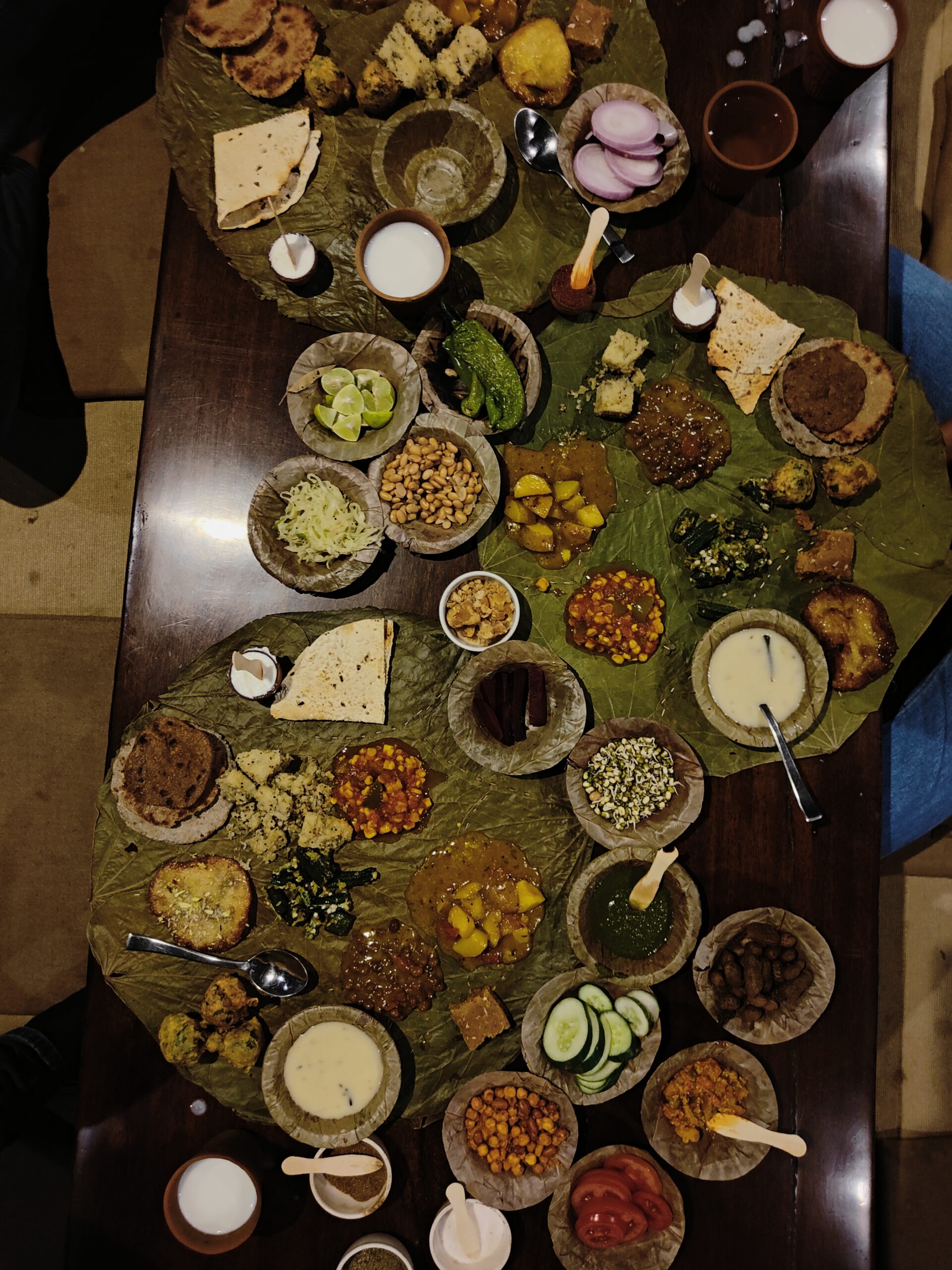
Esther David discovered her Indian Jewish heritage anew through the kitchen. Few books documenting that culinary heritage blend memoir and recipe as directly as Bene Appétit, published by HarperCollins India in 2021. Its author, Esther David, is one of the best-known chroniclers of Bene Israel Jewish life in India, and this book represents the culmination of a career spent writing her community’s history into the record, this time through the specific lens of food, family kitchens, and the customs that surrounded them in Ahmedabad, Gujarat.
Who Is Esther David
Esther David was born in 1945 into a Bene Israel Jewish family in Ahmedabad. Her father, Reuben David, was a hunter-turned-veterinarian who founded the Kamala Nehru Zoological Garden and the Balvatika near Ahmedabad’s Kankaria Lake, while her mother, Sarah, worked as a school teacher. After studying fine arts and art history at the Maharaja Sayajirao University of Baroda, David worked for years as an art critic for the Times of India before turning her attention to writing. She won India’s Sahitya Akademi Award in 2010 for The Book of Rachel, a novel centered on a Bene Israel matriarch whose identity is deeply tied to cooking for her family and community. Her other books, including The Walled City, My Father’s Zoo, Shalom India Housing Society, and Bombay Brides, return again and again to the same terrain: the shrinking, aging, but still vividly remembered Bene Israel community of Gujarat and Maharashtra.
Food as a Vehicle for Memory
David’s fiction had long used food as a way of carrying memory. In The Book of Rachel, the title character’s identity as a cook is inseparable from her identity as the last committed guardian of her family’s Jewish practice in a house and community that is emptying out around her. Bene Appétit makes explicit what earlier novels had approached through fiction: David assembles her family’s actual recipes, kitchen rituals, and food memories into a single volume, presenting the practical, edible side of Bene Israel heritage alongside the historical and emotional context that gives each dish its meaning.
Inside Bene Appétit
Published by HarperCollins India, Bene Appétit is catalogued under subjects including Indic cooking, Jewish cooking, and Bene Israel social life and customs, reflecting its dual identity as both cookbook and cultural document. The recipes reflect the particular fusion that defines Bene Israel cuisine: kosher dietary principles adapted to Gujarati and Konkan coast ingredients, coconut, and spice combinations more commonly associated with the regional Hindu and Jain cooking traditions surrounding the community than with Ashkenazi or Sephardi Jewish cuisine elsewhere in the world. Dishes built around Sabbath and festival observance sit alongside everyday family fare, with David using each recipe as an occasion to describe the people who made it, the kitchens it came from, and the way food marked life-cycle events from births to weddings to mourning.
The Ahmedabad Context
David’s Ahmedabad upbringing gives Bene Appétit a specific regional flavor distinct from the Bene Israel writing that centers on Bombay and the Konkan coast villages further south. Her father’s zoo, a well-known Ahmedabad institution in its own right, appears repeatedly across her body of work as a symbol of a Jewish family deeply embedded in the civic life of a majority Hindu and Jain city, and the food traditions recorded in Bene Appétit reflect decades of everyday exchange between the David family’s Jewish kitchen and the wider Gujarati food culture around it.
The Bene Israel Community’s Culinary Identity
The Bene Israel, who trace their presence in India back many centuries along the Konkan coast south of Bombay, developed a distinctive relationship to food shaped by their determination to maintain Jewish dietary law while living for generations without regular contact with rabbinic authorities or established Jewish institutions. Early Bene Israel communities were known locally as “Shanwar Telis,” or Saturday oil-pressers, because they abstained from their traditional oil-pressing trade on the Sabbath, a practice that itself became a marker of identity long before formal religious texts were reintroduced to the community by Cochin Jewish teachers in the eighteenth century. Food, in this context, was never a peripheral cultural marker; keeping kosher while sourcing ingredients from Konkan and Gujarati markets required constant, practical, inventive decisions passed down through generations of home cooks, almost all of them women. It is precisely this inherited, improvisational cooking knowledge that Bene Appétit sets out to capture before it disappears along with the community that created it.
A Career Spent Documenting a Shrinking Community
Esther David’s decision to write a cookbook late in a long literary career fits a clear pattern in her body of work. Shalom India Housing Society, her 2007 novel, follows a group of Bene Israel families choosing whether to move into a dedicated Jewish housing cooperative in Ahmedabad, dramatizing the same tension between assimilation and preservation that runs through Bene Appétit‘s recipes. Bombay Brides, published in 2019, follows Bene Israel women navigating marriage, emigration to Israel, and the question of what, if anything, of their Indian Jewish identity survives the move. Across these books, David has functioned less as a detached novelist and more as an informal archivist of a community whose numbers in India have fallen sharply since Indian independence and the founding of Israel, as successive generations emigrated in search of religious community and economic opportunity. Bene Appétit extends that archival project into the kitchen, a space David’s fiction had always treated as central to Bene Israel identity but had never before documented in such direct, practical form.
Recognition and Reception
David’s broader literary reputation, anchored by the 2010 Sahitya Akademi Award for The Book of Rachel, has helped bring sustained national attention in India to Bene Israel life at a moment when the community itself has grown very small. Her recognition as a writer, artist, and sculptor working across mediums has meant that Bene Appétit arrived with an audience already primed to see her food writing as a continuation of serious literary and historical work rather than a lighter, secondary project. Reviewers and readers approaching the book have consistently connected it back to The Book of Rachel‘s fictional matriarch, treating the cookbook as the nonfiction counterpart to a character David had spent over a decade earlier using to explore exactly the same themes of food, faith, and familial continuity.
Reuben David’s Zoo and a Family of Institution-Builders
The presence of Esther David’s father throughout her writing, including in the food memories collected in Bene Appétit, reflects a family history of public-facing institution building that is itself part of the story of Ahmedabad’s small Jewish community. Reuben David’s Kamala Nehru Zoological Garden, established in the mid-twentieth century, became one of Ahmedabad’s most visited civic institutions, run by a Jewish family but serving and beloved by the entire city regardless of religion. That same instinct, to build something rooted in a specific Jewish family history but offered outward to a broader public, runs through David’s own literary career and finds one of its clearest expressions in Bene Appétit, a book that takes recipes cooked for decades inside one Bene Israel household and makes them legible and usable for readers who have no connection to the community at all. In this sense the book continues a family pattern of translating private, community-specific knowledge into something the wider city and country can share and appreciate.
Why This Book Matters
Cookbooks rarely receive the same scholarly attention as histories or ethnographies, yet they often preserve details that formal scholarship misses entirely: exact proportions, the specific vegetable substituted when a traditional ingredient was unavailable, the joke that always accompanied a particular dish’s arrival at the table. As the Bene Israel community in India continues to shrink through emigration to Israel and elsewhere, books like Bene Appétit do the quiet work of preserving a distinctly Indian Jewish foodway before its last home kitchens close for good. Read alongside The Book of Rachel and David’s other novels, it completes a decades-long project: not simply describing Bene Israel life from the outside, but making sure the community’s specific tastes, smells, and kitchen rituals survive in print.
For readers first encountering Bene Israel history through Bene Appétit, David’s recipes function as an accessible entry point into a much longer and less visible story than a single kitchen can tell: the community’s origins as a small group of shipwreck survivors along the Konkan coast, its centuries without contact with the wider Jewish world before renewed ties with Cochin and Baghdadi Jewish traders re-established religious teaching and text, and its twentieth-century transformation from a village-based community into one dispersed between Bombay, Ahmedabad, Israel, and beyond. A cookbook cannot substitute for that fuller history, and David does not pretend it can, but by anchoring each recipe to a specific person, occasion, or memory, Bene Appétit gives readers who might never open an academic monograph a genuine, personal way into the same material, one recipe at a time.
Further Reading
For more on the community whose foodways this book documents, see our coverage of the Bene Israel of Maharashtra and Gujarat and our feature articles on Indian Jewish history, as well as the Wikipedia article on Esther David.