
Related Reading
- The Four Communities of Indian Jews: An Overview
- The Bene Israel of Maharashtra
- The Jews of Cochin
- The Baghdadi Jews of Mumbai and Kolkata
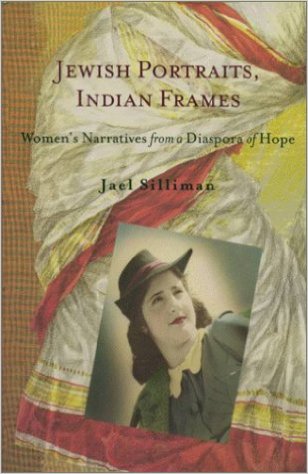
- Books on the Jews of India
The preservation of traditions within small and scattered diaspora communities is never automatic. It requires conscious effort, institutional support, and individuals who are willing to invest time and energy in maintaining practices that the surrounding majority culture does not share and may not understand. For the Indian Jewish communities of the twentieth and twenty-first centuries, tradition preservation has been a central concern, and the strategies they have employed offer insights into how minority cultures survive and adapt across generations.
The Challenge of Transmission
Every religious and cultural tradition faces the challenge of transmission from one generation to the next. For a large majority community, this transmission happens largely through ambient cultural exposure: children absorb their community’s traditions through the rhythms of the calendar, the practices of their neighbors, and the institutional structures of schools, houses of worship, and community organizations that reinforce the tradition continuously. For a small minority community, particularly one that is geographically dispersed, this ambient transmission is largely absent, and deliberate effort is required to ensure that children receive the knowledge and experience that will allow them to continue the tradition.
The Indian Jewish communities have faced this challenge in particularly acute form. As emigration reduced their numbers in India and as diaspora settlement scattered families across multiple countries, the social density required for ambient cultural transmission has been difficult to maintain. The remaining communities in India are too small to support full Jewish educational institutions; the diaspora communities in Israel, Canada, and elsewhere must compete for the attention of young people growing up in majority Jewish cultures that do not naturally include specifically Indian Jewish elements.
Food as a Preservation Strategy
Among the most effective and widely employed strategies for tradition preservation in the Indian Jewish communities is the maintenance and documentation of food culture. Cookbooks, recipe collections, cooking demonstrations, and food-focused cultural events have become important tools for passing on traditional Indian Jewish cuisine from one generation to the next. Food is particularly effective as a preservation medium because it appeals to multiple senses, creates strong emotional associations with family and community memories, and can be practiced in the kitchen of any household regardless of whether a full community infrastructure exists.
Organizations like the Bene Israel Heritage Fund and similar groups have invested in cookbook projects specifically as preservation efforts, understanding that a well-documented recipe is a form of cultural memory that can survive even when the communities that created it have dispersed. The appearance of Indian Jewish recipes in mainstream Indian cookbooks and international food media has also helped bring these culinary traditions to new audiences.
Music and Liturgy
The distinctive liturgical music of the Indian Jewish communities is another area where preservation efforts have been active. The melodies of Bene Israel prayer, shaped over centuries by the musical environment of Maharashtra, and the liturgical tradition of the Cochin Jews, influenced by South Indian classical music, are among the most distinctive aspects of Indian Jewish cultural heritage. Both traditions have been documented through audio recordings, scholarly research, and community performance programs that aim to ensure their survival into future generations.
The challenge of musical preservation is that music is fundamentally a live tradition: it lives in the voices of singers who have been trained by older singers, and when that chain of transmission is broken, even the best recordings cannot fully restore it. Efforts to train young singers in the Indian Jewish musical traditions, in both India and the diaspora, are therefore among the most urgent preservation priorities.
Digital Preservation
The internet and digital technology have opened new possibilities for Indian Jewish tradition preservation. Online archives of documents, photographs, and recordings make it possible for diaspora community members to access their heritage without physical proximity to surviving community institutions. Social media groups and diaspora networks connect Indian Jews across countries and continents in ways that support the maintenance of community identity. And digital publication makes it possible to produce and distribute cultural documentation with a speed and at a cost that was previously impossible.