
Jewish Indian identities sit at the center of Esther David’s fiction, which returns again and again to a single, unresolved question: what does it mean to be simultaneously and fully Jewish and Indian, particularly for a community as small and geographically specific as the Bene Israel of Gujarat and Maharashtra? Rather than resolving that tension, David’s novels tend to dwell inside it, presenting characters who occupy what critics have called an “in-between” position, not fully assimilated into Hindu-majority Indian society, yet also increasingly distant from the Jewish religious world their grandparents knew.
The Book of Rachel: Guarding a Vanishing World
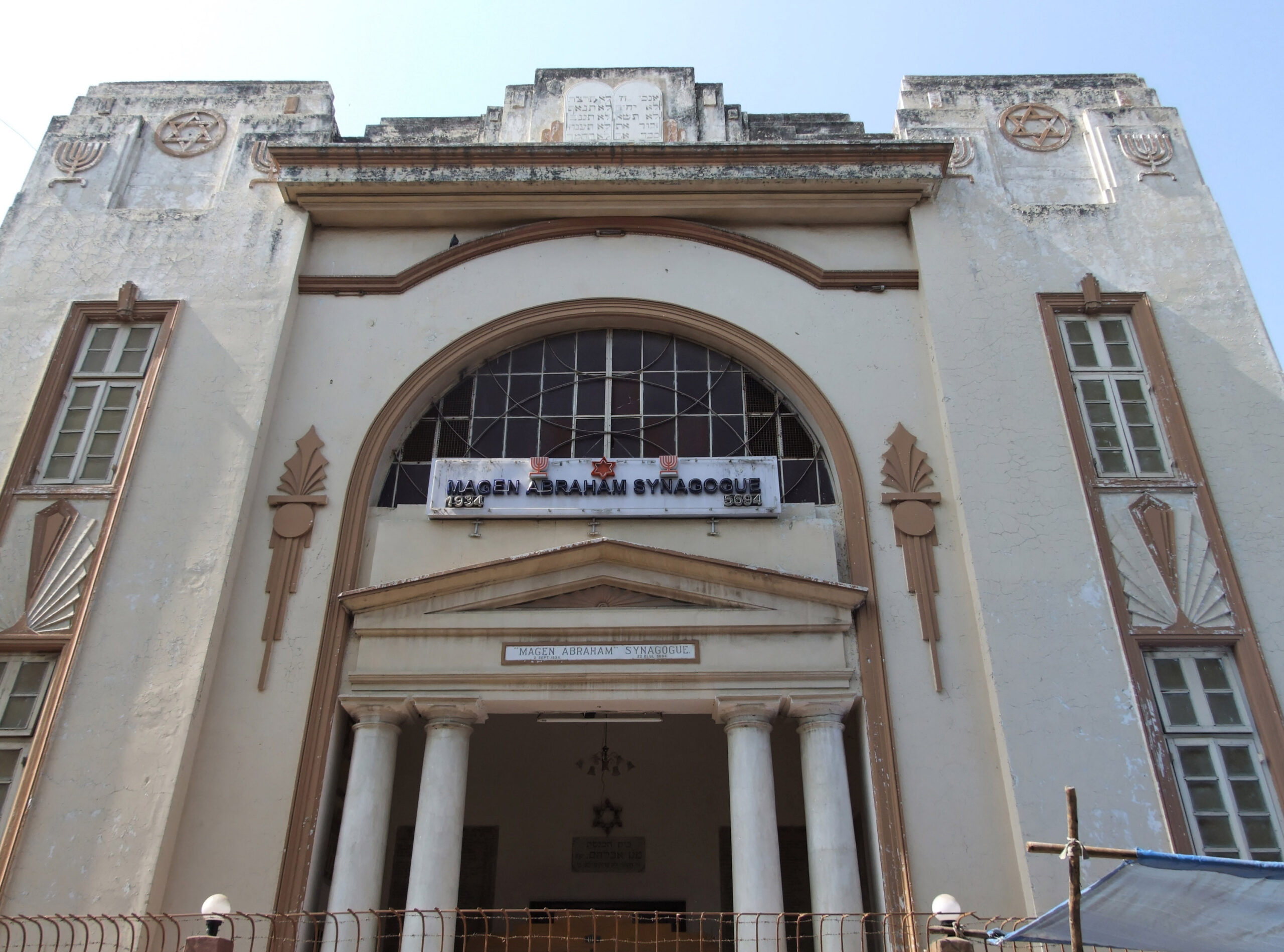
The Book of Rachel, David’s Sahitya Akademi Award-winning 2006 novel, makes this in-between position explicit through its central character. Rachel is an elderly Bene Israel widow who spends the novel trying to preserve her community’s culinary traditions while simultaneously fighting to protect her local synagogue from a land mafia intent on seizing the property. The novel’s plot, part domestic drama, part conflict over land and property rights, ties Rachel’s personal identity directly to physical, material stakes: a synagogue that will disappear, quite literally, if she loses her fight. Reviewing the novel for India Today, critic Geeta Doctor situated the book within a recognizably Indian literary tradition, noting that it read as a blend of R. K. Narayan’s small-town realism and the gentle sentimentality of Tagore’s short story “Kabuliwallah.” Deeptha Achar, a professor of English at Maharaja Sayajirao University of Baroda, offered a more analytical assessment, writing that the novel does more than depict the Bene Israel community from the inside; it examines the economic and cultural pressures that push and pull against the community’s survival. Rachel’s dual struggle, to keep her family’s recipes and her family’s synagogue simultaneously, gives literal, plot-level form to a metaphorical struggle over what, if anything, persists once a religious minority stops practicing its faith in daily, communal ways. The land mafia subplot is worth dwelling on specifically, since it grounds an otherwise abstract question about cultural survival in the most concrete possible terms: property law, real estate value, and the physical vulnerability of a building. Synagogues serving shrinking congregations across India, in Bombay, Calcutta, and Cochin, have faced comparable pressures as emigration leaves fewer people able to maintain or defend historic religious properties, making Rachel’s fictional struggle a recognizable stand-in for a pattern repeated at small Jewish institutions across the country. David does not resolve this tension by having Rachel simply win outright and restore the community to its former strength; the novel’s more limited, personal victory, saving one synagogue through one woman’s persistence, mirrors the actual scale on which Bene Israel heritage preservation has generally succeeded in real life: small, individual efforts rather than large-scale institutional rescues.
Shalom India Housing Society: Identity as a Collective Choice
Where The Book of Rachel examines identity through a single character’s personal struggle, David’s 2007 novel Shalom India Housing Society widens the lens to an entire Bene Israel community facing a collective decision: whether to move into a dedicated Jewish housing cooperative in Ahmedabad. The premise forces multiple characters and families to articulate, out loud and to each other, exactly how much of their identity depends on living near other Jews, keeping kosher, or maintaining visible communal institutions, questions that had perhaps gone unspoken in earlier generations when Jewish identity in Ahmedabad was simply an unremarkable fact of daily life rather than an active decision. By multiplying Rachel’s individual dilemma across an entire building’s worth of families, the novel turns a personal identity crisis into a genuinely collective one, showing how differently various Bene Israel families resolve the same underlying tension between visibility and assimilation. The novel’s title itself signals this tension: “Shalom,” a Hebrew greeting invoking peace and belonging, attached to “India Housing Society,” a distinctly local, bureaucratic Indian institution familiar to anyone who has lived in an Indian residential cooperative. That juxtaposition, a Jewish greeting grafted onto an ordinary Indian housing arrangement, captures in miniature exactly the hybrid condition the novel’s characters are forced to negotiate explicitly rather than simply live unreflectively, as earlier generations largely could.
Bombay Brides: Identity After Emigration
David’s 2019 novel Bombay Brides shifts the “in-between” theme onto new terrain entirely: Bene Israel women who have already emigrated to Israel, rather than those still deciding whether to stay in India. For these characters, the in-between position is no longer about Jewish identity within a Hindu-majority India, but about Indian identity within a Jewish-majority Israel, a mirror image of the earlier novels’ central tension. Read alongside The Book of Rachel and Shalom India Housing Society, Bombay Brides suggests that David does not view emigration as a resolution to Bene Israel identity questions at all, but simply as a relocation of the same fundamental in-betweenness to a new country, where “too Indian” replaces “too Jewish” as the marker of not quite belonging. This reversal is significant because it complicates any simple narrative in which emigration to Israel represents a straightforward homecoming for Bene Israel Jews. If identity were purely a matter of religious majority status, moving from Hindu-majority India to Jewish-majority Israel should resolve the in-between condition David’s earlier novels describe. Instead, Bombay Brides suggests that decades spent as Indian Jews leave the community’s emigrants carrying a distinctly Indian cultural identity that Israeli society reads as foreign, regardless of the religious continuity involved, producing a new and different kind of in-betweenness rather than an end to the condition altogether.
A Consistent Literary Project
Across all three novels, David resists offering her characters, or her readers, a clean resolution to the identity questions she raises. Synagogues are saved or lost; housing cooperatives are joined or rejected; emigration happens or does not, but the underlying condition of being both Jewish and Indian, and never entirely comfortable claiming either identity without qualification, persists regardless of which specific plot outcome a given character experiences. This consistency across roughly fifteen years of published fiction suggests a deliberate authorial project rather than a coincidence of subject matter: David appears less interested in resolving Bene Israel identity than in documenting, novel after novel, exactly how that unresolved identity feels from the inside, across different life stages, different decades, and eventually different countries entirely. David’s own biography lends this consistency additional weight. Born in Ahmedabad in 1945 to a Bene Israel family whose civic prominence, her father founded and ran the city’s main zoological garden, placed them in constant, visible contact with the broader Gujarati community, David did not write from the position of an outsider observing Bene Israel life from a distance. Her novels’ recurring insistence that identity is negotiated rather than simply inherited or assigned reflects a lived reality she experienced directly: a family simultaneously deeply embedded in Ahmedabad’s civic life and distinctly, visibly Jewish within it, never fully one thing or the other in the eyes of the wider community around them.
Why This Reading Matters
Treating David’s novels as a connected body of work rather than as isolated books changes how each individual novel reads. The Book of Rachel‘s land dispute becomes less a standalone plot device and more the first, most concrete version of a conflict David returns to repeatedly in more abstract form. For readers and scholars interested in Jewish diaspora literature more broadly, David’s sustained, multi-novel engagement with in-between identity offers a rare sustained case study of how a single author, from a single small community, chose to keep returning to the same unresolved question across an entire writing career rather than considering it settled after one book. It also offers a useful corrective to broader diaspora literature scholarship, which has tended to focus overwhelmingly on much larger Jewish communities, Ashkenazi communities in the United States and Europe, or Mizrahi and Sephardi communities across the Middle East and North Africa, leaving smaller communities like the Bene Israel almost entirely absent from comparative discussions of diaspora identity in fiction. David’s novels, read together as a single sustained project rather than as isolated works, provide exactly the kind of long-form, multi-decade literary record that scholars of diaspora identity elsewhere have generally had many more authors and books to draw upon.
Geeta Doctor’s comparison of The Book of Rachel to R. K. Narayan is worth taking seriously as more than a passing critical flourish. Narayan’s fictional town of Malgudi became internationally recognized precisely because it used a small, specific, unglamorous setting to explore universal questions about tradition, change, and community, and Doctor’s comparison implicitly argues that David’s Bene Israel Ahmedabad functions the same way: a small, specific setting capable of carrying much larger questions about what happens to any minority community’s identity as the pressures of assimilation, emigration, and economic change accumulate across generations.
In this sense, David’s fiction belongs as much to the broader tradition of Indian regional literature in English as it does to the smaller category of specifically Jewish diaspora writing, a dual belonging that mirrors, fittingly, the dual identity her characters spend three novels trying to reconcile.
Further Reading
For more on Esther David’s other work, including her 2021 food memoir, see our coverage of the Bene Israel of Maharashtra and Gujarat, as well as the Wikipedia article on Book of Rachel.