
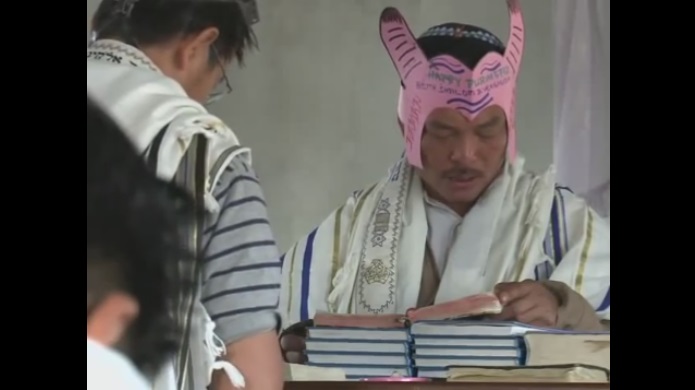
Understanding the Indian Jewish Experience in Historical Context
The story of India’s Jewish communities cannot be properly understood without appreciating the specific historical circumstances that shaped it. Judaism arrived in India through multiple routes over many centuries, creating communities that were diverse in their origins, their practices, and their social positions but united by their adherence to Jewish tradition and their identification with the Jewish people. The Bene Israel of Maharashtra, possibly descended from Jewish settlers who arrived before the Common Era; the Cochin Jews of Kerala, present for at least two thousand years under the protection of Hindu rulers; and the Baghdadi Jews of Calcutta and Bombay, arriving in the late eighteenth century from Iraq and the broader Middle East — each community had its own distinct history but shared the experience of being Jewish in India.
What makes the Indian Jewish story distinctive in the broader context of Jewish history is the nature of the host society in which these communities developed. India under Hindu rule provided a social environment quite unlike the Christian Europe or Muslim Middle East where most Jewish communities spent the Common Era. The absence of organized anti-Jewish persecution, the recognition of Jews as a legitimate minority community with rights to self-governance in religious matters, and the broadly tolerant character of Hindu social philosophy all contributed to a Jewish experience in India that was, by the standards of most Jewish diasporic history, remarkably peaceful.
India and Israel: A Special Bond
The relationship between India and Israel, shaped in significant part by the connections created by the Indian Jewish communities, is one of the most important bilateral relationships in the contemporary geopolitical landscape. India and Israel established full diplomatic relations in 1992, ending decades of Indian support for Palestinian causes that had prevented formal recognition of Israel. Since then, the relationship has grown rapidly, encompassing defense cooperation, technology transfer, agricultural development, and deepening people-to-people connections driven by the large Indian Jewish community in Israel and the growing Indian presence in Israel’s technology sector.
The Indian Jewish communities of Israel serve as a human bridge between the two countries. Their presence in Israel keeps alive the memory and the reality of Jewish life in India, while their connections to family and community in India maintain personal ties that give meaning to the diplomatic relationship. For both countries, the Indian Jewish story is evidence that the relationship between Indian and Jewish civilization has deep roots that long predate the modern political relationship — roots that make the contemporary friendship between the two countries feel like the fulfillment of an ancient connection rather than a new arrangement.
Related Reading
- The Four Communities of Indian Jews: An Overview
- The Bene Israel of Maharashtra
- The Jews of Cochin
- The Baghdadi Jews of Mumbai and Kolkata
- Books on the Jews of India
The challenge of maintaining Jewish identity and practice in Israel is, on the face of it, easier than anywhere else in the world. In the Jewish state, the calendar is organized around Jewish holidays, Hebrew is the language of public life, and Jewish institutions of every kind are accessible. Yet for the Indian Jewish communities that have settled in Israel, the task of maintaining their specifically Indian Jewish identity while participating fully in Israeli life has proven genuinely complex. The very ease of Israeli Jewish life makes it easy to let the specifically Indian dimensions of one’s heritage fade.
The Ashkenazi Default
Israeli Jewish culture has historically been dominated by Ashkenazi norms, practices, and assumptions, despite the fact that Mizrahi and Sephardic Jews now constitute a majority of Israel’s Jewish population. The Ashkenazi dominance of Israeli cultural and religious institutions means that non-Ashkenazi communities often find their practices treated as variations from a norm that is actually just another particular tradition. For Indian Jews, whose practices are sufficiently different from both Ashkenazi and Sephardic norms that they require specific explanation, the Ashkenazi default can make it difficult to maintain their own traditions without constant explanation and justification.
The synagogue is perhaps where this tension is most acute. A Bene Israel family that wishes to attend Shabbat services in the Bene Israel liturgical tradition must find one of the small number of synagogues in Israel that maintain this tradition. In most Israeli neighborhoods, the nearest synagogue will use an Ashkenazi or Sephardic liturgy, and the family must choose between the convenience of the neighborhood synagogue and the preservation of their own liturgical heritage.
Community Organizations
The Indian Jewish communities in Israel have developed a range of organizations dedicated to maintaining their specific identity and practices. The Organization of Indian Jews, the Indian Jewish Cultural Association, and various community groups in the moshavim with significant Bene Israel populations all work to organize cultural events, maintain social networks, and advocate for the community’s interests within Israeli society. These organizations play a crucial role in sustaining the social infrastructure without which Indian Jewish identity in Israel would be impossible to maintain.
The malida ceremony, perhaps the most distinctive element of Bene Israel religious culture, has been maintained through these community organizations, which coordinate the annual gathering at Elijah’s tomb in Haifa and help families who want to perform the ceremony in their own homes to find the necessary ingredients and guidance. The organization of the malida is itself an act of community maintenance, bringing together families that might otherwise have little occasion for contact.
Education and Youth
The question of how to transmit Indian Jewish identity to young people born and raised in Israel is one that community organizations take seriously. Young Israelis of Indian Jewish origin grow up fully in Israeli culture, speaking Hebrew, participating in Israeli educational and social institutions, and navigating the priorities of Israeli youth culture. Making Indian Jewish heritage relevant and engaging to this population requires creativity and investment.
Programs that connect young Israeli Jews of Indian origin with their heritage through cooking, music, storytelling, and visits to remaining Indian Jewish communities in India have had some success in creating generational bridges. The growing Israeli interest in multiculturalism and in the diverse origins of Israeli Jewish society has also created a more receptive environment for the celebration of specifically Indian Jewish contributions to the national story.