
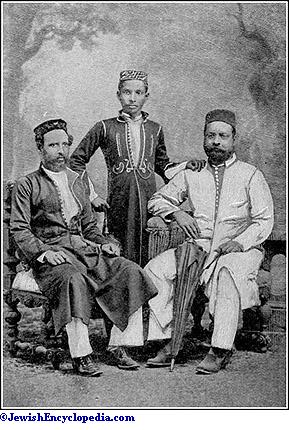
Understanding the Indian Jewish Experience in Historical Context
The story of India’s Jewish communities cannot be properly understood without appreciating the specific historical circumstances that shaped it. Judaism arrived in India through multiple routes over many centuries, creating communities that were diverse in their origins, their practices, and their social positions but united by their adherence to Jewish tradition and their identification with the Jewish people. The Bene Israel of Maharashtra, possibly descended from Jewish settlers who arrived before the Common Era; the Cochin Jews of Kerala, present for at least two thousand years under the protection of Hindu rulers; and the Baghdadi Jews of Calcutta and Bombay, arriving in the late eighteenth century from Iraq and the broader Middle East — each community had its own distinct history but shared the experience of being Jewish in India.
What makes the Indian Jewish story distinctive in the broader context of Jewish history is the nature of the host society in which these communities developed. India under Hindu rule provided a social environment quite unlike the Christian Europe or Muslim Middle East where most Jewish communities spent the Common Era. The absence of organized anti-Jewish persecution, the recognition of Jews as a legitimate minority community with rights to self-governance in religious matters, and the broadly tolerant character of Hindu social philosophy all contributed to a Jewish experience in India that was, by the standards of most Jewish diasporic history, remarkably peaceful.
India and Israel: A Special Bond
The relationship between India and Israel, shaped in significant part by the connections created by the Indian Jewish communities, is one of the most important bilateral relationships in the contemporary geopolitical landscape. India and Israel established full diplomatic relations in 1992, ending decades of Indian support for Palestinian causes that had prevented formal recognition of Israel. Since then, the relationship has grown rapidly, encompassing defense cooperation, technology transfer, agricultural development, and deepening people-to-people connections driven by the large Indian Jewish community in Israel and the growing Indian presence in Israel’s technology sector.
The Indian Jewish communities of Israel serve as a human bridge between the two countries. Their presence in Israel keeps alive the memory and the reality of Jewish life in India, while their connections to family and community in India maintain personal ties that give meaning to the diplomatic relationship. For both countries, the Indian Jewish story is evidence that the relationship between Indian and Jewish civilization has deep roots that long predate the modern political relationship — roots that make the contemporary friendship between the two countries feel like the fulfillment of an ancient connection rather than a new arrangement.
Related Reading
- The Four Communities of Indian Jews: An Overview
- The Bene Israel of Maharashtra
- The Jews of Cochin
- The Baghdadi Jews of Mumbai and Kolkata
- Books on the Jews of India
The Jewish communities of India observed the Jewish calendar in forms that were shaped by both their isolation from the mainstream Jewish world and their immersion in Indian cultural rhythms. The major holidays of the Jewish year, Rosh Hashanah, Yom Kippur, Sukkot, Passover, Shavuot, and Hanukkah, were all observed, but in versions that incorporated the specific cultural character of each Indian Jewish community. The result was a liturgical calendar that was recognizably Jewish in structure while being thoroughly Indian in many of its specific expressions.
Rosh Hashanah and Yom Kippur
The High Holy Days of Rosh Hashanah and Yom Kippur were the most solemn occasions in the Indian Jewish calendar, as they are in Jewish communities everywhere. The Bene Israel observed these holidays with a combination of the standard Hebrew liturgy and their own specific musical tradition, singing the prayers in melodies that had developed within the community over generations and that bore the distinctive imprint of Maharashtrian musical culture. The synagogues of Mumbai and Pune were packed for these occasions, with families traveling from smaller communities to attend services in the larger city synagogues.
Yom Kippur, the Day of Atonement, involved a twenty-five-hour fast from sundown to nightfall the following day, observed by the entire community with the seriousness that Jewish tradition demands. The meal before the fast and the meal that broke the fast were both important ritual occasions, with specific foods that the community associated with the holiday. The breaking of the fast in Indian Jewish households involved the immediate preparation of strongly flavored Indian food after a day of abstinence, a sensory contrast that made the end of Yom Kippur particularly vivid.
Passover and the Indian Jewish Kitchen
Passover, with its requirement that no leavened grain be present in the home for seven days, presented Indian Jewish communities with specific challenges related to the Indian diet, which is heavily dependent on rice and other grains. The question of whether rice was permissible during Passover, which divides Ashkenazi and Sephardic Jewish practice, was resolved by Indian Jewish communities in ways that reflected their own legal traditions and practical circumstances. The Bene Israel, following Sephardic practice, generally permitted rice during Passover, allowing them to maintain more of their usual diet while still observing the prohibition on leavened bread.
The Malida: A Distinctively Indian Jewish Ritual
The malida ceremony of the Bene Israel, a ritual offering of thanksgiving addressed to Elijah the Prophet, has no exact parallel in any other Jewish community’s practice and represents one of the most distinctively Indian Jewish contributions to the broader repertoire of Jewish religious practice. The ceremony is performed at lifecycle events, at the beginning of significant undertakings, and regularly throughout the year in gratitude for blessings received, and it centers on the preparation and presentation of a sweet dish made from flattened rice, coconut, and raisins.