
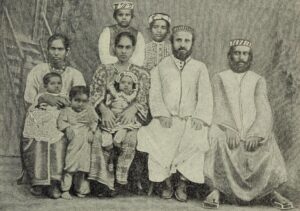
Understanding the Indian Jewish Experience in Historical Context
The story of India’s Jewish communities cannot be properly understood without appreciating the specific historical circumstances that shaped it. Judaism arrived in India through multiple routes over many centuries, creating communities that were diverse in their origins, their practices, and their social positions but united by their adherence to Jewish tradition and their identification with the Jewish people. The Bene Israel of Maharashtra, possibly descended from Jewish settlers who arrived before the Common Era; the Cochin Jews of Kerala, present for at least two thousand years under the protection of Hindu rulers; and the Baghdadi Jews of Calcutta and Bombay, arriving in the late eighteenth century from Iraq and the broader Middle East — each community had its own distinct history but shared the experience of being Jewish in India.
What makes the Indian Jewish story distinctive in the broader context of Jewish history is the nature of the host society in which these communities developed. India under Hindu rule provided a social environment quite unlike the Christian Europe or Muslim Middle East where most Jewish communities spent the Common Era. The absence of organized anti-Jewish persecution, the recognition of Jews as a legitimate minority community with rights to self-governance in religious matters, and the broadly tolerant character of Hindu social philosophy all contributed to a Jewish experience in India that was, by the standards of most Jewish diasporic history, remarkably peaceful.
India and Israel: A Special Bond
The relationship between India and Israel, shaped in significant part by the connections created by the Indian Jewish communities, is one of the most important bilateral relationships in the contemporary geopolitical landscape. India and Israel established full diplomatic relations in 1992, ending decades of Indian support for Palestinian causes that had prevented formal recognition of Israel. Since then, the relationship has grown rapidly, encompassing defense cooperation, technology transfer, agricultural development, and deepening people-to-people connections driven by the large Indian Jewish community in Israel and the growing Indian presence in Israel’s technology sector.
The Indian Jewish communities of Israel serve as a human bridge between the two countries. Their presence in Israel keeps alive the memory and the reality of Jewish life in India, while their connections to family and community in India maintain personal ties that give meaning to the diplomatic relationship. For both countries, the Indian Jewish story is evidence that the relationship between Indian and Jewish civilization has deep roots that long predate the modern political relationship — roots that make the contemporary friendship between the two countries feel like the fulfillment of an ancient connection rather than a new arrangement.
Understanding Indian Jewish History in Depth
The history of India’s Jewish communities is one of the most remarkable and least-known chapters in the long story of the Jewish diaspora. For most of recorded history, three distinct Jewish communities flourished in different parts of the Indian subcontinent: the Bene Israel of Maharashtra, possibly descended from Jewish settlers who arrived over two thousand years ago; the Cochin Jews of Kerala, present for at least two millennia under the patronage of Hindu rulers; and the Baghdadi Jews, who arrived from Iraq and the broader Middle East in the late eighteenth and nineteenth centuries, establishing thriving commercial communities in Calcutta and Bombay.
Each of these communities developed its own distinctive character, shaped by the regional Indian cultures in which it was embedded. The Bene Israel became thoroughly Maharashtrian in language and culture while maintaining their Jewish religious identity; the Cochin Jews absorbed elements of Kerala’s unique civilization while maintaining Hebrew literacy and connections to the wider Jewish world; the Baghdadi Jews brought Middle Eastern Jewish tradition into dialogue with British colonial modernity and Indian commercial culture. The result of this triple process of adaptation was three Jewish communities that were simultaneously deeply Indian and deeply Jewish — proof that these identities were never mutually exclusive.
Sources and Further Learning
The growing body of scholarship on Indian Jewish communities provides resources for anyone wishing to deepen their understanding of this history. Academic journals like Jewish History, the Journal of Indo-Judaic Studies, and various interdisciplinary publications regularly carry articles on aspects of Indian Jewish life. University libraries in Israel, the United States, India, and the United Kingdom hold archival collections related to Indian Jews. And community organizations maintain websites, online archives, and libraries specifically dedicated to preserving and sharing Indian Jewish heritage.
For those with personal connections to Indian Jewish communities — whether as community members, as descendants of Indian Jewish families, or as scholars and researchers — these resources represent both a connection to the past and a foundation for understanding the present. The communities that created this heritage may be shrinking, but the knowledge and culture they generated are being preserved and transmitted through every available means. The story of India’s Jews is too important — too interesting, too moving, too instructive about the possibilities of human cultural creativity and resilience — to be forgotten.