
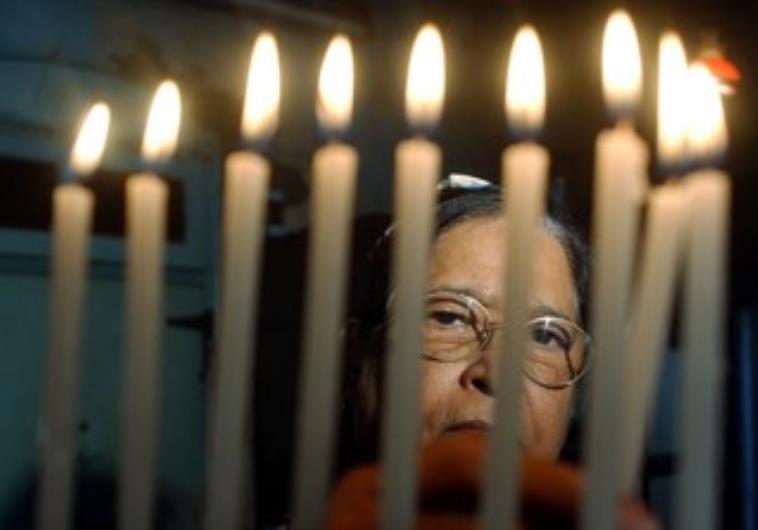
Music has always been one of the most intimate and enduring expressions of Jewish identity, and for the communities of India, it became a space where Jewish and Indian traditions could meet and create something entirely their own. The subject of “Samson Khamkar: Bene Israel Musician” opens a window onto a musical tradition that is at once deeply familiar to Jewish listeners — rooted in the same liturgical texts and ritual functions as synagogue music worldwide — and completely distinctive in its sounds, its sensibility, and its cultural context.
The Indian Jewish Musical Tradition
The musical traditions of the Jewish communities of India represent one of the most distinctive and least-known chapters in the history of Jewish music. Developing in relative isolation from the main currents of Jewish musical history — the Ashkenazi cantorial tradition of Central and Eastern Europe, the Sephardic musical heritage of the Mediterranean — Indian Jewish music took a separate path that led it deep into the musical culture of the subcontinent.
For the Bene Israel community of Maharashtra, music was not simply entertainment or aesthetic pleasure. It was a central element of religious life and communal identity. The melodies used for prayer defined what it sounded like to be Jewish in Maharashtra, Kerala, or Calcutta. The songs sung at home for Shabbat and festivals carried memory and meaning across generations. The music performed at weddings, circumcisions, and other lifecycle events marked the major transitions of individual and communal life with sound and celebration.
Influence of Indian Classical and Folk Music
Indian Jewish music absorbed influences from the rich musical environment of the subcontinent over many centuries of coexistence. The precise nature of these influences varied by region and community: the Bene Israel of Maharashtra absorbed elements of Maharashtrian folk and devotional music; the Cochin Jews absorbed the musical traditions of Kerala; the Baghdadi Jews of Calcutta and Bombay encountered the Bengali and broader North Indian musical traditions of their urban environment.
These borrowings were not wholesale adoptions but selective assimilations that modified traditional Jewish musical forms while preserving their essential character and function. The result was a Jewish music that was distinctively Indian in its sound while remaining recognizably Jewish in its text and purpose — a synthesis that occurred gradually over generations and that expressed itself differently in each of the three major communities.
Scholarship and Preservation
The scholarly study of Indian Jewish music has developed significantly over the past several decades, as ethnomusicologists have recognized the importance of documenting these traditions before the communities that created them disappear. Field recordings made in the second half of the twentieth century preserved important repertoires that might otherwise have been lost entirely. Academic publications, documentary films, and community archives have all contributed to the growing body of knowledge about Indian Jewish music.
Preservation efforts continue to be urgent. Many of the elderly community members who are the primary bearers of traditional Indian Jewish musical knowledge have died, taking irreplaceable repertoires with them. The communities that remain in India are small, and the transmission of musical knowledge from generation to generation has been disrupted by emigration and assimilation. The work of preservation is a race against time, and the scholars and community members engaged in it are acutely aware of what is at stake.
Preserving Indian Jewish Heritage for Future Generations
The task of preserving Indian Jewish heritage is one of the most urgent cultural projects in the contemporary Jewish world. As the communities that created this heritage continue to shrink through emigration and natural attrition, the window for capturing living memories, traditional practices, and community knowledge is narrowing rapidly. Every year, elderly community members pass away, taking with them irreplaceable firsthand knowledge of how Jewish life was actually lived in the Bene Israel villages of Maharashtra, the Jewish neighborhoods of Cochin, or the commercial districts of Calcutta and Bombay where Baghdadi Jewish families built their businesses and synagogues.
The response of scholars, community organizations, and cultural institutions to this challenge has been energetic and multifaceted. Oral history projects have recorded interviews with elderly community members in India, Israel, and the diaspora. Digital archives have made historical photographs, documents, and recordings accessible to researchers and community members around the world. Museum exhibitions have introduced Indian Jewish heritage to audiences who might otherwise never encounter it. And writers, artists, and filmmakers from within and outside the community have created new works that carry Indian Jewish stories and traditions into the contemporary cultural conversation.
The Place of Indian Jews in the Larger Jewish Story
The history of India’s Jewish communities occupies a distinctive and important place in the broader story of the Jewish diaspora. Unlike the often traumatic histories of Jewish communities in Europe and the Middle East — marked by persecution, pogroms, forced conversions, and the Holocaust — the Indian Jewish story is predominantly one of peaceful coexistence, communal autonomy, and cultural creativity within a tolerant host society. This positive experience does not diminish or contradict the difficult experiences of other Jewish communities; it demonstrates that the relationship between Jews and their host societies is shaped by specific historical circumstances rather than by any inevitable dynamic of conflict.
The Indian Jewish communities offer evidence that Jewish identity can be maintained across many centuries of geographic isolation and cultural interchange without requiring either segregation from the surrounding society or assimilation into it. The Bene Israel maintained their Jewish identity across what may be two thousand years of life in Maharashtra while becoming genuinely Indian in language, culture, and social orientation. The Cochin Jews built a thriving community under the protection of local Hindu rulers while maintaining Hebrew literacy and connections to the broader Jewish world. The Baghdadi Jews created cosmopolitan communities in Calcutta and Bombay that participated fully in both the British imperial system and the commercial networks of the Indian Ocean world while maintaining the religious traditions of the ancient Jewish communities of Iraq.
Related Reading
Listen/Learn more: Read more on Wikipedia