
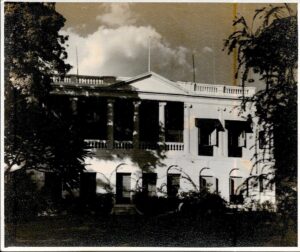
In the bustling New Market of Calcutta, a small bakery has been serving cakes, pastries, and sweets for over a century. Nahoum and Sons is one of the last surviving businesses of the once-thriving Baghdadi Jewish community of Calcutta, and it has become a beloved institution of the city’s food culture — patronized by Hindus, Muslims, Christians, and the handful of Jews who remain in the city, and known to generations of Calcuttans as the source of some of the finest Christmas cakes, plum cakes, and confections in India.
The History of the Shop
The bakery was founded in 1902 by Nahoum Israel Nahum, a Baghdadi Jewish immigrant. It occupies a small corner of the New Market (formerly known as Sir Stuart Hogg Market), a Victorian-era covered market in central Calcutta that has been serving the city since 1874. The shop is modest in size but grand in reputation: its glass cases display fruit cakes, Swiss rolls, coconut macaroons, almond biscuits, and the dark, rum-soaked Christmas cake that is its most famous product. The Christmas cake is deeply ironic in the best possible way — baked by a Jewish family for a holiday they do not observe, and sold to customers of every faith.
A Survivor of Calcutta’s Vanishing Jewish World
Nahoum and Sons endures as an almost solitary representative of a Jewish Calcutta that once contained thousands of families, three grand synagogues, schools, a hospital, clubs, and a full communal infrastructure. The Baghdadi Jewish community peaked at around 5,000-6,000 people in the early twentieth century before emigrating en masse after Indian independence and following anti-Jewish violence in the Arab world that made their emotional ties to Iraq and Syria impossible to maintain. Today perhaps 20-30 Jews remain in the whole of Calcutta, but Nahoum’s continues to operate, run by descendants of the founding family.
A Symbol of Calcutta’s Syncretic Culture
For Calcuttans, Nahoum and Sons is more than a bakery — it is a symbol of the city’s famously pluralistic culture, its ability to absorb communities from around the world and make them wholly its own. The shop has been written about by journalists, novelists, and food writers, and it appears in documentaries about both Indian Jewish history and Calcutta’s identity. It is, in a quiet way, one of the most significant Jewish heritage sites in India.
Source: Nahoum and Sons – Wikipedia