
Related Reading
- The Four Communities of Indian Jews: An Overview
- The Bene Israel of Maharashtra
- The Jews of Cochin
- The Baghdadi Jews of Mumbai and Kolkata
- Books on the Jews of India
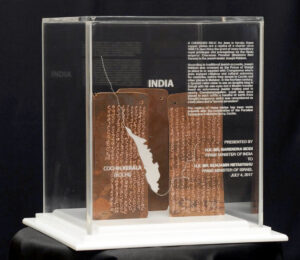
When Narendra Modi became the first sitting Indian Prime Minister to visit Israel in July 2017, it was widely described as a historic diplomatic milestone. Yet for India’s Jewish communities, both those still living on the subcontinent and the much larger population that had emigrated to Israel in previous decades, the visit carried a significance that went beyond diplomatic protocol. It was a moment that brought together two threads of Indian Jewish identity: pride in India as a homeland that had always treated Jews with respect, and pride in Israel as the Jewish state to which most Indian Jews had eventually immigrated.
A Relationship With Deep Roots
The connection between India and the Jewish people predates the establishment of Israel by more than two thousand years. Jewish communities in India stretch back to at least the early centuries of the Common Era, and possibly much further, and the relationship between Jews and their Indian neighbors has been characterized throughout that long history by a mutual respect and tolerance that is genuinely unusual in the global story of Jewish diaspora experience.
India was one of the few countries in the world that never expelled its Jewish citizens, never subjected them to religiously motivated violence, and never imposed discriminatory laws on their practice of Judaism. This history made India a special case in Jewish consciousness, a land that represented the possibility of Jewish life outside persecution, and it gave the Indian-Jewish connection a warmth that was more than merely diplomatic.
Modi and the Bene Israel
Prime Minister Modi’s visit to Israel had particular resonance for the Bene Israel community, many of whose members had emigrated from Maharashtra and now lived in communities across Israel. The Bene Israel had been particularly invested in maintaining a positive relationship between India and Israel, and Modi’s visit was seen as a validation of the special bond between the two countries that Indian Jews had always felt.
During his visit, Modi met with President Reuven Rivlin and Prime Minister Benjamin Netanyahu and participated in ceremonies at the Israeli Holocaust memorial Yad Vashem. He also visited the Museum of the Jewish People, where exhibits on Indian Jewish communities are displayed. The visit included a significant focus on the people-to-people connections between India and Israel, which the presence of tens of thousands of Indian Jews in Israel makes uniquely personal.
The Indian-Israeli Strategic Relationship
Beyond its symbolic dimensions, Modi’s visit was primarily a diplomatic event aimed at deepening the bilateral relationship between India and Israel, which had been steadily growing since the establishment of formal diplomatic relations in 1992. The relationship has since expanded to include significant defense cooperation, agricultural technology transfer, water management, and counter-terrorism collaboration.
For Indian Jews watching from Israel, this growing strategic relationship was a source of satisfaction. It suggested that the two countries they thought of as home were finding common cause in the twenty-first century, creating a geopolitical alignment that gave new contemporary relevance to the ancient connections they embodied personally.
Indian Jews as Cultural Bridges
Indian Jews living in Israel occupy a unique position as bridges between two cultures that are increasingly connected but still have much to learn about each other. They speak both Hebrew and the languages of India, they understand the cultural codes of both societies, and they carry within their own lives the history of a relationship that goes back millennia. As India and Israel deepen their relationship, the Indian Jewish community provides a human dimension to the bilateral ties that no amount of diplomatic protocol can replicate.
Modi’s visit highlighted this bridging role in a particularly visible way, drawing attention to the thousands of Indian Jews who had made Israel their home and whose presence was itself a kind of living diplomacy. For these communities, the visit was an affirmation that the two places they call home, India and Israel, recognize and value each other, and that the Indian Jewish story is part of the larger story of two ancient civilizations finding common ground in the modern world.