
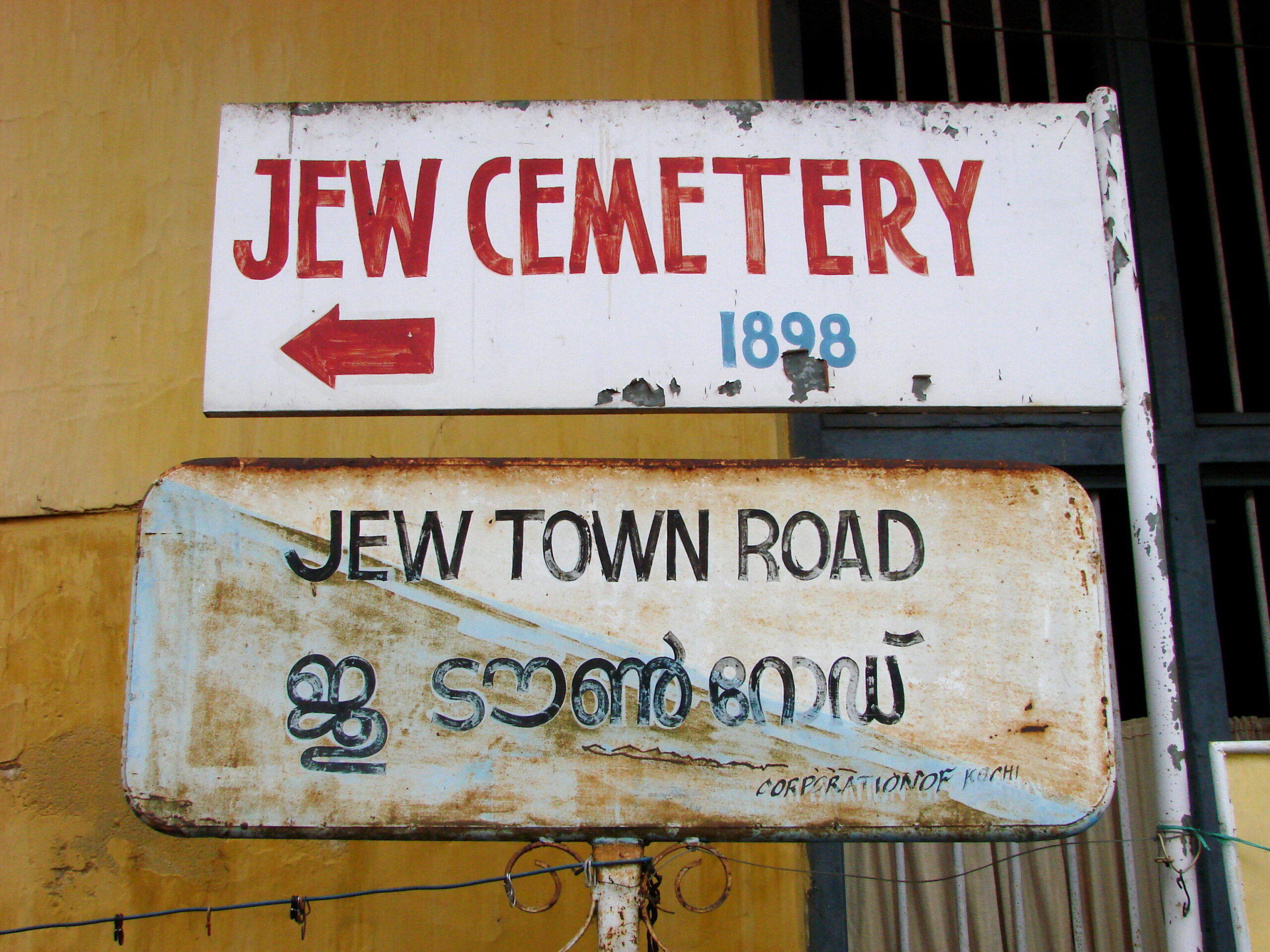
The title once attached to this post — “Scholar Nathan Katz Leads Jewish Heritage Tour of India” — refers to something real: after retiring from Florida International University in 2015, Nathan Katz and his wife Ellen S. Goldberg founded Indo-Judaic, Inc. and began leading Jewish heritage tours of India. But Katz’s connection to Indian Jewish history goes back decades earlier, to a 1993 book he co-authored with Goldberg that remains one of the standard academic works on the subject: The Last Jews of Cochin: Jewish Identity in Hindu India.
The Book That Established Katz’s Reputation
The Last Jews of Cochin: Jewish Identity in Hindu India, published by the University of South Carolina Press in 1993, was co-written by Nathan Katz and Ellen S. Goldberg, years before Katz’s later, broader study Who Are the Jews of India? appeared in 2000. At 352 pages, the book focuses specifically on the Cochin Jewish community of Kerala, examining how a Jewish population that had lived in India for roughly two thousand years managed to maintain a distinct religious identity while also adopting elements of the surrounding Hindu civilization, from certain symbols and social customs to modes of address and communal organization.
A Dual Identity Under Study
The book’s central argument is that Cochin’s Jews developed strategies over many centuries for holding two identities at once: remaining recognizably and observantly Jewish in religious law and practice, while also participating in and adapting to a Hindu-majority social world in ways that set them apart from Jewish communities elsewhere in the world. Katz and Goldberg drew on fieldwork conducted in Kerala as well as historical and textual sources to trace how this dual identity was constructed and sustained, and how it eventually could not prevent the community’s near-total emigration to Israel in the decades following Indian independence.
Scholarly Reception
The Last Jews of Cochin was reviewed in several academic outlets following its publication, including a review by Cynthia Ann Humes published through Project MUSE and a review by David Gold in the AJS Review in 1995. The Chronicle of Higher Education also covered the book on its release, noting that it addressed a community that had already been greatly reduced by emigration to Israel by the time of publication. The book has continued to be cited in later academic treatments of Cochin Jewish history, including in Katz’s own subsequent work.
From Scholarship to Guided Travel
Katz’s academic career centered on Indo-Judaic studies for decades at Florida International University, where he eventually became a distinguished professor and also held the university’s Bhagwan Mahavir Professorship in Jain Studies. After retiring in 2015, Katz and Goldberg did not step away from the subject; instead, they founded Indo-Judaic, Inc. to lead Jewish heritage tours of India, drawing on the same research and contacts built over decades of fieldwork in Cochin, Bombay, and other centers of Indian Jewish life. Their tours have been promoted through organizations such as Jewish Heritage Travel and have been featured in Jewish community publications describing multi-city itineraries covering Cochin, Mumbai, and other historic centers of Indian Jewish settlement.
Why the Book Still Matters
Unlike a general survey, The Last Jews of Cochin gives close, sustained attention to a single community and its particular strategies for religious and cultural survival, based on direct fieldwork rather than secondary sources alone. Read alongside Katz’s later comprehensive study of all three Indian Jewish communities, it offers a useful, more detailed look at exactly how one community, the Cochin Jews, negotiated life as a small religious minority within Hindu India over the course of many centuries.
Book Details
- Title: The Last Jews of Cochin: Jewish Identity in Hindu India
- Authors: Nathan Katz and Ellen S. Goldberg
- Publisher: University of South Carolina Press
- Year: 1993
- Length: 352 pages
- ISBN: 0-87249-847-6
Further Reading
For Katz’s later, broader study of India’s three Jewish communities, see our coverage of Who Are the Jews of India?. Background on the community discussed in both books is available on the Cochin Jews Wikipedia page, and further detail on Katz’s career is available via Nathan Katz’s Wikipedia entry.
Fieldwork in Kerala
Much of The Last Jews of Cochin draws on fieldwork Katz and Goldberg conducted directly among Cochin’s Jewish families in Kerala during a period when the community was already very small, most of its members having emigrated to Israel over the preceding decades. The authors documented synagogue ritual, life-cycle ceremonies, dietary practice, and everyday social relationships between Cochin’s remaining Jewish residents and their Hindu, Christian, and Muslim neighbors, treating the community’s small size as a lens for understanding identity maintenance under pressure rather than as an obstacle to serious research.
Two Katz Books, Two Angles on the Same Community
Read together, Katz’s 1993 book with Goldberg and his 2000 solo study Who Are the Jews of India? offer two different angles on related material. The 1993 book is a focused, single-community study built on direct fieldwork in Cochin, while the 2000 book expands the lens to compare Cochin’s Jews with the Bene Israel and Baghdadi Jewish communities elsewhere in India. Later academic reviewers have treated the two books as complementary parts of the same broader research project into how India’s distinct Jewish communities preserved religious identity over very long stretches of time.
Continuing the Work After Retirement
Katz’s heritage tours with Goldberg have continued to draw directly on the research underlying both books, taking travelers to synagogues and neighborhoods in Cochin and Mumbai that Katz had studied as an academic decades earlier. Promotional materials for these tours, including a 2019 feature in New Jersey Jewish News describing a “Jewish India Experience” tour led by Katz and Goldberg, describe the trips as combining historical and cultural background with visits to the same communities documented in Katz’s scholarship, giving travelers direct access to the sites and, where possible, the people discussed in his academic work.
A Career Spanning Academia and Comparative Religion
Beyond his Indo-Judaic research, Katz spent much of his career at Florida International University also examining connections between Jewish and Hindu religious thought, and he held the university’s Bhagwan Mahavir Professorship in Jain Studies alongside his work on Indian Jewish communities. This comparative religion background informed both of his major books on Indian Jewish history, since Katz consistently framed Cochin’s and later the Bene Israel’s and Baghdadi Jews’ religious survival as a case study in how a minority tradition persists inside a much larger, different civilization rather than treating Indian Jewish history purely as a story of isolation from the wider Jewish world.