
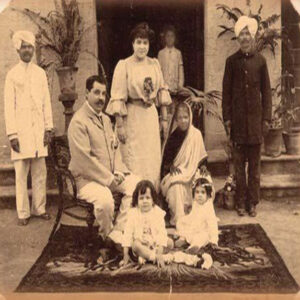
Understanding the Indian Jewish Experience in Historical Context
The story of India’s Jewish communities cannot be properly understood without appreciating the specific historical circumstances that shaped it. Judaism arrived in India through multiple routes over many centuries, creating communities that were diverse in their origins, their practices, and their social positions but united by their adherence to Jewish tradition and their identification with the Jewish people. The Bene Israel of Maharashtra, possibly descended from Jewish settlers who arrived before the Common Era; the Cochin Jews of Kerala, present for at least two thousand years under the protection of Hindu rulers; and the Baghdadi Jews of Calcutta and Bombay, arriving in the late eighteenth century from Iraq and the broader Middle East — each community had its own distinct history but shared the experience of being Jewish in India.
What makes the Indian Jewish story distinctive in the broader context of Jewish history is the nature of the host society in which these communities developed. India under Hindu rule provided a social environment quite unlike the Christian Europe or Muslim Middle East where most Jewish communities spent the Common Era. The absence of organized anti-Jewish persecution, the recognition of Jews as a legitimate minority community with rights to self-governance in religious matters, and the broadly tolerant character of Hindu social philosophy all contributed to a Jewish experience in India that was, by the standards of most Jewish diasporic history, remarkably peaceful.
India and Israel: A Special Bond
The relationship between India and Israel, shaped in significant part by the connections created by the Indian Jewish communities, is one of the most important bilateral relationships in the contemporary geopolitical landscape. India and Israel established full diplomatic relations in 1992, ending decades of Indian support for Palestinian causes that had prevented formal recognition of Israel. Since then, the relationship has grown rapidly, encompassing defense cooperation, technology transfer, agricultural development, and deepening people-to-people connections driven by the large Indian Jewish community in Israel and the growing Indian presence in Israel’s technology sector.
The Indian Jewish communities of Israel serve as a human bridge between the two countries. Their presence in Israel keeps alive the memory and the reality of Jewish life in India, while their connections to family and community in India maintain personal ties that give meaning to the diplomatic relationship. For both countries, the Indian Jewish story is evidence that the relationship between Indian and Jewish civilization has deep roots that long predate the modern political relationship — roots that make the contemporary friendship between the two countries feel like the fulfillment of an ancient connection rather than a new arrangement.
Related Reading
- The Four Communities of Indian Jews: An Overview
- The Bene Israel of Maharashtra
- The Jews of Cochin
- The Baghdadi Jews of Mumbai and Kolkata
- Books on the Jews of India
The connection between the Jews of the Malabar Coast and the ancient spice trade that made Kerala one of the most commercially significant regions in the pre-modern world is one of the most fascinating chapters in Jewish economic history. For at least a millennium, and possibly longer, Jewish traders participated in the commerce that moved pepper, cardamom, cinnamon, and other spices from the coastal forests and plantations of Kerala to the markets of the Arab world, the Mediterranean, and ultimately Europe. This trade shaped not only Jewish economic history but the political and social conditions under which the Cochin Jewish community developed its distinctive identity.
The Malabar Spice Trade
Kerala’s Malabar Coast was the world’s primary source of black pepper during the medieval period, and pepper was among the most valuable commodities in global trade, used throughout the pre-refrigeration world to preserve food and to add flavor and variety to monotonous diets. The value of the pepper trade made the Malabar Coast the destination of merchants from across the known world: Arab traders, Chinese sailors, Persian merchants, and eventually Portuguese, Dutch, and English colonial powers all sought access to the spices of Kerala.
Jewish merchants were active participants in this trade from at least the early medieval period. The Cairo Geniza, the extraordinary archive of medieval Jewish documents discovered in a Cairo synagogue in the late nineteenth century, contains hundreds of letters and commercial records documenting Jewish traders operating along the routes between North Africa, the Middle East, and the Indian coast. These documents reveal a sophisticated network of Jewish commercial agents with partners in Malabar who processed and shipped spices to markets in the west.
The Copper Plate Connection
The famous copper plate grants given by the Kerala king Bhaskara Ravi Varman to the Jewish community leader Joseph Rabban in 1000 CE are often discussed in the context of Jewish rights and privileges, but they also reflect the commercial importance of the Jewish community to the Kerala economy at this period. The rights granted to Rabban, which included control of specific commodities, the right to use certain royal symbols, and hereditary noble status, were the kinds of privileges typically granted to important commercial communities whose cooperation was essential to the prosperity of the kingdom.
The fact that a Kerala king granted such extensive privileges to a Jewish merchant and his community tells us something important about the economic role that Jewish traders played in medieval Malabar. They were not merely one merchant community among many but a community with specific commercial networks, skills, and connections that gave them a position of special importance in the trade that made Kerala wealthy.
Legacy in Contemporary Kerala
The legacy of the ancient Jewish spice trade connection is visible in contemporary Kerala in the continued presence of Jewish heritage in the commercial district of Mattancherry, known as Jew Town, which developed as a center of spice trading. The antique shops and spice merchants that line Synagogue Lane today are the commercial descendants of the Jewish and non-Jewish traders who made this neighborhood the heart of Kochi’s international commerce for centuries. The trade itself is gone from Jewish hands, but the landscape it created remains as evidence of the community’s long commercial presence.