
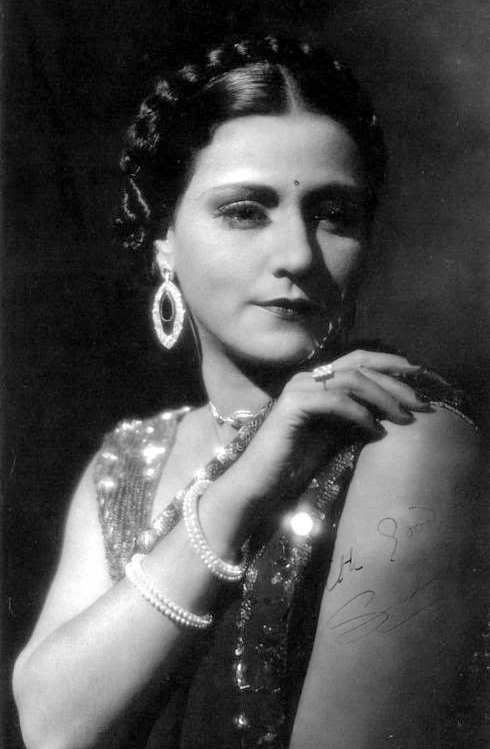
Searching for my Indian Jewish family, or anyone else’s, tends to pull researchers in two very different directions at once. On one end sits the deep, often difficult-to-access world of Jewish religious and mystical study, including the broader Jewish contemplative and mystical tradition many descendants turn to as they try to reconnect with practices their families abandoned generations ago. On the other end sits something few people expect to find in a Jewish genealogy search at all: two of early Bollywood’s most important founding stars, both from Baghdadi Jewish families in Calcutta and Bombay.
The Religious Starting Point
For many descendants of India’s Jewish communities, tracing family history begins with religious practice rather than public records, since so much of Bene Israel, Cochin, and Baghdadi Jewish life in India was organized around synagogue attendance, dietary law, and life-cycle ritual long before formal government documentation became reliable or complete. Descendants researching this history often encounter, for the first time, the deeper currents of Jewish mystical and contemplative tradition that shaped how their ancestors’ communities understood exile, chosenness, and continuity, concepts that took on particular resonance for communities that spent centuries as a small religious minority within a much larger Hindu-majority society. This starting point, abstract, textual, and deeply personal, could not seem further removed from the glamour of a national film industry. The Jewish mystical tradition broadly known as Kabbalah, concerned with hidden meanings in scripture, the nature of exile, and the eventual restoration of a scattered people, held particular appeal for communities who had themselves experienced centuries of geographic isolation from the rest of world Jewry. While formal Kabbalistic scholarship was never the dominant mode of religious life in Bene Israel villages or Cochin synagogues, the broader themes of exile, hidden identity, and eventual return that run through Kabbalistic thought resonate directly with how these communities understood their own historical position: scattered far from Jerusalem, practicing in isolation, and uncertain for generations whether the wider Jewish world even remembered they existed.
Sulochana: Bombay’s First Great Silent Film Star
Yet that same genealogical search frequently leads directly to Ruby Myers, born in 1907 in Poona to a Baghdadi Jewish family, who became India’s first major female film star under the stage name Sulochana. Discovered while working as a telephone operator, Myers initially turned down an offer to act, since acting was considered a disreputable profession for women in 1920s India, before eventually agreeing and becoming, within a few years, the highest-paid movie star in the entire country at Imperial Film Company. Her romantic films of the late 1920s, including Madhuri, Anarkali, and Indira B.A., made her one of the defining faces of Indian silent cinema. When sound film arrived and required fluency in Hindustani, a language she had not previously needed for silent roles, Myers took a year away from acting specifically to learn it, then returned to remake several of her own silent hits as talkies. In 1973, the Indian government awarded her the Dadasaheb Phalke Award, the country’s highest honor for lifetime achievement in cinema, a recognition of just how foundational her contribution to the industry had been. Myers’ decision to keep working under a stage name rather than her birth name reflected a broader pattern among early Indian film performers of minority backgrounds, who frequently adopted screen names that obscured religious or ethnic identity in an industry still working out what kind of performers Indian audiences would accept as leading actors. That her Jewish background remained largely unknown to the general audiences who made her a star illustrates how thoroughly Baghdadi Jewish performers could assimilate into mainstream Indian visual culture while quietly maintaining a separate communal and religious life away from the studio.
Pramila: Miss India and Hindi Cinema’s First Female Producer
A second major figure any thorough search is likely to encounter is Esther Victoria Abraham, born in 1916 in Calcutta to a Baghdadi Jewish family, and known professionally as Pramila. Pramila won the first Miss India pageant in 1947 and went on to become the first woman film producer in the Hindi film industry, a role that placed her on the business and creative side of Bollywood at a time when very few women, of any background, held that kind of authority. Her father, Reuben Abraham, was a Calcutta Jewish businessman, and her own life, including two marriages, the second to a Shia Muslim actor who performed under the stage name Kumar, reflected the same kind of boundary-crossing, multi-community existence that so many Baghdadi Jewish families in colonial India navigated as a matter of daily life rather than exception. As a producer, Pramila took on financial and creative risk in an industry where very few women controlled production budgets or hired crews directly, and her Miss India title the same year gave her a level of public visibility that most producers, male or female, never achieved. Together, her pageant win and her producing career reflected an unusually public, unusually multifaceted relationship to Indian public life for a member of a Jewish community that, in most other respects, kept a relatively low and private profile within the wider cities of Calcutta and Bombay.
Why These Two Stories Keep Surfacing
Sulochana and Pramila appear so often in Indian Jewish genealogical research not because their Jewish identity was a defining feature of their public careers, it was frequently unknown to their audiences at the time, but because their surviving records happen to be unusually well documented compared to most ordinary Baghdadi Jewish families of the same era. National film industry archives, award records, and biographical dictionaries preserved details about these two women that similar documentation almost never survives for non-public Jewish families from the same Calcutta and Bombay communities. For a descendant searching for information about an ordinary great-grandparent who left no comparable public record, discovering that two women from the same small community became national celebrities offers a rare, concrete point of entry into a community whose ordinary members mostly left only fragments: a synagogue membership record, a gravestone, a mention in a colonial-era directory. This asymmetry in the historical record, extensive public documentation for a handful of celebrities against near-total silence for the majority of ordinary community members, is common across minority diaspora communities generally, but it is especially pronounced for India’s Jewish population given how small each community was even at its historical peak. A researcher today searching for an ordinary Baghdadi Jewish family’s synagogue attendance records, business dealings, or immigration paperwork will typically find far less than a researcher looking into Sulochana’s film career or Pramila’s producing credits, simply because national cultural institutions had far stronger incentives to preserve celebrity records than routine communal ones.
The Gap Between Public Record and Private Memory
This is where the two ends of the search, mystical text and movie star, actually meet. Both represent attempts to fill in the same fundamental gap: the disappearance of a small, once-vibrant Jewish community from India through twentieth-century emigration to Israel and elsewhere, leaving behind both the private religious inheritance a family may still practice quietly at home and the rare public record of a shared community member who happened to become famous. Neither source alone tells the full story of any specific family, but together they represent the two kinds of evidence most available to someone searching today: the intimate, unbroken thread of religious practice passed privately through a family, and the rare, public documentation of the few community members whose lives intersected with a national institution large enough to keep records.
Why This Search Matters
As the Bene Israel, Cochin, and Baghdadi Jewish populations remaining in India continue to shrink toward a handful of elderly residents, this kind of dual search, part private religious archive, part public historical record, will likely become the primary way future descendants reconstruct family history at all. Understanding both ends of that search, the textual and spiritual inheritance on one side, and the surprising, well-documented public figures like Sulochana and Pramila on the other, gives searchers a genuinely fuller picture than either source could provide alone. Genealogical researchers who approach this search expecting a single, unified narrative, either a purely religious inheritance or a purely secular celebrity connection, often find the reality more useful precisely because it resists that unification: a family’s private mystical or liturgical tradition and a community’s rare public celebrities are not two competing versions of the same history but two genuinely separate kinds of evidence, each surviving through entirely different mechanisms of preservation, private oral transmission in one case, public institutional archiving in the other.
Both women died decades ago, Myers in 1983 and Abraham in 2006, but their film records, award citations, and biographical entries remain far more accessible today than the private religious and family records of almost anyone else from their same small community, a genuinely useful, if lopsided, starting point for anyone beginning this kind of search.
Further Reading
For more on the communities discussed here, see our coverage of the Baghdadi Jews of Mumbai and Kolkata, as well as the Wikipedia article on Ruby Myers (Sulochana).