
Indian Jewish books to read are not always easy to find, but India’s Jewish communities, Cochin Jews, Bene Israel, and Baghdadi Jews, have produced a surprisingly rich, if scattered, body of literature considering how small each community has become. The eight books below, spanning history, fiction, memoir, and art history, offer genuinely different entry points into the community’s stories, and none requires prior background knowledge to enjoy.
1. Who Are the Jews of India? by Nathan Katz
Published by University of California Press in 2000, this 224-page volume remains the single most comprehensive attempt to describe all three of India’s major Jewish communities within one book. Nathan Katz, the scholar most responsible for establishing Indo-Judaic studies as a field, argues that India represents a genuine outlier in Jewish diaspora history: three separate communities, arriving centuries apart, none of which experienced anything resembling the organized antisemitic violence that shaped Jewish history in Europe and the Middle East. A finalist for the National Jewish Book Award and winner of India’s Vak Devi Saraswati Saman Award, it remains the best single starting point for readers new to the subject. Katz organizes the book less around a single chronological narrative than around the recurring question of what makes a group recognizably Jewish in the first place, using each of the three communities, the internally stratified Cochin Jews, the isolated but persistent Bene Israel, and the more recently arrived Baghdadi merchant families, to test that question from a different angle rather than offering readers one tidy definition.
2. The Last Jews of Cochin by Nathan Katz and Ellen S. Goldberg
Published in 1993, this earlier Katz collaboration focuses specifically on the Cochin Jewish community of Kerala, tracing its internal social stratification into Malabari, Paradesi, and other sub-groups and documenting a community whose Jewish presence on the Malabar coast may stretch back to the fourth century. Written before Katz turned to the broader three-community comparison in Who Are the Jews of India?, it offers considerably more depth on Cochin’s specific religious practices, synagogue architecture, and internal communal politics than any single chapter of a comparative survey could provide. The book pays particular attention to the Paradesi Synagogue in Kochi, built in 1568 and still the oldest active synagogue in the Commonwealth of Nations, along with the community’s distinctive silver Torah ornaments and hand-painted ceremonial tiles, material culture that later scholarship, including Robbins and Tokayer’s art history volume discussed below, would return to in even greater depth.
3. Dropped from Heaven by Sophie Judah
This 2007 linked short story collection, published by Schocken, is set in the fictional town of Jwala Nagar, modeled on the small Bene Israel communities of India’s heartland far from the larger Jewish populations of Bombay and Calcutta. Judah, who grew up within a Bene Israel family before eventually emigrating, fills her stories with the kind of specific, insider detail, local trade vocabulary, synagogue social hierarchy, wedding and mourning etiquette, that an outside observer could not easily reproduce. It remains one of the only works of literary fiction to place Bene Israel village life at its center rather than treating it as background color. Reviewers at the time of publication frequently noted how unusual it was for a Jewish community entirely unfamiliar to most English-language readers to receive this kind of sustained literary treatment, since almost no earlier writer had set fiction inside a Bene Israel village using the community’s own idiom and daily concerns as the central subject rather than as exotic background detail for an outsider protagonist.
4. The Book of Rachel by Esther David
Winner of India’s 2010 Sahitya Akademi Award, this novel follows Rachel, an elderly Bene Israel widow in Ahmedabad who fights simultaneously to preserve her family’s culinary traditions and to save her local synagogue from a land mafia intent on seizing the property. Critic Geeta Doctor compared the novel in India Today to a blend of R. K. Narayan’s small-town realism and the gentle sentimentality of Tagore’s “Kabuliwallah,” while academic reviewers praised its unusually clear-eyed portrait of the economic and cultural pressures facing a shrinking religious minority. David’s own biography as a sculptor, artist, and longtime Times of India art critic before turning to fiction gives the novel an unusually visual sensibility, particularly in its descriptions of the physical synagogue Rachel fights to protect and the specific material objects, ritual foods, worn prayer books, that anchor her sense of continuing Jewish practice in a community with dwindling numbers.
5. Bene Appétit by Esther David
David’s 2021 book for HarperCollins India shifts from fiction to memoir and cookbook, assembling her own family’s Bene Israel recipes alongside the kitchen rituals and food memories that gave each dish its meaning. Structured around Ahmedabad’s Bene Israel community and David’s own upbringing as the daughter of Reuben David, founder of the city’s well-known zoological garden, the book captures details, exact recipe proportions, the specific stories attached to individual dishes, that more conventional histories rarely preserve. The recipes reflect the particular fusion that defines Bene Israel cuisine specifically: kosher dietary principles adapted to Gujarati and Konkan coast ingredients rather than to the Ashkenazi or Sephardi culinary traditions more commonly associated with Jewish cooking elsewhere in the world, making the book as much a document of regional Indian foodways as of Jewish practice.
6. Jewish Portraits, Indian Frames by Jael Silliman
Published in 2001, this collection gathers oral histories and first-person narratives from Indian Jewish women across the Baghdadi, Bene Israel, and Cochin communities. Silliman, who grew up in a Baghdadi Jewish family in Calcutta originally from Aleppo, brings a scholar’s rigor, her academic background is in gender and reproductive rights rather than literature, to documenting how Indian Jewish women specifically experienced faith, migration, and communal identity, a perspective that more male-centered histories of the same communities often overlook entirely. Silliman has since extended this documentary project into a digital archive, Recalling Jewish Calcutta, built with academic partners including Jadavpur University, Trinity College Dublin, and the National University of Ireland Maynooth, positioning the book as the print-era foundation for what has since become an ongoing, expanding online record of the same community.
7. The Last Jews of Kerala by Edna Fernandes
British journalist Edna Fernandes spent time embedded with Kerala’s dwindling Cochin Jewish community for this 2008 book, documenting the final years of a population that had once numbered in the thousands across the Malabar coast and had shrunk, by the time of her research, to only a handful of elderly residents. Written for a general readership rather than an academic one, the book functions partly as a eulogy for a vanishing community and partly as an accessible introduction to Cochin Jewish history for readers who might never otherwise encounter it. Fernandes structures the book around individual community members rather than abstract history, following specific families through synagogue closures, disputes over communal property, and the practical, often painful calculations involved in deciding whether to emigrate to Israel or remain in a place that, for many interviewed, was the only home their families had known for generations.
8. Jews and the Indian National Art Project, edited by Kenneth X. Robbins and Marvin Tokayer
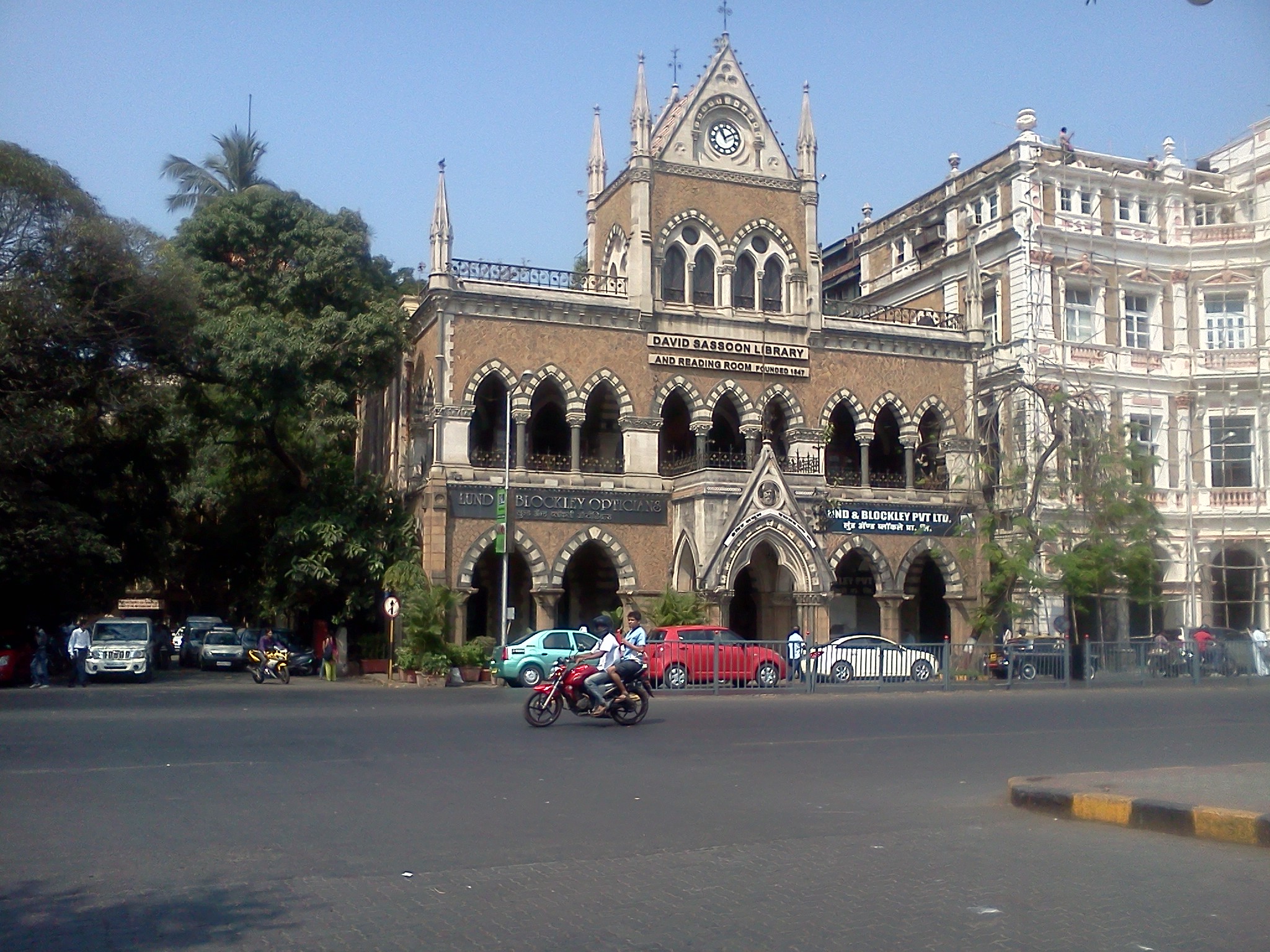
This 2015 Niyogi Books volume takes a different approach entirely, documenting Jewish contributions to Indian visual and material culture: synagogue architecture, Torah arks crafted by shared Hindu, Muslim, and Jewish silversmith workshops, illuminated ketubot, and the civic art patronage of wealthy Baghdadi Jewish merchant families like the Sassoons. Editors Robbins, an American art collector, and Tokayer, a rabbi who spent eight years as the only rabbi in Japan, frame Jewish artistic contributions as integral to India’s national art history rather than as a separate, niche communal footnote. Robbins, whose personal collection of South Asian art was largely donated to the Smithsonian Institution in 1990, has built a career documenting how minority communities beyond India’s Hindu majority, including African-descended nobility in Indian princely courts, shaped Indian visual culture, situating this volume as one entry in a much longer project concerned with minority artistic contribution to Indian national heritage broadly.
Where to Start
Readers wanting the broadest possible overview should begin with Katz’s Who Are the Jews of India?, while those drawn to personal, character-driven storytelling will find more immediate reward in Judah’s Dropped from Heaven or David’s The Book of Rachel. Whatever the entry point, all eight books share a common urgency: each was written, in one way or another, to preserve specific details of communities that continue to shrink year by year through ongoing emigration. Readers more interested in material culture and art history than in personal narrative should turn directly to Robbins and Tokayer’s volume, while anyone specifically researching family genealogy will likely find Fernandes’s on-the-ground reporting and Silliman’s collected oral histories the most immediately useful of the eight.
Taken together, the eight titles cover Cochin, Bene Israel, and Baghdadi Jewish life across history, fiction, memoir, and art, leaving very little of India’s Jewish story untouched.
Further Reading
For more on the individual communities covered across these books, see our coverage of the Bene Israel of Maharashtra and the Jews of Cochin, as well as the Wikipedia article on Nathan Katz.