
Related Reading
- The Four Communities of Indian Jews: An Overview
- The Bene Israel of Maharashtra
- The Jews of Cochin
- The Baghdadi Jews of Mumbai and Kolkata
- Books on the Jews of India
The history of Jews in India is surrounded by a number of persistent myths and misconceptions that have accumulated over decades of popular misunderstanding. At the same time, many of the actual facts about Indian Jewish communities are remarkable enough that they sound like myths. Separating fact from fiction, and understanding why the myths persist, is an important part of telling the Indian Jewish story accurately.
Myth: There Are No Jews in India
The most fundamental misconception about Indian Jews is that they do not exist or that if they do, they arrived recently and in small numbers connected to global Jewish migration patterns. In fact, Jewish communities have been present in India for at least two thousand years, and some of the most ancient Jewish communities in the world outside the Middle East are Indian. The Bene Israel of Maharashtra, the Cochin Jews of Kerala, and the Baghdadi Jews of Calcutta and Bombay all represent substantial communities with deep roots in the Indian subcontinent.
Today the Jewish population of India has declined significantly through emigration to Israel and other countries, but a community of several thousand people remains, concentrated primarily in Mumbai, Pune, and a few other cities. These are not recent arrivals or tourists but families whose connection to India stretches back many generations.
Myth: Indian Jews Were Treated Badly
The opposite of this myth, the assumption that Indian Jews, like Jewish communities everywhere, must have faced persecution and discrimination, is also wrong. India is one of the very few countries in the world where Jewish communities lived for centuries without facing systematic antisemitism. The copper plate grants given to the Cochin Jewish community by a Hindu king in 1000 CE, the military service of Bene Israel soldiers in Indian armies, and the commercial freedom enjoyed by Baghdadi Jewish merchants in British India all testify to a relationship between Jews and their Indian neighbors that was characterized by mutual respect rather than hostility.
This does not mean that Indian Jewish communities never faced any difficulties or discrimination. The Bene Israel faced internal community stratification along caste-like lines, and there were occasional tensions with other communities. But compared to the systematic persecution that characterized Jewish life in Europe for most of the past two thousand years, India was an extraordinary sanctuary.
Fact: Indian Jews Were Among the First to Support Zionism in Asia
One of the lesser-known facts about Indian Jewish history is the early and enthusiastic support that Indian Jewish communities gave to Zionism. The Bene Israel community in particular responded to Theodor Herzl’s call for a Jewish homeland with considerable enthusiasm, and Indian Jewish leaders attended early Zionist congresses. When Israel was established in 1948, Indian Jewish communities were among the first diaspora populations to begin large-scale immigration to the new state.
Myth: Indian Jews Are Not “Real” Jews
This myth has had painful real-world consequences. In the 1960s, the Israeli rabbinate issued a ruling questioning the full Jewish status of the Bene Israel, citing concerns about their practice of Judaism during their centuries of isolation from the Jewish mainstream. The ruling caused enormous pain within the community and was eventually reversed following sustained protest. The episode reflected a narrowness in some Jewish religious authorities’ conception of what authentic Jewish life could look like.
Modern genetic and historical research has confirmed the Jewish origins of all three major Indian Jewish communities. Their DNA carries markers associated with ancient Middle Eastern populations, their religious practices are grounded in the same biblical texts as Jewish communities everywhere, and their liturgical traditions are recognizably connected to the broader Jewish world even when they differ in their specifics.
Fact: Bollywood Had Jewish Stars
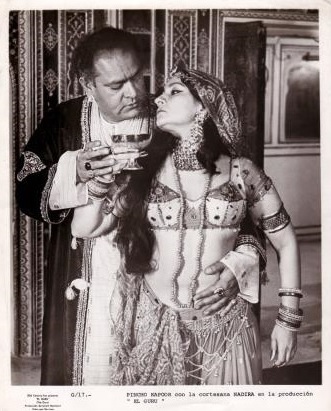
One of the most surprising facts about Indian Jewish history is the significant role that Bene Israel women played in the early Indian film industry. In an era when most respectable Hindu families refused to allow their daughters to work in films, the more cosmopolitan Bene Israel community produced several of Bollywood’s most celebrated early actresses. Nadira and Pramila are among the most famous, and their careers helped establish the conventions of Hindi film acting that continue to influence the industry today.