
The Jewish community of Cochin — known as the Cochin Jews or Malabar Jews — is one of the oldest Jewish communities in the world, with traditions that trace their settlement in Kerala back over two thousand years and perhaps much longer. The story of “The Forgotten Jews of India and Their Significance” opens a window onto a community that combined ancient heritage with remarkable resilience and cultural creativity, developing a way of life that was simultaneously deeply Jewish and thoroughly embedded in the unique civilization of Kerala.
Origins and Ancient Settlement in Kerala
The Jewish community of Cochin traces its roots to settlements on the Kerala coast that tradition dates to the time of King Solomon or to the period following the destruction of the First Temple in 586 BCE. While these earliest dates cannot be verified, documentary and archaeological evidence confirms a well-established Jewish community in Kerala by the early medieval period. The famous copper plates granted by the Raja of Cochin to the Jewish merchant Joseph Rabban, dating to approximately the tenth century CE, provide one of the earliest historical documents relating to the community, recording rights and privileges that indicate a well-established and respected presence.
The Cochin Jews developed over the centuries into a community that was thoroughly integrated into the social and economic fabric of Kerala. Jewish merchants played important roles in the spice trade that made Kerala famous across the ancient world, connecting the region’s markets to buyers in the Middle East, the Mediterranean, and beyond. Their commercial skills and international connections made them valuable partners for the local rulers of Cochin, who extended protection and privileges that allowed the community to flourish.
Community Structure and Religious Life
The Cochin Jewish community was never a single, unified entity but rather a collection of related but distinct groups that maintained their own synagogues and, to some degree, their own social networks. The major division was between the Paradesi (white) Jews and the Malabari (black) Jews, reflecting different periods of arrival in India and different patterns of interaction with the surrounding population. Despite these internal divisions, all Cochin Jews shared the same fundamental religious tradition, rooted in the Sephardic Jewish liturgy and practice.
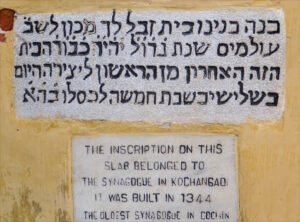
The synagogues of the Cochin Jewish community were remarkable institutions — centers of religious life, communal governance, and social interaction that maintained a rich tradition of liturgical music, scholarly learning, and communal support. The Paradesi Synagogue in Mattancherry, built in 1568, is the oldest surviving example and one of the most architecturally distinguished Jewish buildings in Asia. Its distinctive interior, combining South Indian and Jewish architectural elements, reflects the unique cultural synthesis that characterized Cochin Jewish life at its height.
Preserving Indian Jewish Heritage for Future Generations
The task of preserving Indian Jewish heritage is one of the most urgent cultural projects in the contemporary Jewish world. As the communities that created this heritage continue to shrink through emigration and natural attrition, the window for capturing living memories, traditional practices, and community knowledge is narrowing rapidly. Every year, elderly community members pass away, taking with them irreplaceable firsthand knowledge of how Jewish life was actually lived in the Bene Israel villages of Maharashtra, the Jewish neighborhoods of Cochin, or the commercial districts of Calcutta and Bombay where Baghdadi Jewish families built their businesses and synagogues.
The response of scholars, community organizations, and cultural institutions to this challenge has been energetic and multifaceted. Oral history projects have recorded interviews with elderly community members in India, Israel, and the diaspora. Digital archives have made historical photographs, documents, and recordings accessible to researchers and community members around the world. Museum exhibitions have introduced Indian Jewish heritage to audiences who might otherwise never encounter it. And writers, artists, and filmmakers from within and outside the community have created new works that carry Indian Jewish stories and traditions into the contemporary cultural conversation.
The Place of Indian Jews in the Larger Jewish Story
The history of India’s Jewish communities occupies a distinctive and important place in the broader story of the Jewish diaspora. Unlike the often traumatic histories of Jewish communities in Europe and the Middle East — marked by persecution, pogroms, forced conversions, and the Holocaust — the Indian Jewish story is predominantly one of peaceful coexistence, communal autonomy, and cultural creativity within a tolerant host society. This positive experience does not diminish or contradict the difficult experiences of other Jewish communities; it demonstrates that the relationship between Jews and their host societies is shaped by specific historical circumstances rather than by any inevitable dynamic of conflict.
The Indian Jewish communities offer evidence that Jewish identity can be maintained across many centuries of geographic isolation and cultural interchange without requiring either segregation from the surrounding society or assimilation into it. The Bene Israel maintained their Jewish identity across what may be two thousand years of life in Maharashtra while becoming genuinely Indian in language, culture, and social orientation. The Cochin Jews built a thriving community under the protection of local Hindu rulers while maintaining Hebrew literacy and connections to the broader Jewish world. The Baghdadi Jews created cosmopolitan communities in Calcutta and Bombay that participated fully in both the British imperial system and the commercial networks of the Indian Ocean world while maintaining the religious traditions of the ancient Jewish communities of Iraq.