
Understanding the Indian Jewish Experience in Historical Context
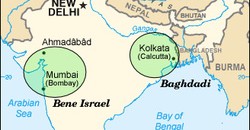
The story of India’s Jewish communities cannot be properly understood without appreciating the specific historical circumstances that shaped it. Judaism arrived in India through multiple routes over many centuries, creating communities that were diverse in their origins, their practices, and their social positions but united by their adherence to Jewish tradition and their identification with the Jewish people. The Bene Israel of Maharashtra, possibly descended from Jewish settlers who arrived before the Common Era; the Cochin Jews of Kerala, present for at least two thousand years under the protection of Hindu rulers; and the Baghdadi Jews of Calcutta and Bombay, arriving in the late eighteenth century from Iraq and the broader Middle East — each community had its own distinct history but shared the experience of being Jewish in India.
What makes the Indian Jewish story distinctive in the broader context of Jewish history is the nature of the host society in which these communities developed. India under Hindu rule provided a social environment quite unlike the Christian Europe or Muslim Middle East where most Jewish communities spent the Common Era. The absence of organized anti-Jewish persecution, the recognition of Jews as a legitimate minority community with rights to self-governance in religious matters, and the broadly tolerant character of Hindu social philosophy all contributed to a Jewish experience in India that was, by the standards of most Jewish diasporic history, remarkably peaceful.
India and Israel: A Special Bond
The relationship between India and Israel, shaped in significant part by the connections created by the Indian Jewish communities, is one of the most important bilateral relationships in the contemporary geopolitical landscape. India and Israel established full diplomatic relations in 1992, ending decades of Indian support for Palestinian causes that had prevented formal recognition of Israel. Since then, the relationship has grown rapidly, encompassing defense cooperation, technology transfer, agricultural development, and deepening people-to-people connections driven by the large Indian Jewish community in Israel and the growing Indian presence in Israel’s technology sector.
The Indian Jewish communities of Israel serve as a human bridge between the two countries. Their presence in Israel keeps alive the memory and the reality of Jewish life in India, while their connections to family and community in India maintain personal ties that give meaning to the diplomatic relationship. For both countries, the Indian Jewish story is evidence that the relationship between Indian and Jewish civilization has deep roots that long predate the modern political relationship — roots that make the contemporary friendship between the two countries feel like the fulfillment of an ancient connection rather than a new arrangement.
Related Reading
- The Four Communities of Indian Jews: An Overview
- The Bene Israel of Maharashtra
- The Jews of Cochin
- The Baghdadi Jews of Mumbai and Kolkata
- Books on the Jews of India
Academic research on Indian Jewish communities has historically been sparse, confined to a small number of specialist scholars in Jewish studies, South Asian studies, and anthropology whose work reached relatively limited audiences. In recent decades, however, a new generation of researchers, including both scholars from within the Indian Jewish communities themselves and outside scholars drawn to this understudied field, has been working to expand the documentary and analytical record of Indian Jewish life. Among the most interesting of these projects are those undertaken by Fulbright scholars who use their research fellowships to study Indian Jewish communities from the inside.
The Fulbright Connection
The Fulbright Program, which funds academic exchanges between the United States and other countries, has supported research on Indian Jewish communities through grants to American scholars studying in India and Indian scholars studying in the United States. These exchanges have produced dissertations, monographs, documentary films, and ethnographic studies that have significantly expanded scholarly knowledge of Indian Jewish communities and have helped bring this knowledge to broader academic and public audiences.
The Fulbright scholars who have focused on Indian Jewish communities have approached their subjects from a wide range of disciplinary perspectives. Anthropologists have studied the community practices and social structures of the Bene Israel and Cochin Jewish communities. Historians have researched the commercial history of the Baghdadi Jews. Folklorists have documented the oral traditions, music, and ritual practices of communities in India and in the diaspora. Together, these diverse research projects have created a substantially richer picture of Indian Jewish life than existed a generation ago.
The Challenge of Research
Researching Indian Jewish communities presents specific methodological challenges that Fulbright scholars and other researchers must navigate carefully. The communities are small and in some cases declining, which means that research participation requires building genuine trust with people who are aware that their community is disappearing and who may be skeptical about how their stories will be used. Oral history research with elderly community members must be conducted with sensitivity to the reality that many of the people being interviewed have already lost most of their community to emigration.
There are also questions about who has the right to tell these stories and who benefits from their telling. Scholars from outside the community must be particularly thoughtful about these questions, recognizing that academic research and publication, even when well-intentioned, can shape public understanding of a community in ways that the community itself might not endorse. The most successful research projects are those that involve genuine collaboration with community members and that produce outcomes that serve the community’s own interests in documentation and preservation.
Weaving Narratives
The metaphor of weaving that appears in discussions of Indian Jewish narrative research is apt. The story of the Indian Jewish communities is not a single thread but many threads, each representing a different community, generation, individual experience, and disciplinary perspective. Weaving these threads together into a coherent understanding requires both the breadth of perspective that Fulbright exchanges provide and the depth of engagement with specific communities that sustained fieldwork makes possible.
The narratives that emerge from this research are valuable not only as historical records but as contributions to the living cultures of communities that are actively working to understand and preserve their own heritage. When a Fulbright scholar shares research findings with the community that hosted the research, or when academic publications find their way back to community libraries and organizations, the research becomes part of the community’s own ongoing process of self-understanding and cultural maintenance.