
The Jews in India and the Far East, by James Henry Lord, exists today mainly in a 1976 Greenwood Press reprint edition of 120 pages, explicitly described on its title page as a reprint of articles originally contributed to the periodical Church and Synagogue, together with additional appendices. The original articles date to the early decades of the twentieth century, a period when Christian missionary societies operating in British India took a close, if theologically motivated, documentary interest in India’s small Jewish communities, producing some of the earliest sustained outside descriptions of groups like the Bene Israel that exist in the English-language record.
A Missionary’s Documentary Project
Lord’s work belongs to a broader tradition of missionary ethnography, in which Christian missionaries stationed in Asia, tasked primarily with evangelization, nonetheless produced detailed observational accounts of the religious minorities and unfamiliar communities they encountered, sometimes becoming, almost incidentally, among the only outside chroniclers of groups that otherwise left few written records of their own. Church and Synagogue, the periodical in which Lord’s original articles appeared, was oriented toward Christian missions to Jewish communities worldwide, reflecting a current of missionary thought that took particular interest in scattered and little-known Jewish populations, viewing them both as a subject of genuine ethnographic curiosity and, from the missionary perspective, as a potential field for evangelization.
This dual motivation shapes how Lord’s book should be read today. It is not a neutral, disinterested scholarly ethnography in the modern academic sense, but a missionary’s documentary account, produced with an evangelizing purpose that modern readers need to keep in view. At the same time, precisely because so few outside observers took the trouble to document these communities in any detail during this period, missionary writings like Lord’s often constitute some of the only surviving descriptive records of a Jewish community’s customs, demographics, and religious practice as they stood at a particular historical moment, before further change through migration and modernization altered them irrevocably.
Spanning India and the Far East
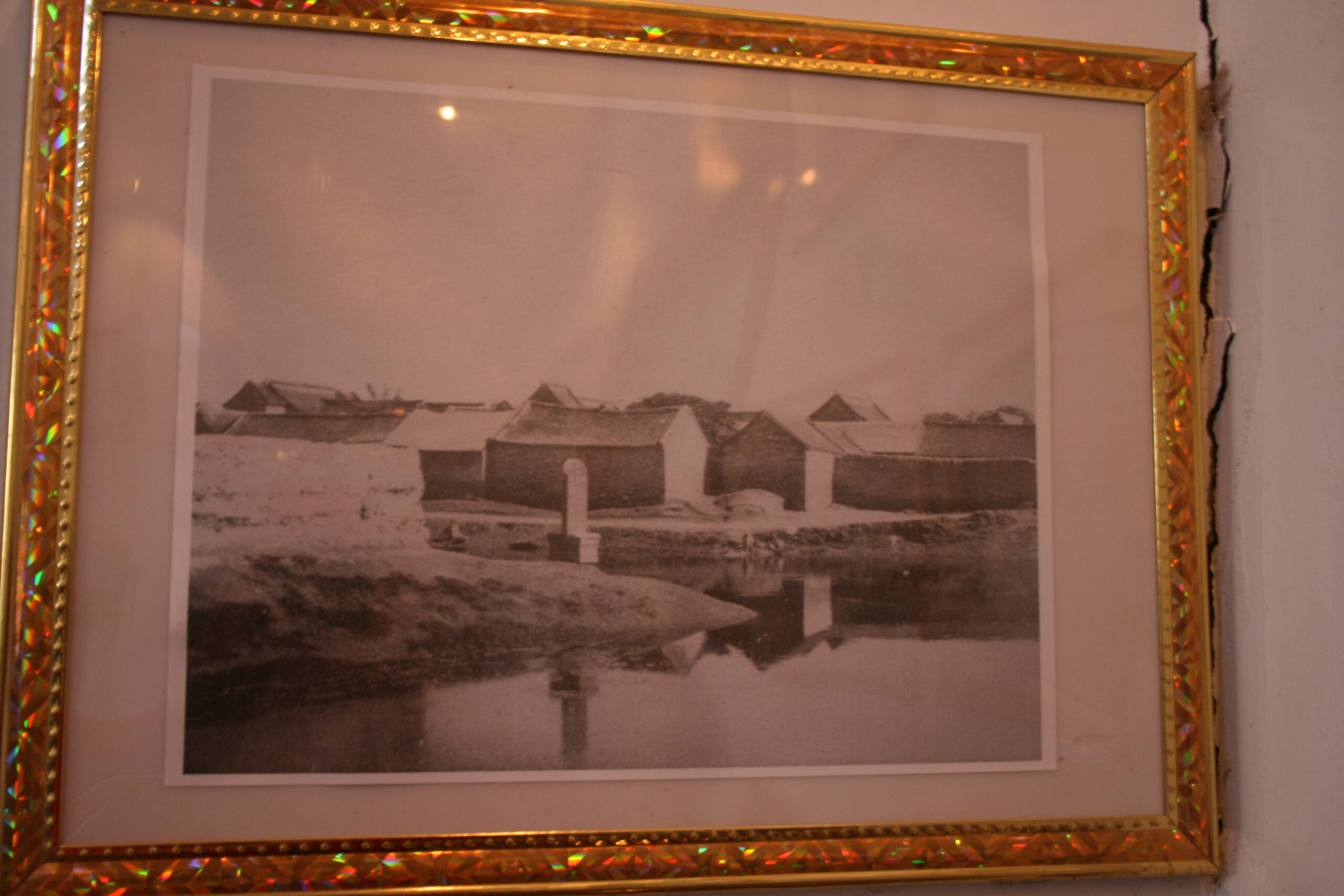
The book’s title signals a geographic ambition unusual among works on Indian Jewry: rather than confining itself to India’s Bene Israel, Cochin, or Baghdadi communities, Lord’s survey extended into the Far East, almost certainly encompassing the Jewish community of Kaifeng, China, whose small, ancient, and by the twentieth century severely assimilated Jewish population had long attracted the curiosity of Christian missionaries and travelers. The Kaifeng community, whose origins are traditionally traced to Jewish merchants who settled along Silk Road trade routes centuries earlier, had by Lord’s time lost most of its distinct religious practice, its synagogue in disrepair and its members largely absorbed into the surrounding Chinese population while retaining a residual awareness of Jewish ancestry. Jesuit missionaries, most famously Matteo Ricci, had documented contact with Kaifeng’s Jewish community as early as the seventeenth century, and Protestant missionaries continued this tradition of documentary interest into the era in which Lord was writing, producing photographs and descriptions of the Kaifeng synagogue and its remaining Torah scrolls before the building itself was later lost.
By placing India’s Jewish communities within this wider frame of “the Far East,” Lord implicitly invited readers to consider Bene Israel, Cochin, and Baghdadi Jews not as an isolated Indian phenomenon but as part of a broader pattern of small, geographically scattered Jewish communities across South and East Asia, each shaped by centuries of relative isolation from the major centers of world Jewry and each of correspondingly great interest to missionary societies seeking to understand, and in their own terms redeem, Jewish communities living entirely outside the reach of contemporary rabbinic authority in Europe or the Middle East.
Reading a Missionary Source Critically
Contemporary historians of Indian Jewry generally approach missionary-authored sources like Lord’s with appropriate caution, mining them for descriptive and demographic detail while remaining alert to the theological assumptions and evangelizing framework that shaped what the missionary-authors chose to record and how they interpreted it. Lord’s original observations of Bene Israel religious practice, communal organization, and daily life, produced during years of direct engagement with the community, nonetheless retain real documentary value precisely because so few alternative outside accounts from the same period survive. The same holds for whatever material his articles preserved concerning the Jewish community of Kaifeng, a community whose own twentieth-century remnant left little documentation of its own and has depended heavily on outside visitors, missionaries and secular scholars alike, for what the historical record retains of its later, much-diminished religious life.
A Reprint That Preserves a Fragile Record
Greenwood Press’s decision to reprint Lord’s scattered periodical articles as a single volume in 1976 reflects a recognition, shared by later scholars of Indian and Asian Jewish history, that even flawed or theologically motivated documentary sources deserve preservation and wider circulation when they concern communities as small and thinly documented as the Bene Israel of Lord’s era or the Kaifeng Jews of China. For researchers working today on the history of Jews in India and the wider Asian Jewish diaspora, Lord’s The Jews in India and the Far East remains a source to be read carefully, with due attention to its missionary origins, but not dismissed, since it captures observational detail about vanishing or transforming communities that later, more methodologically careful scholarship has often had to work hard to reconstruct from other, scarcer sources.
A Long Tradition of Missionary Engagement with the Bene Israel
Lord’s early twentieth-century project continued a much longer tradition of Christian missionary engagement with the Bene Israel that stretched back nearly a century before his own articles appeared. The Scottish missionary John Wilson, who arrived in Bombay in 1829 together with his wife Margaret under the auspices of the Scottish Missionary Society, and who later helped establish the University of Bombay and served as its vice-chancellor, was among the earliest and most consequential of these missionary figures. The Wilsons opened schools conducted in Marathi and Hebrew specifically for the Bene Israel community of the Konkan region, teaching both boys and girls, and undertook translation of the Bible, particularly the Old Testament, intended for the community’s benefit. This nineteenth-century missionary infrastructure, schools, translation projects, and sustained personal contact with Bene Israel families, created the documentary and institutional foundation on which later writers like Lord could draw when compiling their own accounts decades afterward.
Read against this longer history, Lord’s articles in Church and Synagogue appear less as an isolated curiosity than as one installment in an ongoing, generations-long missionary documentary project focused on Bene Israel and, more broadly, on scattered Jewish communities across Asia. That project was never religiously neutral, and its evangelizing aims should give modern readers pause, but it also means that a considerable share of the surviving early written record concerning Bene Israel religious practice, communal organization, and daily life passed through missionary hands before reaching wider circulation, making works like Lord’s, whatever their limitations, part of the source base that later, more secular scholarship on Indian Jewry has had to reckon with.
For contemporary readers, the value of revisiting a work like The Jews in India and the Far East lies less in treating it as a definitive account than in understanding it as a window onto how India’s Jewish communities were perceived and documented by outsiders during a formative period of colonial-era contact, before the upheavals of Indian independence and the establishment of Israel reshaped these communities through mass emigration. Lord’s book, preserved through its 1976 reprint, stands as one small but tangible link in the documentary chain connecting the earliest missionary curiosity about the Bene Israel and the Jews of the Far East to the more rigorous academic scholarship on Indian Jewry that would emerge later in the twentieth century.