
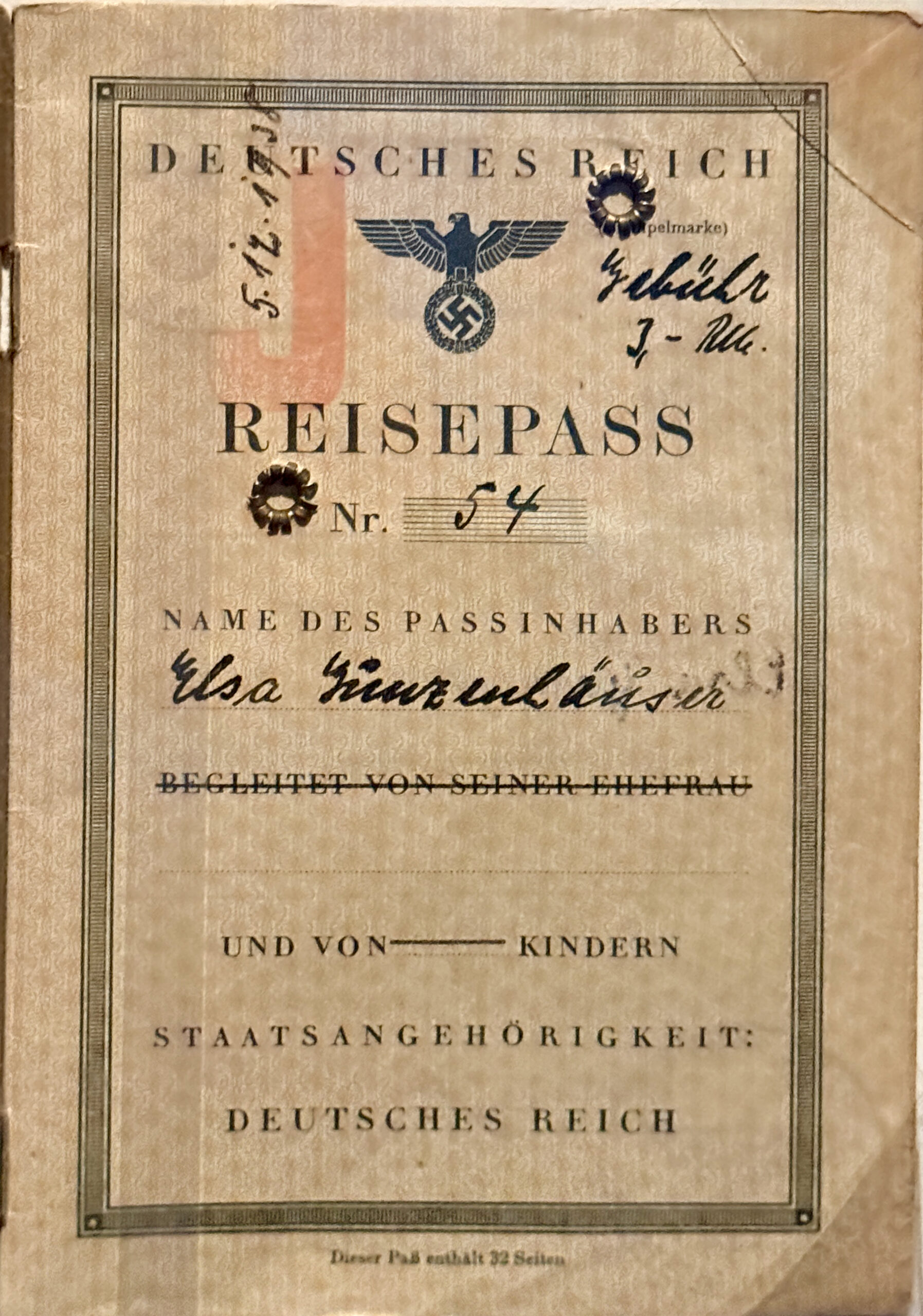
Jewish Exile in India, 1933-1945, edited by Anil Bhatti and Johannes H. Voigt and published in 1999 by Manohar Publishers in association with the Max Mueller Bhavan (the Goethe-Institut) in New Delhi, is a 195-page scholarly anthology examining a chapter of Indian Jewish history quite different from the subcontinent’s ancient Cochin, Bene Israel, and Baghdadi communities: the small, urgent wave of German-speaking Jewish refugees who fled Nazi persecution for British India between Hitler’s rise to power in 1933 and the end of the Second World War in 1945.
A German-Indian Scholarly Collaboration
The book’s origins in a partnership between Indian academic Anil Bhatti and German historian Johannes H. Voigt, published under the sponsorship of the Max Mueller Bhavan, the German cultural institute’s Indian branch, reflect the binational character of its subject matter. This was a history that belonged simultaneously to Germany, whose policies of persecution and later genocide created the refugee crisis in the first place, and to India, the improbable destination where several thousand of these refugees, doctors, lawyers, academics, musicians, and businesspeople among them, found at least temporary sanctuary while the British Empire that governed India navigated its own complicated wartime relationship with enemy nationals.
That complexity is central to the book’s subject. Unlike refugees who reached Palestine, Britain, or the United States, Jewish refugees who arrived in India occupied an unusual legal and social position. They were fleeing Nazi Germany as Jews, yet they typically arrived still carrying German or Austrian nationality, and once Britain declared war on Germany in September 1939, that nationality legally classified many of them as enemy aliens in the eyes of the colonial government, regardless of the fact that Nazi racial law had already stripped them of any real protection from the German state whose citizenship they nominally still held. Some refugees found themselves interned in camps alongside actual Nazi sympathizers and German nationals loyal to the Reich, a bitter irony that the essays in Bhatti and Voigt’s volume examine in detail.
Life in Indian Cities and Princely States
The volume’s contributors trace how these refugees built provisional lives across British India and in some of the princely states, several of which, along with a number of Indian intellectuals and political figures, showed considerable willingness to offer refuge despite the restrictive immigration policies of the colonial government, which was, throughout the 1930s, generally reluctant to admit large numbers of European refugees. Bombay, Calcutta, and other major cities became home to small but professionally significant clusters of refugee doctors, architects, musicians, and academics, many of whom went on to make lasting contributions to Indian institutions, from hospitals and universities to the country’s classical music and art scenes, before the majority eventually moved on after 1945 to Israel, Britain, the United States, or Australia once the war had ended and, in many cases, once relatives who had not escaped Europe were confirmed to have perished in the Holocaust.
A Different Kind of Indian Jewish History
Because this refugee population was transient by nature, arriving under emergency conditions and mostly departing again within a decade or two, its history does not fit neatly alongside the multi-generational narratives of Cochin, Bene Israel, or Baghdadi Jewish settlement in India, each of which involved communities that took root and considered India home across many generations. Jewish Exile in India, 1933-1945 instead documents an episode of transit and temporary refuge, closer in kind to the story of wartime Jewish refugees who passed through Shanghai or various parts of Latin America than to the deep-rooted communal histories more commonly associated with Indian Jewry. That distinction is precisely what makes Bhatti and Voigt’s volume valuable: it recovers a chapter of Indian Jewish history that involved real, documented human lives, but one that left few permanent communal institutions behind and has consequently received far less attention than the older, settled communities.
The essays collected in the volume draw on archival material, including immigration records, internment documentation, and personal accounts, to reconstruct both the policy environment refugees encountered and the individual and collective experience of exile itself: the anxious process of securing visas and exit permits from Nazi Germany, the disorienting arrival in a colonial society organized along entirely unfamiliar lines of caste, religion, and race, and the eventual, often difficult decisions about where to rebuild a permanent life once the war ended and return to Europe was no longer conceivable for most survivors.
Why This Episode Still Matters
For readers of Indian Jewish history accustomed to the deep timelines of the Cochin Jews or the century-and-a-half-old Baghdadi trading communities of Bombay and Calcutta, the story documented in Jewish Exile in India, 1933-1945 offers a useful corrective: a reminder that India’s engagement with Jewish refugees was not limited to the communities that settled and stayed, but also included a brief, intense episode of humanitarian refuge extended, however imperfectly and under colonial constraints, to Jews fleeing a genocide unfolding thousands of miles away. Bhatti and Voigt’s scholarly volume, produced through a German-Indian academic partnership three decades after the events it describes, remains one of the few dedicated studies of this specific and often overlooked chapter, and it complements the more familiar literary treatment of similar territory found in works of fiction such as Anita Desai’s Baumgartner’s Bombay, grounding that novel’s imagined refugee experience in documented historical fact.
Internment and Its Ironies
Perhaps the most striking material addressed in the volume concerns the internment policy that the British colonial government applied to German and Austrian nationals in India after September 1939. Under wartime regulations, anyone holding German or Austrian citizenship, regardless of their political or religious identity, could be classified as an enemy alien and subject to internment or restricted movement. For Jewish refugees who had fled Germany specifically to escape Nazi persecution, this classification produced a bitter irony: individuals who had lost their safety, and in Nazi Germany’s own legal framework effectively lost full citizenship rights, on account of their Jewishness could nonetheless find themselves confined by British colonial authorities in camps alongside German nationals who remained loyal to the Nazi regime, simply because both groups carried the same passport. Essays in the collection examine how refugees, aid organizations, and in some cases sympathetic colonial officials worked to sort out these classifications and secure the release or preferential treatment of refugees who could demonstrate their status as victims rather than agents of the German state.
An Overlooked Source for Historians
Since its 1999 publication, Jewish Exile in India, 1933-1945 has served as a reference point for the smaller community of historians researching global patterns of Jewish refuge during the Nazi era, particularly those examining the lesser-studied destinations outside of the major receiving countries such as the United States, Britain, and Palestine. Because the volume emerged from a genuine German-Indian scholarly collaboration, sponsored by a German cultural institution operating in India, it also stands as an example of exactly the kind of binational historical reckoning that the subject demands, bringing together German archival material documenting the conditions refugees fled with Indian colonial and post-colonial records documenting how they were received, restricted, and eventually assimilated or moved on from Indian soil.
The book’s narrow chronological frame, opening in 1933 with Hitler’s appointment as chancellor and closing in 1945 with the war’s end, also implicitly marks the natural limits of this refugee episode: unlike India’s older Jewish communities, whose histories extend across centuries and whose members largely emigrated only after Indian independence and the creation of Israel, the wartime refugee population arrived and departed within little more than a decade, leaving behind scattered individual legacies in Indian medicine, architecture, and the arts rather than lasting communal institutions of their own. That brevity is itself part of the historical significance Bhatti and Voigt’s volume captures: a compressed, high-stakes episode of flight and temporary refuge, fully embedded in the global catastrophe of the Holocaust, that nonetheless became, for a few thousand individuals and for a handful of years, part of the history of Jews in India.