
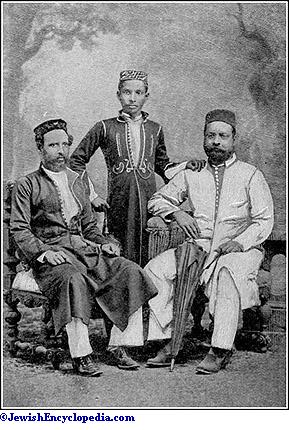
Two models of Jewish continuity, developed by Nathan Katz, the American scholar most responsible for establishing Indo-Judaic studies as a recognized academic field, argue that India’s Jewish communities do not fit any single template for how a Jewish diaspora survives outside the Western world. His comparative analysis of Cochin Jews and Bene Israel, developed across his major books and scholarly writing, presents these two communities as two genuinely different models of Jewish continuity, each shaped by a distinct relationship to the surrounding Hindu society that hosted them for centuries.
Who Is Nathan Katz
Katz is Distinguished Professor Emeritus at Florida International University, where he founded the Department of Religious Studies and helped establish FIU’s programs in Jewish Studies, Asian Studies, and Jain Studies. Trained originally in Buddhist studies, with fieldwork experience across India and Sri Lanka as a Fulbright fellow in the late 1970s, Katz turned his comparative religious studies training toward India’s own Jewish communities, co-authoring The Last Jews of Cochin in 1993 and publishing Who Are the Jews of India? with University of California Press in 2000, a book that was a finalist for the National Jewish Book Award and later won India’s Vak Devi Saraswati Saman Award. In 2002, Katz convened an international seminar on Indo-Judaic studies at Oxford University, drawing scholars from North America, Europe, India, and Israel, a conference that produced the field-defining volume Indo-Judaic Studies in the 21st Century. He continues to edit the Journal of Indo-Judaic Studies and, since retiring in 2015, has led Jewish-interest tours of India with his wife, Ellen S. Goldberg. Katz’s turn toward Indo-Judaic studies came relatively late in a career that began in Buddhist and Jain studies rather than Jewish studies specifically, a background that gave his comparative work on Indian Jewish communities an unusually strong grounding in South Asian religious and social structures generally, rather than approaching Cochin and Bene Israel history purely through the lens of Jewish historiography developed for European or Middle Eastern contexts. This cross-disciplinary training is part of why his two-model framework emphasizes social integration strategies specific to South Asian caste and community structures rather than relying on comparative categories borrowed from Ashkenazi or Sephardi Jewish historiography, which were developed to describe very different host societies entirely.
The Cochin Model: Continuity Through Layered Hierarchy
Katz’s work on the Cochin Jews of Kerala describes a community that maintained its Jewish identity in part by adapting to, rather than rejecting, the caste-conscious social structure of the society around it. Over centuries, Cochin’s Jewish community itself split into distinct sub-groups, commonly described as “Black Jews,” “White Jews” or Paradesi Jews, and a class of Jewish converts and manumitted slaves, each with different synagogue affiliations and social status, mirroring the layered social hierarchies of the Malabar coast more broadly. Rather than diluting Jewish continuity, Katz argues that this internal stratification allowed the community to remain embedded in, and legible to, the surrounding Hindu social order for centuries without provoking the kind of majority hostility that led to persecution and expulsion of Jewish communities in much of Europe and the Middle East. Continuity, in the Cochin model, came through successful integration into an existing social system on terms the wider society already understood. This stratification was reinforced physically as well as socially: Cochin’s Jewish quarter historically contained multiple separate synagogues serving different sub-groups within the same small Jewish population, rather than a single unified congregation, a level of internal division that would be unusual within most Jewish communities elsewhere but that mirrored the fine-grained social distinctions common across South Indian society more broadly. Katz’s account treats this internal fragmentation not as a sign of communal weakness but as evidence that the Cochin Jews had successfully mapped their own community onto categories the surrounding Malabar society already possessed the vocabulary to recognize and accommodate.
The Bene Israel Model: Continuity Through Isolation and Reconnection
The Bene Israel of the Konkan coast represent, in Katz’s framework, a nearly opposite model. Rather than integrating into a visible social hierarchy, the Bene Israel maintained a much smaller set of core Jewish practices, Sabbath observance, dietary restriction, circumcision, in near-total isolation from the wider Jewish world for well over a thousand years, preserving these practices as a private, village-level tradition passed through families rather than through any visible communal structure legible to outsiders. Continuity in the Bene Israel case depended on cultural minimalism and internal transmission rather than external legibility: the community survived not by explaining itself to surrounding Hindu society in terms that society already understood, but by keeping its distinguishing practices small, private, and consistent enough to transmit accurately across dozens of generations without any rabbis, texts, or outside contact to correct drift or error. Only in the eighteenth century, when Cochin Jewish teachers traveled north to instruct Bene Israel communities in normative Sephardi practice, did the two models Katz describes come into direct contact with one another. This isolation was so complete that, prior to renewed contact in the eighteenth century, the Bene Israel had lost access even to a written Torah scroll or any Hebrew liturgical texts, retaining only oral fragments of prayer and practice. That the community nonetheless preserved a recognizably Jewish identity for such an extended period, without any of the institutional supports, synagogues, rabbis, texts, that most historical accounts of Jewish continuity treat as prerequisites, is precisely what makes the Bene Israel case so significant within Katz’s broader argument: it demonstrates that Jewish continuity does not require the institutional infrastructure that most diaspora communities elsewhere relied upon.
Why the Comparison Matters
Katz’s central argument is that both models produced genuine, verifiable Jewish continuity across many centuries, despite following almost opposite strategies. This matters for the broader study of Jewish diaspora communities because it complicates any assumption that Jewish continuity requires a single specific set of conditions, visible communal institutions, contact with other Jewish communities, or formal religious education among them. India’s Jewish communities, considered together rather than separately, demonstrate that continuity can be achieved either through successful integration into a legible social hierarchy, as with the Cochin Jews, or through small-scale, isolated, family-transmitted practice, as with the Bene Israel, without either strategy being inherently more durable than the other over the long term.
A Third Model, Briefly Noted
Katz’s broader work also acknowledges a third pattern among India’s Jewish communities, represented by the Baghdadi Jews of Bombay and Calcutta, who arrived far more recently, in the eighteenth and nineteenth centuries, as merchant migrants from Ottoman Iraq and built their communities around trade wealth, colonial-era institutions, and eventual assimilation into British colonial society rather than into either Hindu caste hierarchy or isolated village life. Because the Baghdadi Jewish presence in India is so much more recent, and so much more thoroughly documented through colonial-era records, Katz treats it as a distinct case study rather than folding it into either of his two main models, though it provides a useful third point of comparison for understanding just how differently India’s various Jewish communities related to the societies around them. David Sassoon and later Baghdadi Jewish merchant families in Bombay and Calcutta built synagogues, schools, and civic institutions explicitly modeled on British colonial patterns, and largely socialized within an English-speaking colonial elite rather than integrating into either a Hindu caste hierarchy or a small, isolated village structure. This produced a form of Jewish continuity dependent on colonial-era institutional wealth and British patronage in ways neither the Cochin nor Bene Israel models required, and it is also why Baghdadi Jewish communal life in India declined so quickly and completely once British colonial rule ended in 1947, since the specific institutional supports that had sustained it disappeared along with the colonial administrative structures the community had built its continuity around.
Why This Scholarship Matters Today
As all three of India’s Jewish communities have shrunk dramatically through twentieth-century emigration to Israel, Katz’s comparative framework has become more important, not less, for understanding what specifically is being lost as each community’s population dwindles toward disappearance in India itself. A framework that treats Cochin Jewish and Bene Israel history as two distinct, internally coherent survival strategies, rather than as minor regional variations on a single Jewish diaspora story, makes it possible to document each community’s disappearance with the specificity its distinct history deserves, rather than flattening India’s Jewish history into a single generic narrative of decline. It also carries a practical implication for heritage preservation efforts specifically: a synagogue restoration project appropriate for the Cochin Jewish model, focused on physical buildings and visible communal institutions, would do little to preserve what actually sustained Bene Israel continuity for a thousand years, since that continuity depended on family-transmitted practice rather than institutional infrastructure in the first place. Effective preservation, in other words, has to be tailored to which of Katz’s models actually describes the community in question.
Further Reading
For more on the communities discussed in Katz’s comparative framework, see our coverage of the Jews of Cochin and the Bene Israel of Maharashtra, as well as the Wikipedia article on Nathan Katz.