
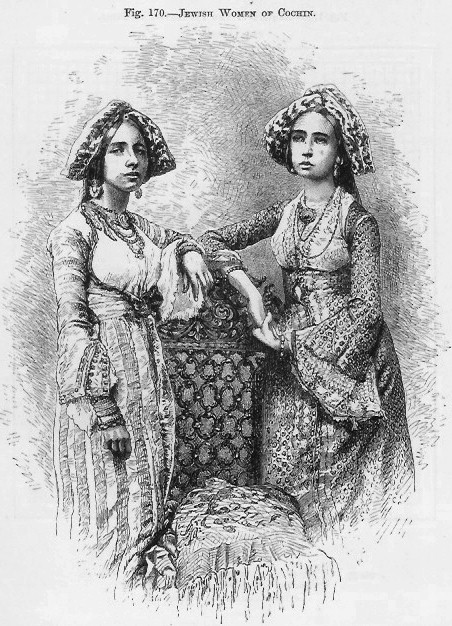
Published by the Jewish Publication Society in 1995, Ruby of Cochin: An Indian Jewish Woman Remembers, co-written by Ruby Daniel and scholar Barbara C. Johnson, is a 240-page memoir that holds a distinctive place in Indian Jewish literature: it was the first book published by a Cochin Jewish woman, offering a firsthand account of a life that spanned military service, religious devotion, emigration to Israel, and a decades-long project to preserve the endangered tradition of Judeo-Malayalam women’s songs.
An Extraordinary Life in Cochin and Beyond
Born in December 1912 in Kochi, Ruby Daniel was the eldest child of Eliyahu Hai Daniel, who sold tickets for the ferry connecting Cochin with Ernakulam, and Leah Japheth Daniel. Raised partly by her maternal grandparents, she excelled academically, attending both a local government school for girls and the Jewish school where she studied Hebrew, Torah, and synagogue liturgy each morning and afternoon. She went on to St. Teresa’s Convent Girls Higher Secondary School in Ernakulam and completed a year at St. Teresa’s College before leaving after the deaths of her father and grandfather in the same year.
What followed was a career remarkable by any standard, and especially so for a Jewish woman in colonial India. Daniel enlisted in government service, working as a clerk in the High Court and District Court Munsiff Court, before serving from 1944 to 1946 in the Women’s Royal Indian Navy, becoming one of the few women in Indian military service at the time and, notably, the first Jewish Indian woman and the first Malayali woman to serve in this capacity in modern Indian history.
From Cochin to a Kibbutz
In 1951, as the overwhelming majority of Cochin’s Jewish community made aliyah following Israeli statehood, Ruby Daniel emigrated as well, settling on Neot Mordechai, a predominantly Ashkenazi and secular kibbutz in northern Israel. This move placed her, a woman steeped in the specific religious customs and Judeo-Malayalam linguistic heritage of Cochin, within a very different Israeli Jewish cultural context, one shaped largely by European and secular Zionist traditions rather than the South Indian Jewish practices she had grown up with.
Rather than allowing this specific Cochin Jewish heritage to fade within her new, very different community, Daniel dedicated much of her later life to its active preservation. Beginning in the 1980s and continuing through the 1990s, she undertook the painstaking work of translating into English more than 120 Judeo-Malayalam women’s songs, a body of oral literary tradition performed for generations by Cochin Jewish women at weddings, holidays, and other communal occasions, but never before systematically translated or preserved in written form for outside scholarly access.
Writing a Life, Preserving a Community
Daniel’s literary career began with We Learned from the Grandparents: Memories of a Cochin Jewish Woman, published in 1992, before culminating in Ruby of Cochin in 1995, produced in collaboration with anthropologist Barbara C. Johnson, who had separately conducted doctoral research on Cochin’s Jewish community. The memoir traces Daniel’s full life story, from her childhood in Kochi through her groundbreaking military service to her eventual emigration and life on an Israeli kibbutz, offering readers a firsthand account of experiences — serving in the armed forces of India as a Jewish woman working alongside Hindu and Muslim men, for instance — that exist nowhere else in the documented literature on Cochin Jewish life.
Among the memoir’s specific contributions to the historical record is Daniel’s documentation of a fourth recognized method of marriage witness among Cochin’s Jews: witness by the entire congregation, a communal practice distinct from more familiar rabbinic marriage procedures and one that might otherwise have gone unrecorded outside of direct community testimony like Daniel’s own.
A Collaboration Between Community Memory and Scholarly Method
The partnership between Daniel and Johnson reflects a productive model for documenting endangered minority religious communities: a community member with direct lived experience and linguistic access to material like the Judeo-Malayalam songs, working alongside a trained researcher able to provide the scholarly framework, translation support, and publishing connections needed to bring that material to a wider readership. This same collaborative model, pairing community insiders with academic researchers, recurs throughout the literature on Cochin Jewish history, reflecting a broader recognition among both communities and scholars that neither perspective alone fully captures the richness of a small, historically distinct Jewish community’s experience.
A Foundational Text for Cochin Jewish Studies
As the first book published by a Cochin Jewish woman, Ruby of Cochin occupies a foundational place in the literature documenting this ancient Jewish community, whose presence on India’s Malabar coast likely dates back many centuries. For researchers, genealogists, and general readers seeking a firsthand, textured account of Cochin Jewish life — one that captures not just religious practice and communal structure but the lived experience of a woman navigating colonial India, military service, and eventual emigration to Israel — Daniel and Johnson’s collaborative memoir remains an essential and still under-recognized touchstone.
The Judeo-Malayalam Song Tradition
The body of Judeo-Malayalam women’s songs that Daniel worked to preserve represents one of the most distinctive and vulnerable elements of Cochin Jewish culture. Sung by women during weddings, festivals, and other communal gatherings, these songs blended Malayalam language and musical idiom with specifically Jewish religious and historical content, creating a genuinely hybrid oral literary tradition found nowhere else in the Jewish world. Because this tradition was transmitted primarily through oral performance among women, rather than through written text or male-dominated religious scholarship, it was especially vulnerable to being lost entirely as the Cochin Jewish community emigrated to Israel and dispersed across a very different linguistic and cultural environment where Malayalam was no longer spoken in daily life.
Daniel’s decision to spend years of painstaking work translating more than 120 of these songs into English, working from memory and from consultation with other Cochin Jewish women who still recalled them, represents one of the most significant single-handed acts of cultural preservation in the history of India’s Jewish communities. Her work laid the groundwork for the broader international scholarly project, involving researchers well beyond Johnson herself, to study, translate, and analyze the full corpus of Judeo-Malayalam women’s songs, a project that continues to this day and that would have been immeasurably poorer without Daniel’s initial translation efforts.
A Life Bridging Two Worlds
What makes Ruby of Cochin especially valuable as a historical document is the way it captures, through one woman’s specific life story, the broader transition experienced by the entire Cochin Jewish community: from a centuries-old, religiously distinct minority community integrated into Kerala’s Hindu- and Muslim-majority social world, to a scattered diaspora resettled primarily in Israel, where Cochin Jewish religious customs, culinary traditions, and oral literature became minority practices within a broader, predominantly Ashkenazi Israeli Jewish culture. Daniel’s own experience straddling both worlds, and her deliberate effort to ensure her original community’s distinctive traditions were not lost in that transition, makes her memoir a uniquely personal complement to the more academic histories of Cochin Jewish life produced by scholars like Walter Fischel and Barbara Johnson herself in her separate academic work.
Daniel passed away in September 2002, having lived to see her memoir published and her translation work recognized by scholars studying Cochin Jewish culture internationally. Her dual legacy, as both a documented pioneer in Indian military history and as the preserver of a fragile women’s oral song tradition, distinguishes Ruby of Cochin from other Indian Jewish memoirs and situates it as an essential primary source for anyone seeking to understand not just the broad historical outlines of Cochin Jewish life but its specific, gendered, and richly textured lived experience across a century of dramatic change.