
Ginu Zacharia Oommen’s Ethnicity, Marginality and Identity: The Jews of Cochin in Israel, published by Manak Publications in 2011, is a 337-page academic study examining what happened to Kerala’s Cochin Jewish community after the overwhelming majority of its members made aliyah to Israel in the mid-1950s. Rather than treating emigration as an endpoint, the book takes it as a starting point, following the Cochin Jews into their new Israeli context to examine how a small, culturally distinctive immigrant community negotiated questions of ethnicity, social marginality, and identity within a society itself organized, at the time of their arrival, around often unstated hierarchies of ethnic origin among Jewish immigrant groups.
From Kerala to the Negev
The Cochin Jews’ emigration followed a compressed and decisive timeline. Following Indian independence in 1947 and the establishment of Israel in 1948, most of Kerala’s Cochin Jews made aliyah in the mid-1950s, a sharp contrast to the Paradesi Jews, the Sephardi-descended “White Jews” of Cochin, most of whom instead chose to migrate to Australia and other Commonwealth countries, following a pattern closer to that of Cochin’s Anglo-Indian community. This divergence in emigration destination between Cochin’s two historically distinct Jewish populations, the longer-settled Malabar Jewish community and the later-arriving Paradesi Jews, reflected differences in language, colonial-era connections, and social position that had structured relations between the two groups for centuries within Kerala itself.
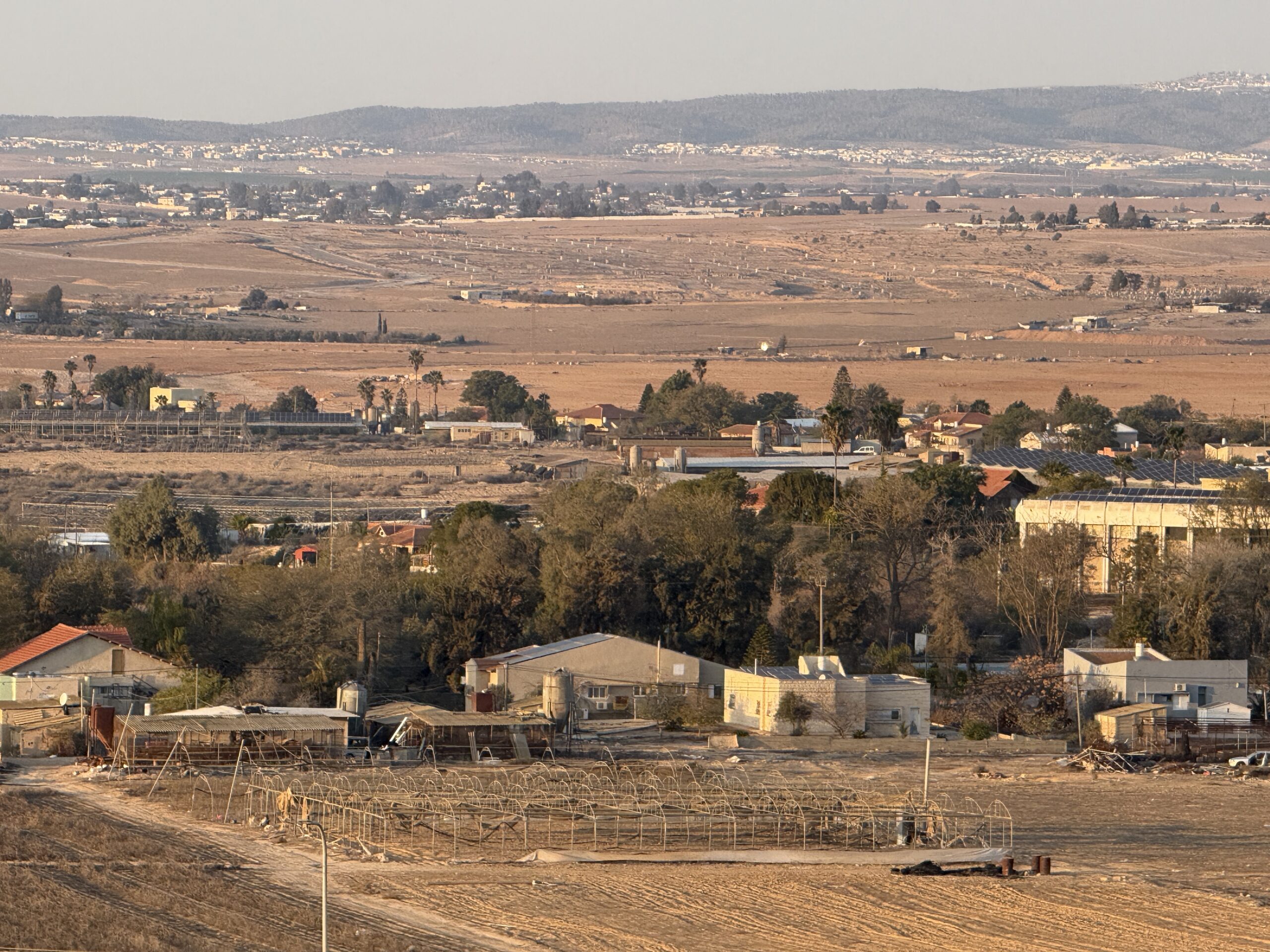
Many of the Cochin Jews who did make aliyah settled together in newly established agricultural communities in Israel’s Negev desert region. The moshav of Nevatim, originally founded in 1946 by Jewish immigrants from Hungary and then abandoned and re-established at a nearby site, was resettled in 1954 specifically by Cochin Jewish immigrants from Kochi, becoming one of the most concentrated sites of Cochin Jewish communal life in Israel and a place where distinctively Kerala Jewish customs, foodways, and social patterns continued to be practiced by a community now living in a Middle Eastern desert landscape rather than a tropical South Indian coastal one.
Marginality Within a New Society
Oommen’s book examines how this transplanted community navigated its position within Israeli society more broadly, a society whose early decades were marked by significant, often institutionally reinforced hierarchies favoring Ashkenazi Jews of European origin over Mizrahi and other non-European Jewish immigrant groups, including immigrants from India, Iraq, Yemen, Morocco, and elsewhere. Cochin Jewish immigrants, despite their ancient and continuously documented Jewish identity, found themselves grouped within this broader category of non-European, and therefore socially marginalized, immigrant Jewry, facing questions about their status and belonging that echoed, in a new context, some of the questions about authenticity and legitimacy the Bene Israel community faced from Israel’s rabbinate around the same period.
At the same time, Oommen’s title signals that his analysis extends beyond a simple story of marginalization imposed from outside the community. The book’s framing around “ethnicity, marginality and identity” suggests an examination of how Cochin Jews themselves actively constructed and maintained a distinct communal identity within Israeli society, drawing on their specific Kerala Jewish heritage, including internal distinctions inherited from India itself, such as the historic differentiation between the Malabar Jewish community and the smaller Paradesi Jewish population, even as both groups were absorbed into a broader Israeli social landscape that often treated all Indian-origin Jews as a single undifferentiated category.
A Scholarly Approach to Diaspora Resettlement
Manak Publications, an Indian academic press specializing in social science scholarship, situates Oommen’s book within a tradition of serious sociological and anthropological research on migration and diaspora communities, distinct from the more popular or documentary treatments that make up a considerable share of the literature on Indian Jewry. This academic framing allowed Oommen to apply established theoretical frameworks from migration studies and ethnic identity research, developed originally to study other diaspora and immigrant populations worldwide, to the specific and relatively understudied case of Cochin Jewish resettlement in Israel, producing an analysis grounded in comparative social science rather than purely descriptive historical narrative.
A Community Twice Displaced
What makes the Cochin Jewish case particularly rich for this kind of ethnicity and identity analysis is the community’s layered history of displacement and adaptation: from an ancient, well-established presence in Kerala stretching back roughly two thousand years, through centuries of relative isolation and gradual accommodation with the surrounding Hindu caste society, to a mid-twentieth-century mass emigration that relocated the great majority of the community to a radically different social and physical environment in Israel within the span of just a few years. Oommen’s study captures this community at the point of confronting a new set of ethnic and social hierarchies in Israel, bringing with it not only its distinct religious practices but also internal social distinctions carried over from its Indian context, making Ethnicity, Marginality and Identity a valuable case study not only for scholars of Indian Jewry specifically but for the broader field of migration and diaspora studies concerned with how transplanted communities negotiate identity and status in unfamiliar new social settings.
Continuity of Kerala Customs in a Desert Landscape
One of the striking features of Cochin Jewish resettlement in places like Nevatim is the persistence of specifically Kerala-derived cultural practice within an entirely transformed physical and social environment. Communities that had spent centuries developing distinctive foodways, life-cycle rituals, and social customs adapted to the tropical, agrarian environment of the Malabar coast found themselves, within a single generation, cultivating similar communal bonds in the arid conditions of Israel’s Negev desert. This kind of cultural persistence amid radical environmental and social change offers rich material for the ethnicity and identity analysis at the center of Oommen’s study, since it raises the question of which elements of a community’s identity travel most readily across such a dramatic relocation, religious practice, culinary tradition, social hierarchy, and which elements prove more fragile or subject to transformation under the pressure of a genuinely new social and physical context.
The book’s attention to internal community distinctions, particularly the historic differentiation between the Malabar Jewish community and the Paradesi or “White” Jews of Cochin, also speaks to a broader pattern examined in migration and diaspora studies more generally: the way internal social hierarchies and distinctions that structured a community’s life in its country of origin do not simply disappear upon emigration but often persist, sometimes in modified form, within the new diaspora setting, occasionally interacting in complex ways with the new social hierarchies the community encounters in its adopted country.
Situating the Book Within Cochin Jewish Studies
Oommen’s 2011 study joins a body of scholarship on Cochin Jewish emigration and resettlement that includes earlier academic work examining the community’s transition from India to Israel, but his specific framing around marginality as a sociological category, rather than purely as historical description, distinguishes his contribution. By treating marginality as an analytical lens rather than simply a condition to be documented, Oommen’s work invites comparison with broader sociological literature on minority and immigrant status within stratified societies, extending the study of Cochin Jewry beyond the community-specific historical and ethnographic literature into more general conversations about ethnicity, migration, and social hierarchy that scholars of other immigrant and diaspora populations worldwide would recognize and find relevant to their own research.
For readers interested specifically in what happened to Kerala’s Cochin Jewish community after its dramatic mid-century emigration, rather than in the community’s earlier history within India itself, Oommen’s book offers one of the most substantial and theoretically grounded treatments available, tracing the community’s ongoing negotiation of ethnicity and identity across the decades since their arrival in Israel and situating that experience within the broader scholarly conversation about how immigrant and minority communities construct and maintain distinct identities under conditions of social marginality in their adopted homelands.
Read alongside the broader literature on India’s Jewish communities, Oommen’s book fills a specific and important gap: most other studies focus on the communities as they existed in India itself, leaving the post-emigration Israeli chapter comparatively understudied, a gap this 337-page monograph addresses with sustained scholarly attention.