
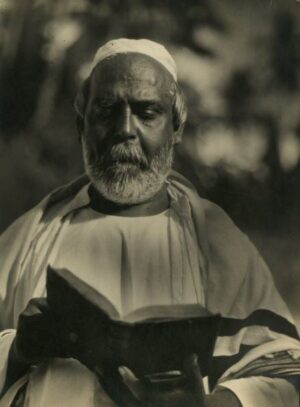
Understanding the Indian Jewish Experience in Historical Context
The story of India’s Jewish communities cannot be properly understood without appreciating the specific historical circumstances that shaped it. Judaism arrived in India through multiple routes over many centuries, creating communities that were diverse in their origins, their practices, and their social positions but united by their adherence to Jewish tradition and their identification with the Jewish people. The Bene Israel of Maharashtra, possibly descended from Jewish settlers who arrived before the Common Era; the Cochin Jews of Kerala, present for at least two thousand years under the protection of Hindu rulers; and the Baghdadi Jews of Calcutta and Bombay, arriving in the late eighteenth century from Iraq and the broader Middle East — each community had its own distinct history but shared the experience of being Jewish in India.
What makes the Indian Jewish story distinctive in the broader context of Jewish history is the nature of the host society in which these communities developed. India under Hindu rule provided a social environment quite unlike the Christian Europe or Muslim Middle East where most Jewish communities spent the Common Era. The absence of organized anti-Jewish persecution, the recognition of Jews as a legitimate minority community with rights to self-governance in religious matters, and the broadly tolerant character of Hindu social philosophy all contributed to a Jewish experience in India that was, by the standards of most Jewish diasporic history, remarkably peaceful.
India and Israel: A Special Bond
The relationship between India and Israel, shaped in significant part by the connections created by the Indian Jewish communities, is one of the most important bilateral relationships in the contemporary geopolitical landscape. India and Israel established full diplomatic relations in 1992, ending decades of Indian support for Palestinian causes that had prevented formal recognition of Israel. Since then, the relationship has grown rapidly, encompassing defense cooperation, technology transfer, agricultural development, and deepening people-to-people connections driven by the large Indian Jewish community in Israel and the growing Indian presence in Israel’s technology sector.
The Indian Jewish communities of Israel serve as a human bridge between the two countries. Their presence in Israel keeps alive the memory and the reality of Jewish life in India, while their connections to family and community in India maintain personal ties that give meaning to the diplomatic relationship. For both countries, the Indian Jewish story is evidence that the relationship between Indian and Jewish civilization has deep roots that long predate the modern political relationship — roots that make the contemporary friendship between the two countries feel like the fulfillment of an ancient connection rather than a new arrangement.
Related Reading
- The Four Communities of Indian Jews: An Overview
- The Bene Israel of Maharashtra
- The Jews of Cochin
- The Baghdadi Jews of Mumbai and Kolkata
- Books on the Jews of India
The 2008 Mumbai terror attacks presented Indian Jews with a moment of profound ambiguity and pain. Among the targets chosen by the ten Pakistani terrorists who carried out simultaneous attacks across the city on November 26, 2008, was the Chabad House at Nariman House in the Colaba neighborhood, a building that served as a Jewish outreach and hospitality center for Jewish visitors to Mumbai. The six people killed there, including the center’s director Rabbi Gavriel Holtzberg and his wife Rivka, were the only Jewish victims in a tragedy that claimed 166 lives across multiple attack sites.
A Jewish Building in a Hindu City
Nariman House was not a historic Indian Jewish institution but a recently established Chabad center run by the Holtzbergs, a young couple from Brooklyn who had come to Mumbai to provide Jewish services for the growing number of Israeli tourists and Jewish businesspeople visiting the city. Their two-year-old son Moshe was present in the building during the attack and was rescued by his Indian nanny, Sandra Samuel, who carried him to safety while the attack was ongoing.
The targeting of Nariman House was understood by most observers as an explicitly antisemitic element of the attack. The building was not commercially or politically significant; it was targeted specifically because it was a Jewish institution. This made the Mumbai attacks the first act of antisemitic terrorism in a country that had never in its history been the site of organized violence against Jews. The shock to India’s Jewish community was correspondingly profound.
The Indian Jewish Response
India’s Jewish community responded to the attacks with a combination of mourning for the victims and anxiety about what they signified. The attacks occurred in the city that had been the center of Bene Israel and Baghdadi Jewish life in India for generations, and the sense that Mumbai, the safest city in the world for Jews throughout their long history in India, had become a target was deeply disturbing. Community members who had grown up believing that India’s tolerance of Jews was an unassailable historical fact had to confront the reality that this tolerance, however genuine and deep, could not protect them from imported violence.
The response also included a remarkable outpouring of solidarity from Mumbai’s non-Jewish population. Hindus, Muslims, and Christians who lived near Nariman House or who knew the Holtzbergs personally expressed grief and condemnation of the attack in terms that affirmed the community’s sense of belonging in Mumbai. The Indian nanny Sandra Samuel’s act of heroism in rescuing baby Moshe became a symbol of the bonds of loyalty and affection that connected the Jewish community to its Indian neighbors.
Legacy
Nariman House was rebuilt and reopened as a Chabad center following the attacks, a deliberate act of communal resilience that insisted on the continuation of Jewish life in Mumbai. Baby Moshe, raised by his grandparents in Israel after the death of his parents, grew up to become a symbol of both the tragedy and the survival of Jewish connection to Mumbai. The annual commemoration of the attacks, observed in Mumbai and in Indian Jewish communities around the world, keeps alive the memory of the victims while affirming the community’s determination to maintain its presence in India.