
Understanding the Indian Jewish Experience in Historical Context
The story of India’s Jewish communities cannot be properly understood without appreciating the specific historical circumstances that shaped it. Judaism arrived in India through multiple routes over many centuries, creating communities that were diverse in their origins, their practices, and their social positions but united by their adherence to Jewish tradition and their identification with the Jewish people. The Bene Israel of Maharashtra, possibly descended from Jewish settlers who arrived before the Common Era; the Cochin Jews of Kerala, present for at least two thousand years under the protection of Hindu rulers; and the Baghdadi Jews of Calcutta and Bombay, arriving in the late eighteenth century from Iraq and the broader Middle East — each community had its own distinct history but shared the experience of being Jewish in India.
What makes the Indian Jewish story distinctive in the broader context of Jewish history is the nature of the host society in which these communities developed. India under Hindu rule provided a social environment quite unlike the Christian Europe or Muslim Middle East where most Jewish communities spent the Common Era. The absence of organized anti-Jewish persecution, the recognition of Jews as a legitimate minority community with rights to self-governance in religious matters, and the broadly tolerant character of Hindu social philosophy all contributed to a Jewish experience in India that was, by the standards of most Jewish diasporic history, remarkably peaceful.
India and Israel: A Special Bond
The relationship between India and Israel, shaped in significant part by the connections created by the Indian Jewish communities, is one of the most important bilateral relationships in the contemporary geopolitical landscape. India and Israel established full diplomatic relations in 1992, ending decades of Indian support for Palestinian causes that had prevented formal recognition of Israel. Since then, the relationship has grown rapidly, encompassing defense cooperation, technology transfer, agricultural development, and deepening people-to-people connections driven by the large Indian Jewish community in Israel and the growing Indian presence in Israel’s technology sector.
The Indian Jewish communities of Israel serve as a human bridge between the two countries. Their presence in Israel keeps alive the memory and the reality of Jewish life in India, while their connections to family and community in India maintain personal ties that give meaning to the diplomatic relationship. For both countries, the Indian Jewish story is evidence that the relationship between Indian and Jewish civilization has deep roots that long predate the modern political relationship — roots that make the contemporary friendship between the two countries feel like the fulfillment of an ancient connection rather than a new arrangement.
Related Reading
- The Four Communities of Indian Jews: An Overview
- The Bene Israel of Maharashtra
- The Jews of Cochin
- The Baghdadi Jews of Mumbai and Kolkata
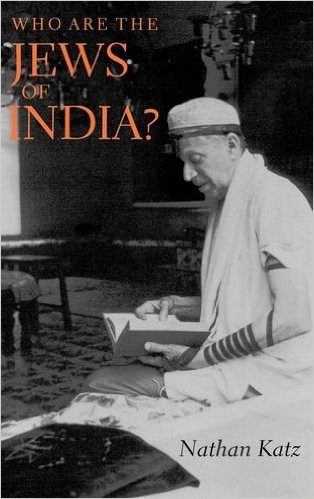
- Books on the Jews of India
The Bene Israel community of Maharashtra has inspired a small but significant body of literary fiction that uses the specific circumstances of Jewish Indian life to explore universal themes of identity, belonging, tradition, and change. Among the most interesting of these novels is Meera Mehadevan’s Shulamith, a work that takes its name from the Hebrew biblical name and situates its story in the world of Bene Israel community life in urban Maharashtra. The novel represents an important contribution to the still-developing tradition of Indian Jewish literary fiction in English.
The Author and Her Background
Meera Mehadevan writes from a position of cultural intimacy with the Bene Israel community, and her novel reflects both the insider knowledge of someone who has observed community life closely and the literary sensibility of a writer interested in the universal dimensions of particular human experiences. Her decision to write about the Bene Israel in English places the novel in the tradition of Indian English fiction that has used minority community experience to explore the larger questions of Indian modernity, postcolonial identity, and cultural change.
The name Shulamith, derived from the Hebrew Shulammite mentioned in the Song of Songs, carries biblical resonances that connect the novel’s specifically Indian Jewish subject matter to the broader heritage of Jewish literary tradition. This connection between the Indian particular and the Jewish universal is characteristic of the best Indian Jewish literary fiction, which uses the specific circumstances of Indian Jewish life to illuminate experiences that readers from any background can recognize and respond to.
Themes and Concerns
The central concerns of Shulamith are those that preoccupy all serious Indian Jewish fiction: the question of how to maintain religious and cultural identity in conditions of modernization and diaspora, the tensions between the generations created by immigration and social change, the complex relationships between the Jewish community and the broader Indian society in which it is embedded. The specific Bene Israel setting gives these universal concerns a distinctive flavor that is both culturally specific and broadly resonant.
Food, as in much Indian Jewish fiction, plays an important role in the novel as a carrier of cultural memory and community identity. The kitchens where Bene Israel women prepare traditional dishes are spaces where cultural transmission happens outside of formal educational contexts, where the knowledge of who one is and where one comes from is encoded in the smell of coconut milk and turmeric rather than in books or institutional instruction.
Place in Indian Jewish Literature
Shulamith occupies a significant place in the still-developing body of Indian Jewish fiction in English. Alongside the better-known novels of Esther David, it helps constitute a tradition of literary engagement with Bene Israel experience that brings this community’s story to readers who might not encounter it through historical scholarship or community documentation. Literary fiction, with its capacity to render the inner lives of characters and to place individual experience in its full social and cultural context, is one of the most effective vehicles for sharing the Indian Jewish story with audiences who have no prior knowledge of this community.