
Stanley Jackson’s The Sassoons, published in 1968 by Heinemann in Britain and Dutton in the United States at roughly 300 to 350 pages depending on the edition, is a popular narrative biography of the Baghdadi Jewish merchant family whose commercial empire, built substantially on the China-India opium trade, earned them the enduring nickname “the Rothschilds of the East.” Jackson’s book traces the family across generations, from its origins in Baghdad and Aleppo through its dramatic rise to commercial and social prominence in Bombay and across Asia, and finally to its later assimilation into British aristocratic society.
From Baghdad to Bombay to the Peerage
The family patriarch, David Sassoon, built the international trading house David Sassoon & Sons Company after establishing himself in Bombay, staffing his growing business empire with fellow Baghdadi Jews brought specifically from Iraq to run its various branches across India, Burma, Malaya, and East Asia. This policy of building his commercial network through trusted co-religionists from his own community cemented the family’s dominant position in the lucrative and historically fraught Sino-Indian opium trade, with Sassoon interests extending as far as Shanghai, where the family’s Sassoon House on the Bund became one of the city’s most recognizable landmarks. As the family’s wealth grew, later generations gravitated toward London, where they became prominent figures in English society and were eventually ennobled by Queen Victoria, completing a remarkable multi-generational trajectory from Ottoman Baghdad through colonial Bombay to the British peerage.
Popular Narrative History Versus Scholarly Biography
Jackson’s approach to this material reflects his work as a popular biographer and journalist writing for a general readership, favoring vivid narrative storytelling and colorful anecdote over the more rigorous archival and scholarly apparatus that later academic historians of the Sassoon family would employ. This distinguishes The Sassoons from Cecil Roth’s earlier, more scholarly 1941 study The Sassoon Dynasty, which approached the same family history with the documentary rigor of a trained Jewish historian rather than the narrative flair of a commercial biographer writing nearly three decades later for a broad popular audience newly curious about the family following the further rise to fame of later Sassoon generations in British society, fashion, and the arts.
This popular narrative approach made Jackson’s book accessible to a wide general readership interested in the Sassoon family’s remarkable, almost novelistic trajectory from Middle Eastern Jewish merchants to British aristocrats, a story combining commercial ambition, imperial trade networks, religious and cultural identity, and eventual social assimilation into the highest reaches of British society. For readers less interested in detailed archival scholarship than in a compelling, well-told family saga, Jackson’s book offered an engaging entry point into one of the most consequential Baghdadi Jewish family histories connected to India’s colonial economy.
Philanthropy Alongside Commerce
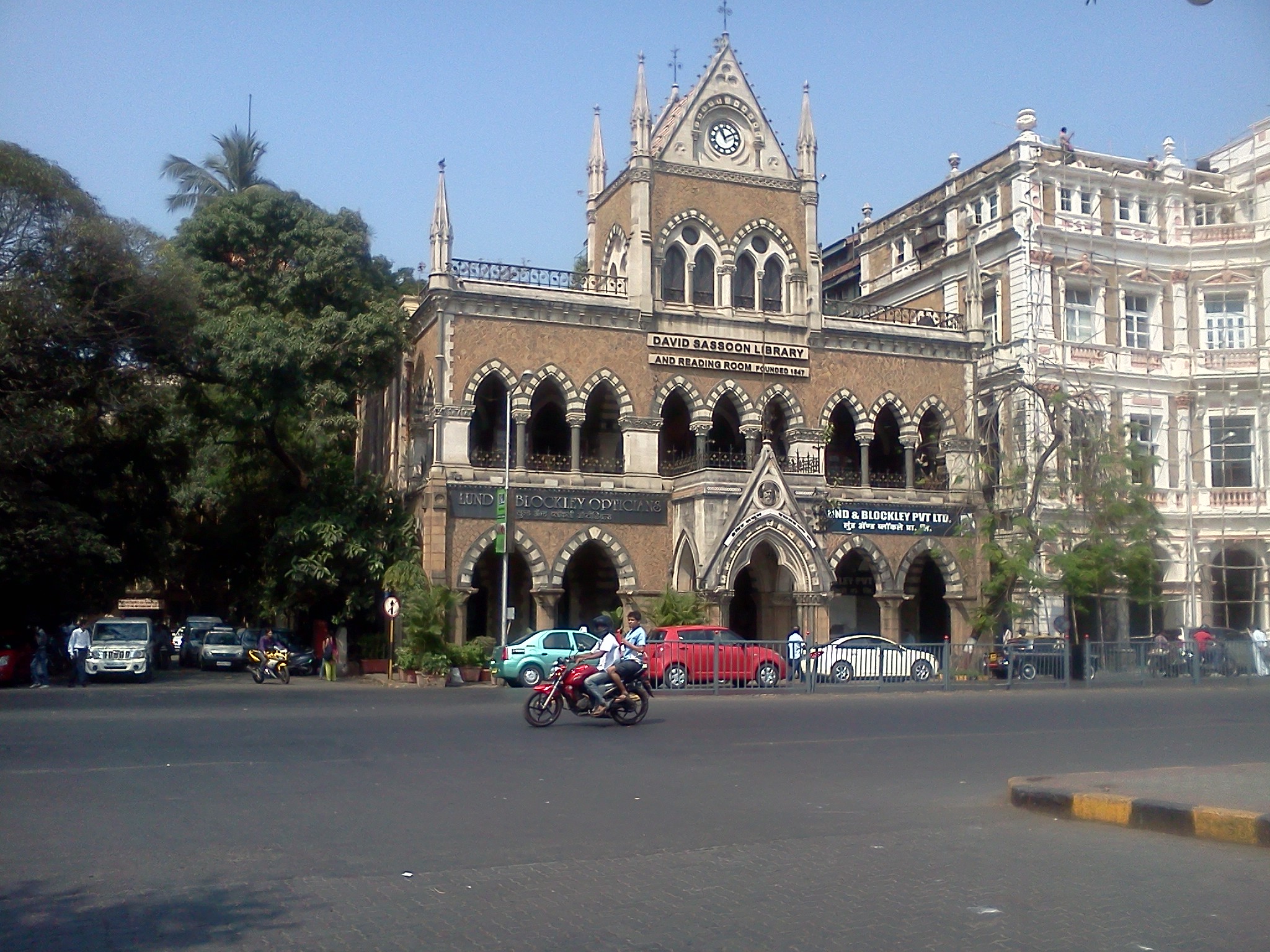
Jackson’s narrative also addresses the extensive philanthropic activity that accompanied the Sassoon family’s commercial success, including the funding of schools, orphanages, hospitals, and museums across the cities where family members conducted business, reflecting a pattern common among the wealthiest Baghdadi Jewish merchant families of colonial-era India, who frequently directed substantial portions of their commercial fortunes toward institution-building that served their local communities alongside, and often extending beyond, their strictly Jewish co-religionists. The David Sassoon Library in Bombay, still standing today as one of the city’s notable Fort-area landmarks, exemplifies this philanthropic legacy, a lasting physical monument to the family’s institutional generosity that long outlasted the specific commercial fortunes that funded it.
A Family Story With Lasting Popular Appeal
More than five decades after its publication, Jackson’s The Sassoons remains one of the more accessible popular biographies of a family whose story continues to attract public fascination, from its origins as Iraqi Jewish merchants through its central role in colonial India’s and China’s opium economy to its ultimate transformation into British aristocracy. For readers seeking a lively, narrative introduction to this family’s remarkable multi-generational journey, rather than the more scholarly and specifically Jewish-historical treatment Cecil Roth’s earlier study provides, Jackson’s book remains a readable and enduringly popular starting point.
The Opium Trade’s Uncomfortable Legacy
Any serious account of the Sassoon family’s commercial rise, including Jackson’s, must reckon with the family’s central role in the nineteenth-century opium trade between British India and China, a business that generated enormous wealth for Sassoon interests and other trading houses while contributing directly to a public health and social crisis in China that would eventually help trigger the Opium Wars between China and Britain. This dimension of Sassoon family history sits uneasily alongside the family’s extensive philanthropic reputation, illustrating a broader and uncomfortable pattern in the history of colonial-era commercial fortunes, in which enormous wealth generated through trade with significant human costs elsewhere was subsequently redirected toward genuinely beneficial local philanthropy, schools, hospitals, libraries, and orphanages that served real community needs in Bombay, Shanghai, and other cities where the family operated.
Jackson’s popular narrative treatment addresses this history as part of the family’s broader commercial story, situating the opium trade within the context of the wider legal and commercial framework of nineteenth-century British colonial trade in Asia, in which the East India Company and numerous merchant houses beyond the Sassoons participated in and profited from this same trade under British colonial policy. Readers approaching Jackson’s book today bring a more critical historical perspective on this trade than may have been typical of general readers in 1968, and the book’s popular narrative style means it does not always interrogate this history with the same critical distance that more recent, specifically focused scholarly treatments of the opium trade’s human costs in China have developed.
A Family That Shaped Bombay’s Landscape
Beyond the specific commercial and philanthropic history Jackson documents, the Sassoon family’s lasting physical imprint on Bombay’s urban landscape, visible today in structures like the David Sassoon Library and Reading Room in the city’s Fort area, testifies to the scale and permanence of the family’s local institutional legacy. These buildings, still standing and in active use more than a century after their construction, represent a different kind of historical record than Jackson’s book itself: physical monuments to the family’s presence and philanthropy that continue to shape Mumbai’s built environment and collective memory of its colonial-era Baghdadi Jewish merchant community, independent of and complementary to the documentary and biographical record that books like Jackson’s and Roth’s have preserved in print.
Two Books, One Remarkable Family
Read alongside Cecil Roth’s earlier scholarly treatment, Jackson’s 1968 popular biography offers a genuinely complementary perspective on the Sassoon family story: where Roth brought the documentary rigor of professional Jewish historical scholarship to the family’s origins and communal significance, Jackson brought the narrative skill of a popular biographer to a wider, more general readership newly curious about a family whose descendants had, by the 1960s, become notable figures in British fashion, arts, and society in their own right. Together, the two books, separated by nearly three decades and written for quite different audiences and purposes, illustrate how a single remarkable family history can generate distinct but equally valuable literary treatments across different eras and for different readerships.
For readers interested specifically in the Baghdadi Jewish community’s broader history in colonial India, the Sassoon family’s story, whatever its complications and uncomfortable dimensions, remains one of the most historically significant and well-documented threads within that larger community history, illustrating both the extraordinary commercial success some Baghdadi Jewish merchant families achieved under British colonial rule and the complex, sometimes troubling economic foundations, alongside genuine philanthropic achievement, upon which that success was built.
Jackson’s own career as a prolific popular biographer, producing accessible narrative accounts of prominent families and public figures for a broad mid-twentieth-century British readership, situates The Sassoons within a wider tradition of commercial biography that flourished in postwar Britain, one that found in the Sassoon family’s dramatic multi-generational rise from Ottoman Baghdad to the British peerage exactly the kind of compelling, almost novelistic material that made for genuinely popular and enduringly readable history.