
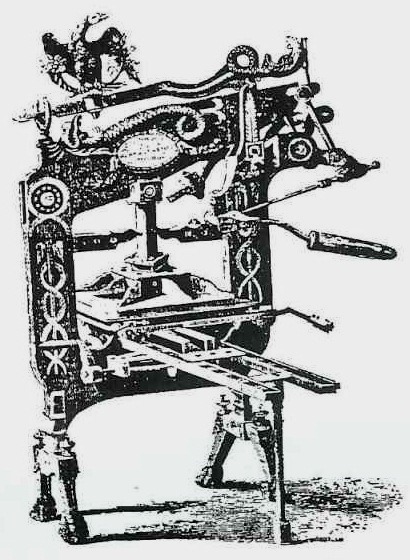
In October 1992, the Judah L. Magnes Museum in Berkeley, California — an institution now known as the Magnes Collection of Jewish Art and Life at the University of California, Berkeley — published a slim, 46-page exhibition catalog titled The Jewish Printed Book in India: Imprints of the Blumenthal Rare Book & Manuscript Library, authored by scholar Fred D. Astren. The catalog accompanied an exhibition drawing on the Blumenthal Rare Book and Manuscript Library’s holdings of printed Hebrew, Judeo-Arabic, and Marathi-language Jewish books produced in India, offering a rare, focused look at a chapter of Jewish print culture that receives far less attention than the printing histories of European Jewish communities.
Why Indian Jewish Printing Matters
India was home to three historically and culturally distinct Jewish communities: the ancient Cochin Jews of Kerala, the Bene Israel of the Konkan coast around Bombay, and the Baghdadi Jewish merchant communities that settled in Bombay and Calcutta from the eighteenth century onward. Each of these communities developed its own relationship to Hebrew literacy, liturgical language, and vernacular translation, and the emergence of Jewish printing presses in colonial India in the nineteenth century reflects those differences directly. Bene Israel prayer books, for instance, were frequently printed with facing Marathi translations or transliterations, reflecting a community whose members were fluent in Marathi as a mother tongue but for whom Hebrew remained primarily a liturgical language requiring active pedagogical support. Baghdadi Jewish presses, by contrast, more often produced texts in Judeo-Arabic, the everyday spoken and written language of a community that had migrated from Baghdad and Aleppo and retained close linguistic ties to its Middle Eastern origins even generations after settling in India.
This linguistic diversity — Hebrew, Judeo-Arabic, and Marathi all appearing within a single national Jewish printing tradition — is part of what makes the history documented in Astren’s catalog so distinctive. Nowhere else in the Jewish world did a printing tradition need to serve, within the same broad geographic and colonial context, communities with such different vernacular and liturgical starting points.
The Blumenthal Collection as a Research Resource
The Blumenthal Rare Book and Manuscript Library, whose holdings formed the basis of the 1992 exhibition and catalog, represents one of the more significant assemblages of Indian Jewish printed material held outside India itself. Rare book and manuscript collections like this one play an outsized role in preserving the physical record of Jewish printing history in India, since many of the original printing houses — small, community-run operations rather than large commercial publishers — left behind fragile, low-print-run materials that were never digitized or widely archived at the time of their original publication. As the emigration of Indian Jewish communities to Israel, the United Kingdom, and elsewhere accelerated in the decades following Indian independence and Israeli statehood, much of this printed material risked being lost, sold off piecemeal, or simply disintegrating in humid Indian climates poorly suited to paper preservation.
Institutions like the Magnes Museum, and the broader network of Judaica special collections at research universities and museums, therefore serve a preservation function that goes well beyond simple curiosity. A catalog like Astren’s does double duty: it documents specific holdings for scholarly reference, while also making the broader case — through its very existence — that Indian Jewish print culture deserves to be treated as a serious subfield of Jewish bibliographic and print history, alongside the far more extensively studied printing traditions of Amsterdam, Venice, Constantinople, and Eastern Europe.
What Indian Jewish Presses Actually Printed
The output of Jewish presses in colonial India included prayer books and Haggadot adapted for local communal use, translations and paraphrases of biblical texts into Marathi and Judeo-Arabic, communal histories and religious instructional material, and occasional literary or journalistic publications serving the internal communication needs of the Bene Israel, Baghdadi, and Cochin Jewish communities. Because these communities were relatively small in absolute numbers — never approaching the size of major European or Middle Eastern Jewish populations — print runs tended to be modest, and many titles exist today only in a handful of surviving copies scattered across specialist library collections in India, Israel, the United Kingdom, and the United States.
This scarcity is precisely why exhibition catalogs and bibliographic surveys matter so much to the field. A researcher working today on the history of Marathi-language Jewish printing, for example, cannot simply consult a comprehensive digitized archive the way they might for early modern European Hebrew printing; they must instead track down catalogs like Astren’s, along with related bibliographic studies such as Brad Sabin Hill’s later work on Hebrew, Judeo-Arabic, and Marathi Jewish printing in India, in order to reconstruct even a partial picture of what was printed, where, by whom, and for what communal purpose.
A Small Catalog With an Outsized Role
Although modest in length at just 46 pages, The Jewish Printed Book in India occupies an important niche in the historiography of Indian Jewish life: it treats print culture, rather than religious practice, migration, or communal organization, as the primary lens for understanding how India’s Jewish communities maintained, adapted, and transmitted their textual and liturgical traditions across generations and linguistic environments. For researchers, genealogists, and general readers interested in the material culture of Indian Jewish life — the actual books that sat on synagogue shelves and in family homes in Bombay, Calcutta, and Kochi — Astren’s catalog and the Blumenthal collection it documents remain an essential, if specialized, point of reference.
Printing as a Marker of Communal Confidence
The establishment of a local Jewish printing press is, in almost every diaspora community’s history, a marker of a certain level of communal stability, literacy, and institutional confidence. A community needs enough Hebrew and vernacular literacy among its members to generate demand for printed prayer books and religious texts, enough economic resources to fund typesetting and printing equipment or contract with commercial printers, and enough communal organization to coordinate what gets printed and distributed. That Bene Israel and Baghdadi Jewish communities in nineteenth and early twentieth century Bombay and Calcutta reached this threshold, producing their own printed religious and communal literature rather than relying exclusively on imported texts from Europe or the Middle East, speaks to the depth and self-sufficiency these communities had achieved by the height of the colonial period.
At the same time, the linguistic choices embedded in these printed texts reveal the particular negotiations each community was making between religious tradition and local identity. A Marathi-language Bene Israel prayer book was not simply a convenience for readers who found Hebrew difficult; it was a statement about how thoroughly the Bene Israel community had integrated into the linguistic and cultural fabric of the Konkan region while still maintaining distinct Jewish religious observance. Judeo-Arabic texts printed for Calcutta’s Baghdadi Jewish community similarly reflected an ongoing attachment to Middle Eastern linguistic and cultural roots even generations after the community’s founding in India. Reconstructing this history through surviving printed artifacts, as catalogs like Astren’s attempt to do, offers a uniquely tangible way of tracing how Indian Jewish communities balanced these competing pulls of tradition, integration, and self-expression across more than a century of print culture.
Specific biographical detail about Fred D. Astren’s role in curating the original exhibition, beyond his authorship of the accompanying catalog, is not readily available in independently verifiable sources, and this account does not speculate beyond what the bibliographic record confirms: a 1992 catalog, published by the Judah L. Magnes Museum, documenting the Blumenthal Rare Book and Manuscript Library’s holdings of Hebrew, Judeo-Arabic, and Marathi Jewish printed material from India. For readers seeking to go deeper into this niche but historically rich subject, consulting library catalogs at institutions holding Judaica special collections remains the most reliable path, since so little of this material has been comprehensively digitized or summarized elsewhere.