
In 1969, a slim but historically valuable volume titled The Origin and History of the Calcutta Jews was published under the authorship of I. S. Abraham, offering one of the earliest community-authored chronicles of a Jewish settlement that, by the time of the book’s release, had already entered a long and irreversible decline. Unlike academic histories written by outside scholars decades later, Abraham’s account carries the distinct value of a chronicler writing from within the community itself, at a moment when elders who remembered the nineteenth-century heyday of Calcutta’s Baghdadi Jewish quarter were still alive to be consulted, and when synagogue records, family papers, and oral memory had not yet been scattered by emigration.
A Community Built on Trade and Migration
The story that Abraham set out to record began in the late eighteenth century, when Baghdadi Jewish merchants originally from Aleppo and Baghdad started arriving in the rapidly growing colonial capital of Calcutta. The first recorded Jewish settler in the city was Shalom Obadiah Cohen, born in Aleppo in 1762, who had already established himself as a trader in Surat before relocating to Calcutta in 1798. Cohen’s arrival marked the beginning of a community that would, over the following century, become one of the most prosperous and influential Baghdadi Jewish settlements in Asia, forming a commercial and family network that stretched from Baghdad and Basra through Bombay and Calcutta to Rangoon, Singapore, Hong Kong, and Shanghai.
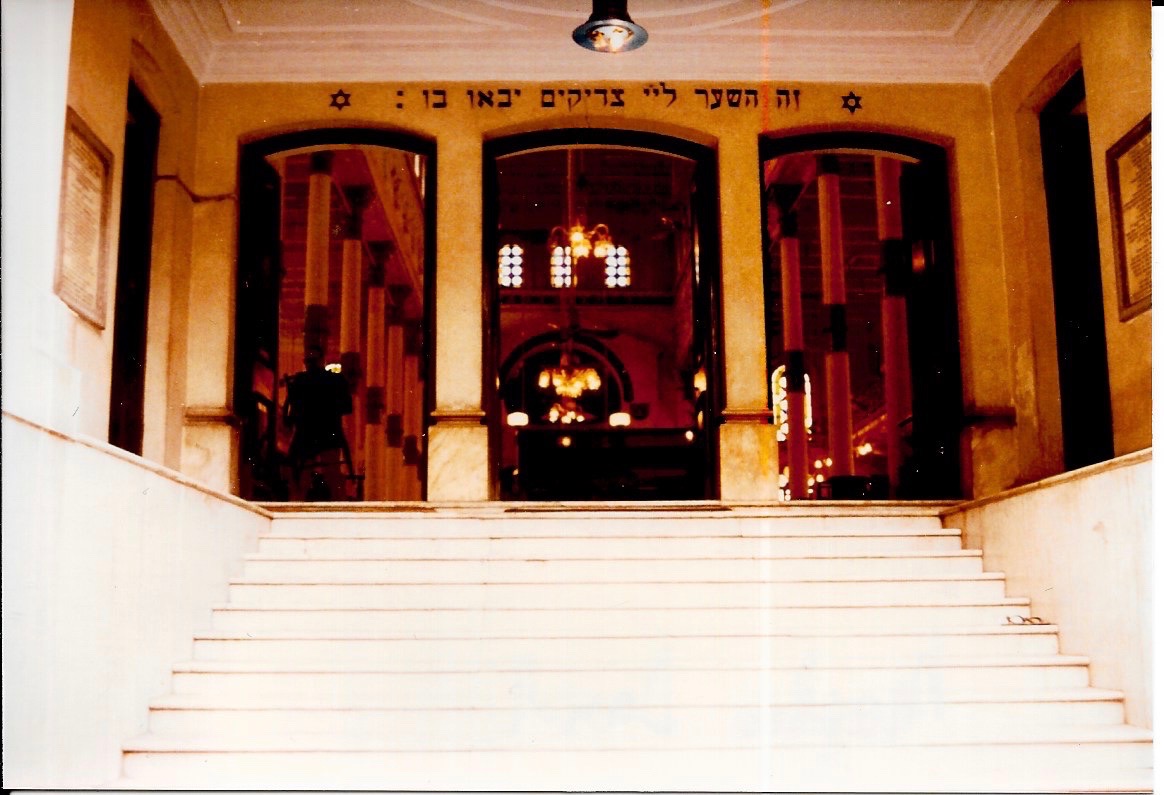
Through the nineteenth century, Calcutta’s Jewish merchant families built fortunes in cotton, jute, spices, and, controversially, the opium trade that linked British India to China. These families were not merely wealthy; they were architects of the city’s built environment, sponsoring synagogues, religious schools, and charitable institutions that gave the community both a spiritual center and a public face. The grandest of these, the Maghen David Synagogue, along with the Beth El and Neveh Shalome synagogues, still stand in central Calcutta today as some of the last physical markers of a community that has otherwise almost entirely dispersed.
Between Two Worlds: Identity in Flux
One of the recurring themes that a history like Abraham’s had to grapple with is the community’s shifting sense of identity across generations. The first generation of settlers spoke Judeo-Arabic at home, dressed in the fashions of Baghdad and Aleppo, and maintained close ties to the Middle East. As the nineteenth century wore on, however, successive generations born in Calcutta increasingly adopted English language, British manners, and the aspirational culture of the colonial elite, even while continuing to observe Jewish religious law and communal customs. This was a community perpetually negotiating between an inherited Judeo-Arabic heritage and the pull of Anglicization, a tension that shaped everything from synagogue architecture to marriage patterns to the language used in communal record-keeping.
Economically, the community was never monolithic. Alongside the famous merchant elite — families whose names became associated with department stores, real estate, and trading houses across the city — there existed a far larger population of poorer Jews who depended heavily on charitable distributions organized through the synagogues. A history of the community written from within, as Abraham’s was, would have needed to account for both ends of this spectrum: the wealthy benefactors whose names appear on synagogue foundation stones, and the ordinary families who relied on communal welfare to get by in a city that offered them opportunity but rarely guaranteed security.
Decline and the Urgency of Documentation
By the time Abraham’s book appeared in 1969, the demographic reality facing Calcutta’s Jews was already stark. The establishment of the State of Israel in 1948, combined with the political and economic uncertainties that followed Indian independence in 1947 and the nationalization pressures of the subsequent decades, prompted a wave of emigration that emptied the community of most of its younger members. Families that had lived in Calcutta for five or six generations relocated to Israel, the United Kingdom, Australia, and North America, leaving behind synagogues, cemeteries, and a body of communal memory that risked vanishing along with the people who carried it.
It is against this backdrop of visible, accelerating decline that a locally authored history takes on particular significance. Books written by community insiders in the mid-twentieth century — during the very years when emigration was hollowing out the congregation — serve a documentary function that later academic studies, however rigorous, cannot fully replicate. Abraham was writing not from archival reconstruction alone but from a living, if shrinking, community, with access to the kind of everyday detail — names, family relationships, minor disputes, small institutional histories — that tends to fall outside the scope of broader scholarly narratives focused on economic or political trends.
Why This History Matters Today
Today, fewer than a handful of Jews remain in Kolkata, and the community that Shalom Obadiah Cohen helped found in 1798 exists mainly in memory, in the stewardship of its remaining synagogue buildings, and in the pages of histories like Abraham’s. The Maghen David Synagogue and its sister institutions have become heritage sites, visited more often by tourists and historians than by worshippers, their soaring arches and stained glass a testament to a community whose confidence and prosperity once seemed permanent.
For readers interested in the Baghdadi Jewish diaspora more broadly, Calcutta’s story offers an important counterpoint to the better-documented history of Bombay’s Jewish community. While Bombay’s Baghdadi Jews, including the Sassoon family, are relatively well covered in popular and scholarly literature, Calcutta’s community has received comparatively less sustained attention, making early records like Abraham’s account valuable precisely because they are rare. The book stands as a reminder that Jewish history in India was never a single, uniform story, but a set of distinct regional communities — the Bene Israel of the Konkan coast, the Cochin Jews of Kerala, and the Baghdadi Jews of Bombay and Calcutta — each shaped by its own patterns of migration, trade, and adaptation.
Specific biographical details about I. S. Abraham himself are difficult to verify through independently accessible sources, and this account does not attempt to fabricate them. What can be said with confidence is that the book fits within a small but important tradition of community-authored histories produced by Indian Jews in the decades following independence and Israeli statehood, when the urgency of preserving communal memory was keenly felt by those who remained. For anyone researching the Jewish presence in eastern India, Abraham’s history remains a foundational, if now hard-to-find, reference point.
The Synagogues That Outlasted the Community
Three synagogues anchor the physical memory of Calcutta’s Jewish community: the Neveh Shalome Synagogue, founded in the early nineteenth century as the community’s first permanent house of worship; the Beth El Synagogue, established later to accommodate a growing congregation; and the Maghen David Synagogue, completed in 1884 through the patronage of the Ezra family and widely regarded as one of the most architecturally striking synagogues in Asia, with its tall clock tower visible across the surrounding market district. These buildings were never merely functional; they were statements of permanence and success by a community that, at its height in the early twentieth century, numbered several thousand members spread across central Calcutta’s commercial neighborhoods.
Maintaining these synagogues today falls to a mostly non-Jewish caretaking staff, longtime employees and their descendants who have kept the buildings functioning for prayer, Torah scroll storage, and occasional visits from the last remaining Jewish residents and the Jewish tourists, journalists, and genealogists who come seeking traces of family history. This arrangement, unusual but deeply moving, has become its own subject of documentary and journalistic interest in the decades since Abraham’s book appeared, as outside observers try to understand how a community’s sacred spaces can be preserved by people who are not themselves members of that faith, out of respect, employment, and a sense of custodianship built over generations.
A Regional History Worth Preserving
Read alongside later, more widely available histories of Indian Jewish communities, Abraham’s 1969 account occupies a specific and useful niche: a document written close enough to the community’s active life to capture details that would otherwise be lost, yet distant enough from the founding generation to offer a full arc of the settlement’s rise and eventual contraction. For researchers, genealogists tracing Baghdadi Jewish family lines through Calcutta, Bombay, and onward to Britain, Israel, or Australia, and general readers curious about the lesser-known corners of India’s religious pluralism, the book remains a touchstone reference, even where copies are now scarce and the author’s own biography remains only lightly documented in accessible records.