
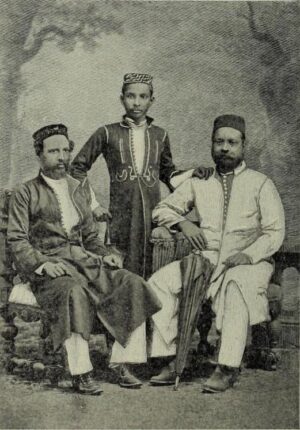
Understanding the Indian Jewish Experience in Historical Context
The story of India’s Jewish communities cannot be properly understood without appreciating the specific historical circumstances that shaped it. Judaism arrived in India through multiple routes over many centuries, creating communities that were diverse in their origins, their practices, and their social positions but united by their adherence to Jewish tradition and their identification with the Jewish people. The Bene Israel of Maharashtra, possibly descended from Jewish settlers who arrived before the Common Era; the Cochin Jews of Kerala, present for at least two thousand years under the protection of Hindu rulers; and the Baghdadi Jews of Calcutta and Bombay, arriving in the late eighteenth century from Iraq and the broader Middle East — each community had its own distinct history but shared the experience of being Jewish in India.
What makes the Indian Jewish story distinctive in the broader context of Jewish history is the nature of the host society in which these communities developed. India under Hindu rule provided a social environment quite unlike the Christian Europe or Muslim Middle East where most Jewish communities spent the Common Era. The absence of organized anti-Jewish persecution, the recognition of Jews as a legitimate minority community with rights to self-governance in religious matters, and the broadly tolerant character of Hindu social philosophy all contributed to a Jewish experience in India that was, by the standards of most Jewish diasporic history, remarkably peaceful.
India and Israel: A Special Bond
The relationship between India and Israel, shaped in significant part by the connections created by the Indian Jewish communities, is one of the most important bilateral relationships in the contemporary geopolitical landscape. India and Israel established full diplomatic relations in 1992, ending decades of Indian support for Palestinian causes that had prevented formal recognition of Israel. Since then, the relationship has grown rapidly, encompassing defense cooperation, technology transfer, agricultural development, and deepening people-to-people connections driven by the large Indian Jewish community in Israel and the growing Indian presence in Israel’s technology sector.
The Indian Jewish communities of Israel serve as a human bridge between the two countries. Their presence in Israel keeps alive the memory and the reality of Jewish life in India, while their connections to family and community in India maintain personal ties that give meaning to the diplomatic relationship. For both countries, the Indian Jewish story is evidence that the relationship between Indian and Jewish civilization has deep roots that long predate the modern political relationship — roots that make the contemporary friendship between the two countries feel like the fulfillment of an ancient connection rather than a new arrangement.
Related Reading
- The Four Communities of Indian Jews: An Overview
- The Bene Israel of Maharashtra
- The Jews of Cochin
- The Baghdadi Jews of Mumbai and Kolkata
- Books on the Jews of India
The phrase “Lost Tribe” carries enormous weight in Jewish consciousness, invoking the mystery of ten Israelite tribes exiled by the Assyrian Empire in 722 BCE and never heard from again in the historical record. Over the centuries, dozens of communities around the world have been identified by various scholars, travelers, and rabbinical authorities as possible descendants of these Lost Tribes, and the northeast Indian communities of Manipur and Mizoram represent one of the most actively pursued and officially recognized of these claims. Glimpses of these communities reveal a form of Jewish practice that is both familiar and deeply shaped by its long years of development in isolation from the Jewish mainstream.
Visiting the Communities
Travelers and journalists who have visited the Bnei Menashe communities in Manipur and Mizoram typically describe the experience as simultaneously surprising and moving. Arriving in the hill country of northeastern India, far from any established Jewish center, they find communities that observe Shabbat with genuine devotion, maintain synagogues that look remarkably similar to those of mainstream Jewish communities worldwide, study Hebrew with real commitment, and celebrate Jewish holidays with a seriousness and knowledge that reflects years of dedicated Jewish education.
The physical setting is incongruous in the most striking way. The green hills of Manipur, the bamboo architecture of Mizo villages, the faces and clothing of communities rooted in a South and Southeast Asian cultural tradition, all of this contrasts sharply with the Hebrew letters on synagogue signs, the Star of David decorations, and the Jewish calendar that organizes the community’s weekly and annual rhythms. The contrast between setting and practice is not jarring but moving, a visual demonstration of the universal reach of a tradition that has maintained its essential character across every conceivable geographic and cultural setting.
Religious Practice
The religious practice of the Bnei Menashe communities reflects both their connection to the mainstream Jewish tradition and the specific history of their community. Hebrew is studied seriously, and services are conducted using the standard Sephardic prayer book adopted by most Bnei Menashe communities under the guidance of rabbinical advisors from Israel and elsewhere. Jewish dietary laws are observed with care, even when this requires significant practical accommodation in a setting where kosher food is not easily available.
The Bnei Menashe also maintain pre-contact traditions that they interpret as ancestral Israelite practices. Certain ceremonies and customs that predate their formal connection with the mainstream Jewish world are seen as evidence of their ancient Israelite heritage, and some rabbinical authorities have acknowledged these practices as supporting the community’s claims of Jewish origin. The relationship between these indigenous practices and mainstream Jewish law is an ongoing subject of rabbinical discussion and community reflection.
The Community Waiting
Perhaps the most striking aspect of the Bnei Menashe communities is the way they have organized their entire communal life around the aspiration of aliyah. The communities function, in a sense, as waiting rooms for immigration to Israel, with Jewish education, Hebrew language learning, and halakhic observance all understood as preparation for the life they hope to live in the Jewish state. This orientation toward an imagined future homeland gives the community a specific quality of purposefulness and direction that is unusual among diaspora communities.
The waiting itself is not passive. Thousands of community members have already made aliyah in previous immigration cohorts, and their reports from Israel shape the expectations and preparations of those who remain. The ongoing connection between the communities in Manipur and Mizoram and the Bnei Menashe communities that have already settled in Israel creates a network of relationship and information that spans two very different worlds.